Scar Camouflage
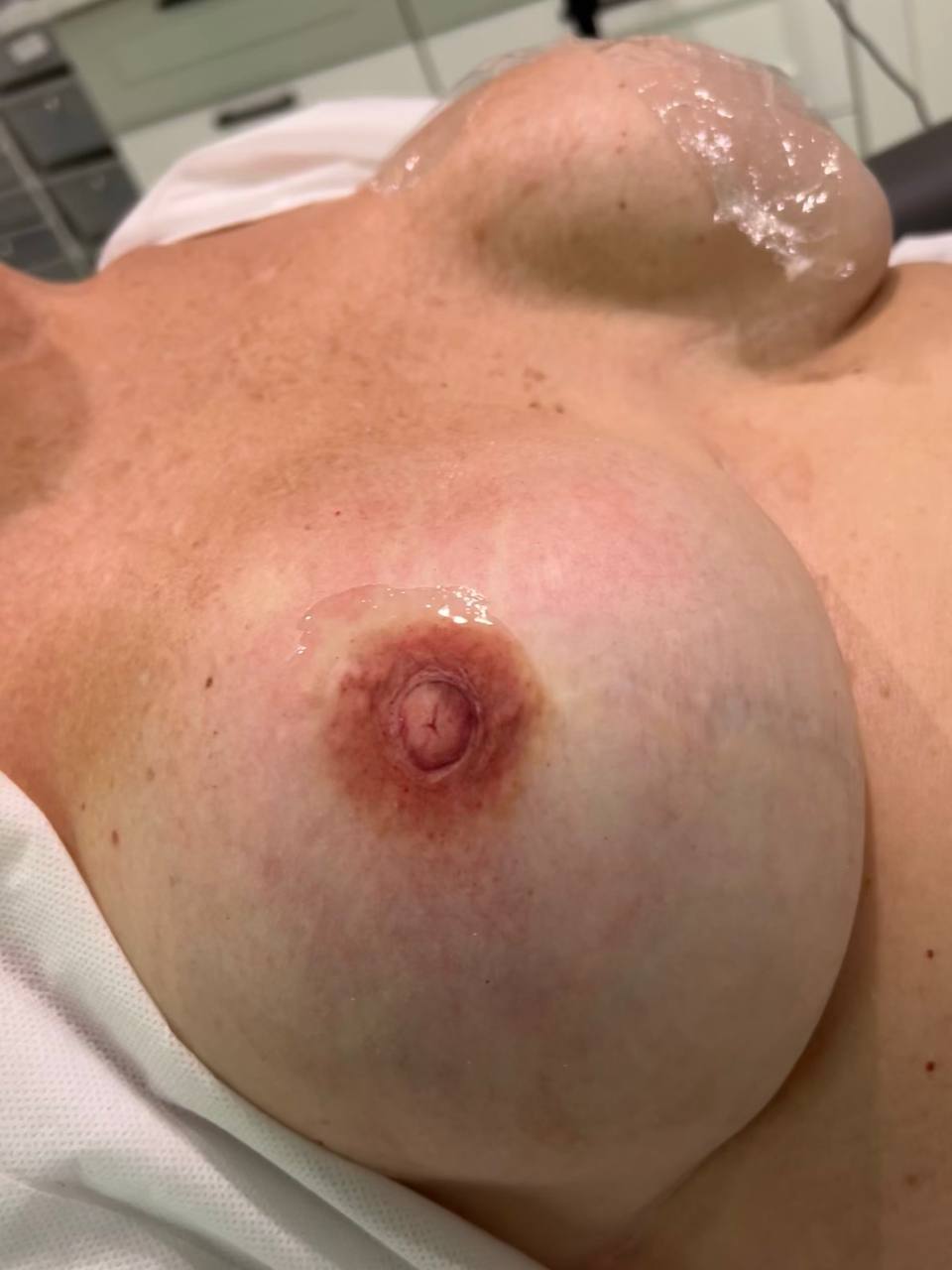
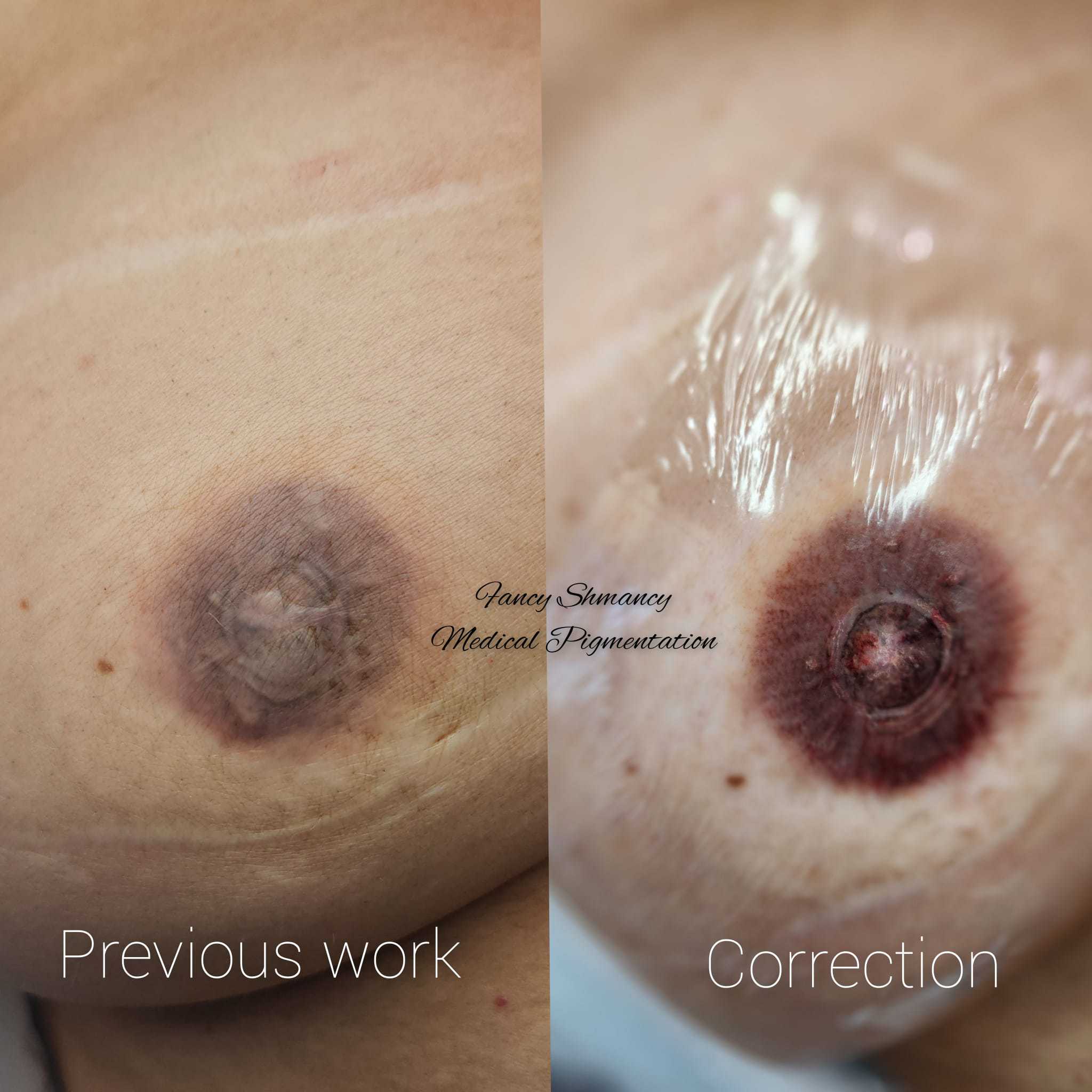
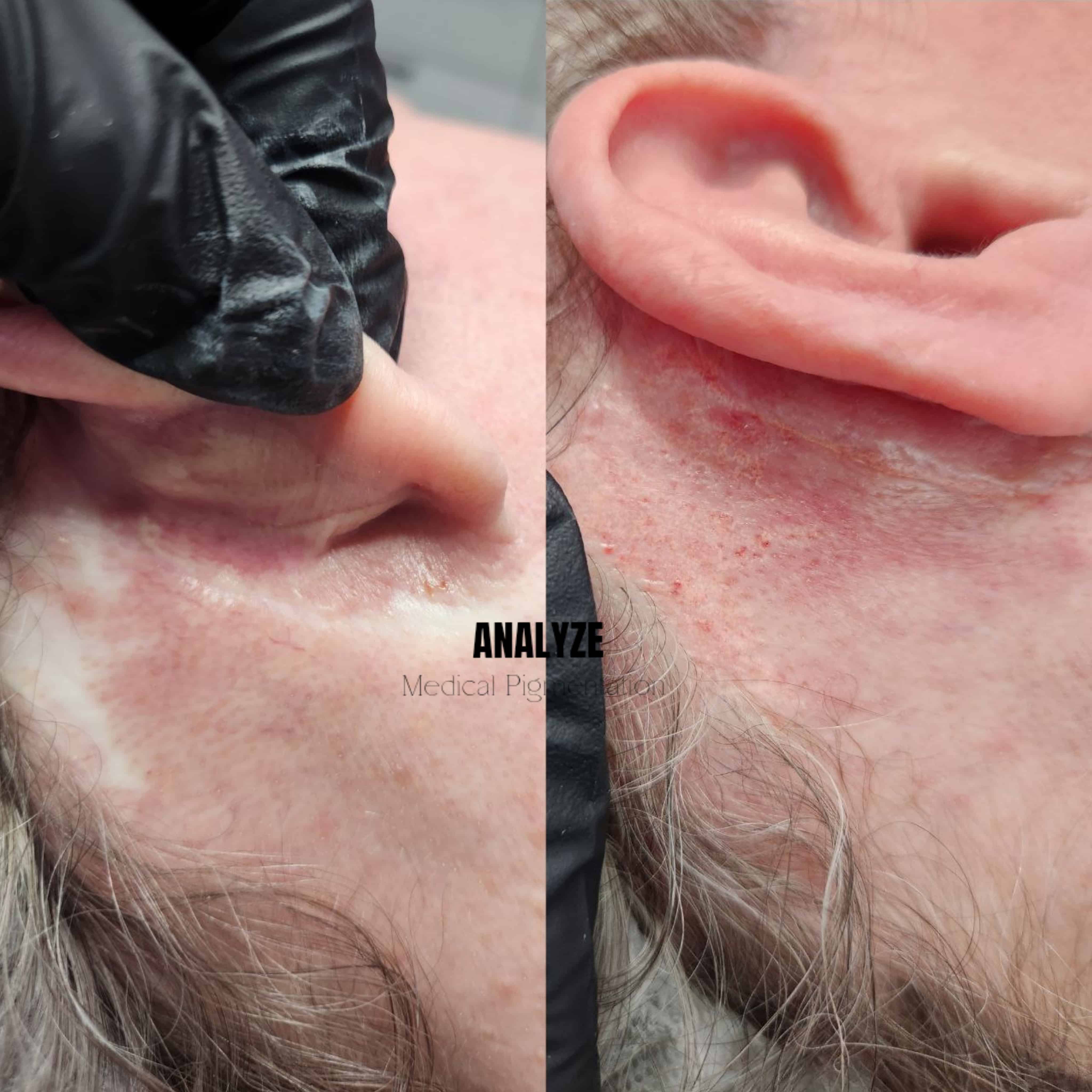
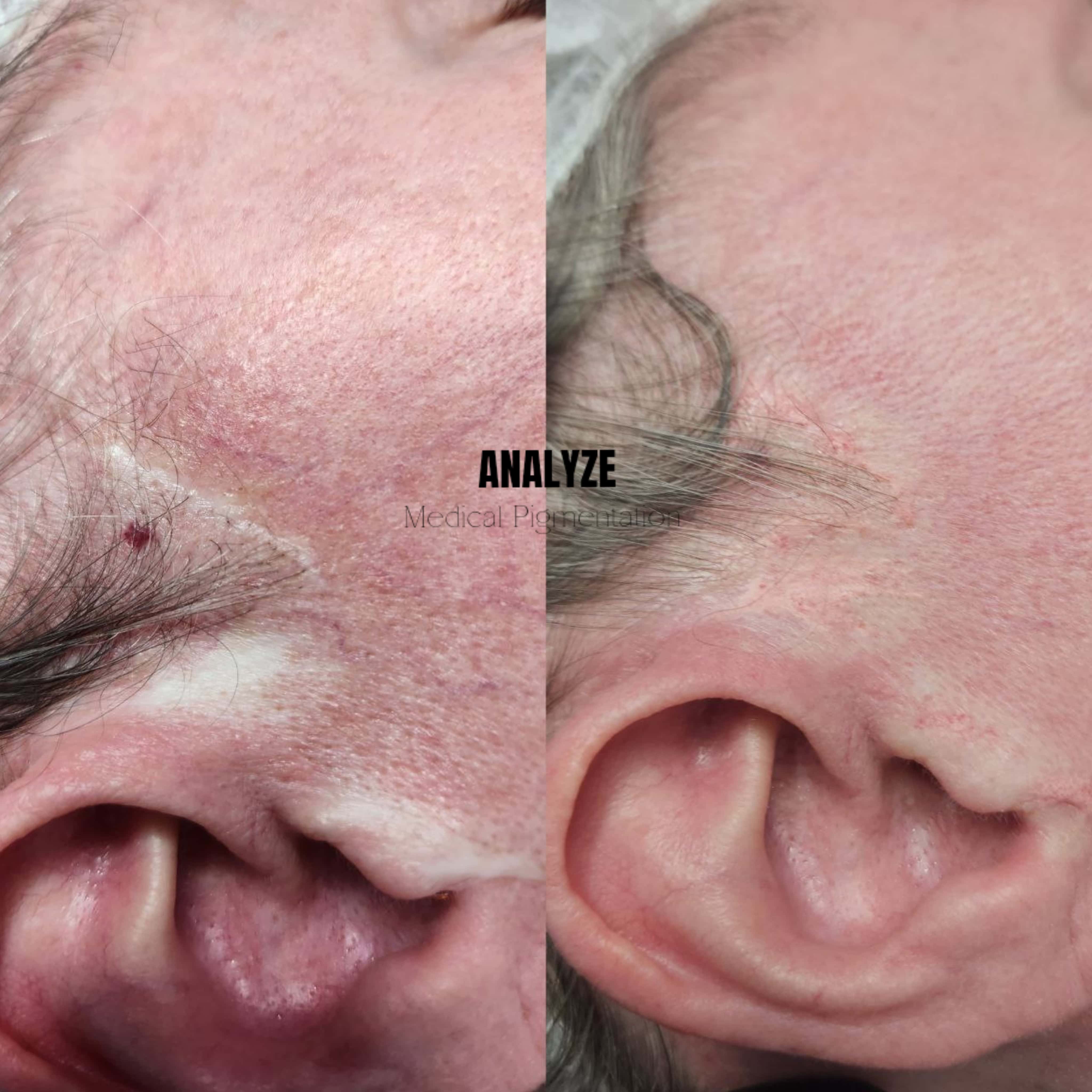
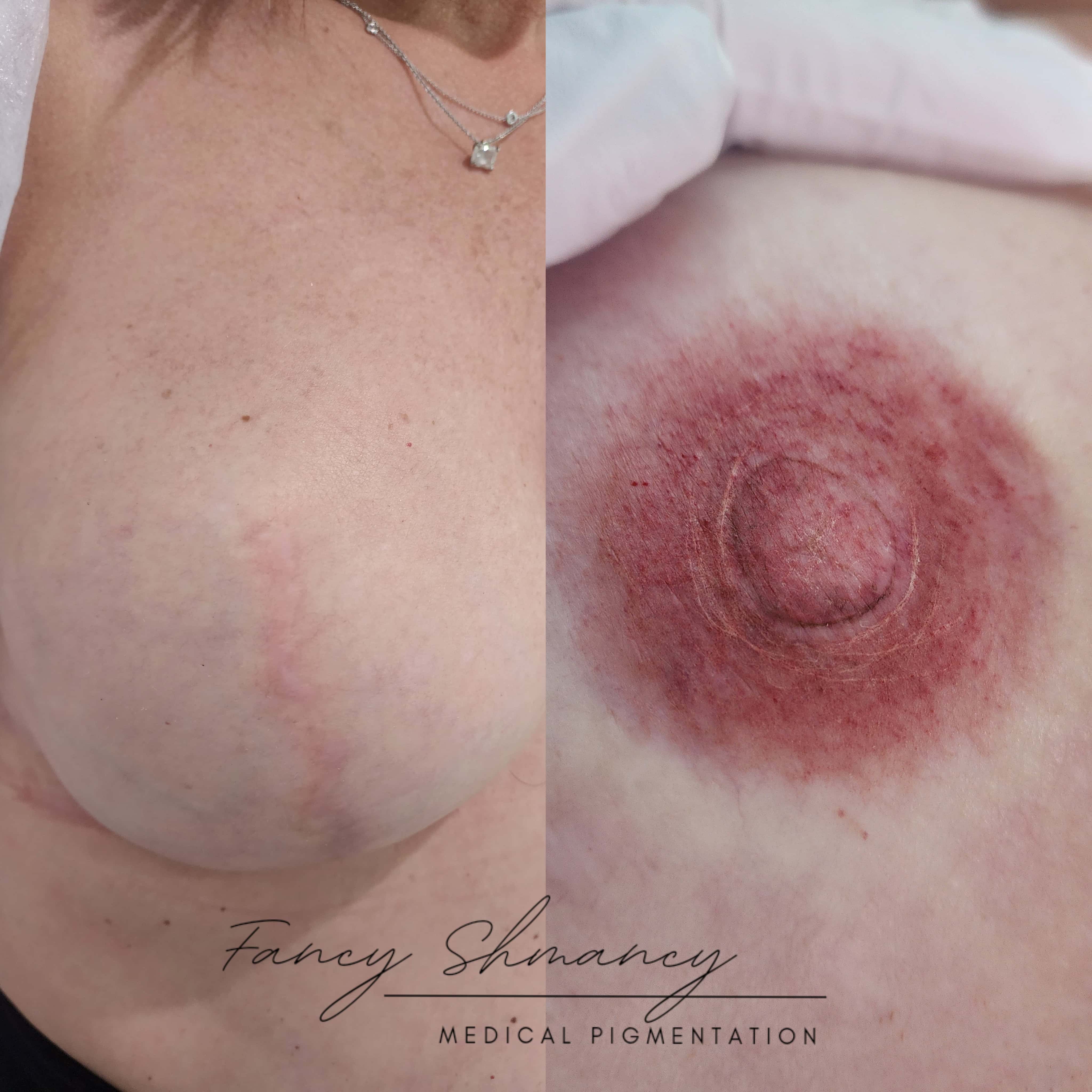
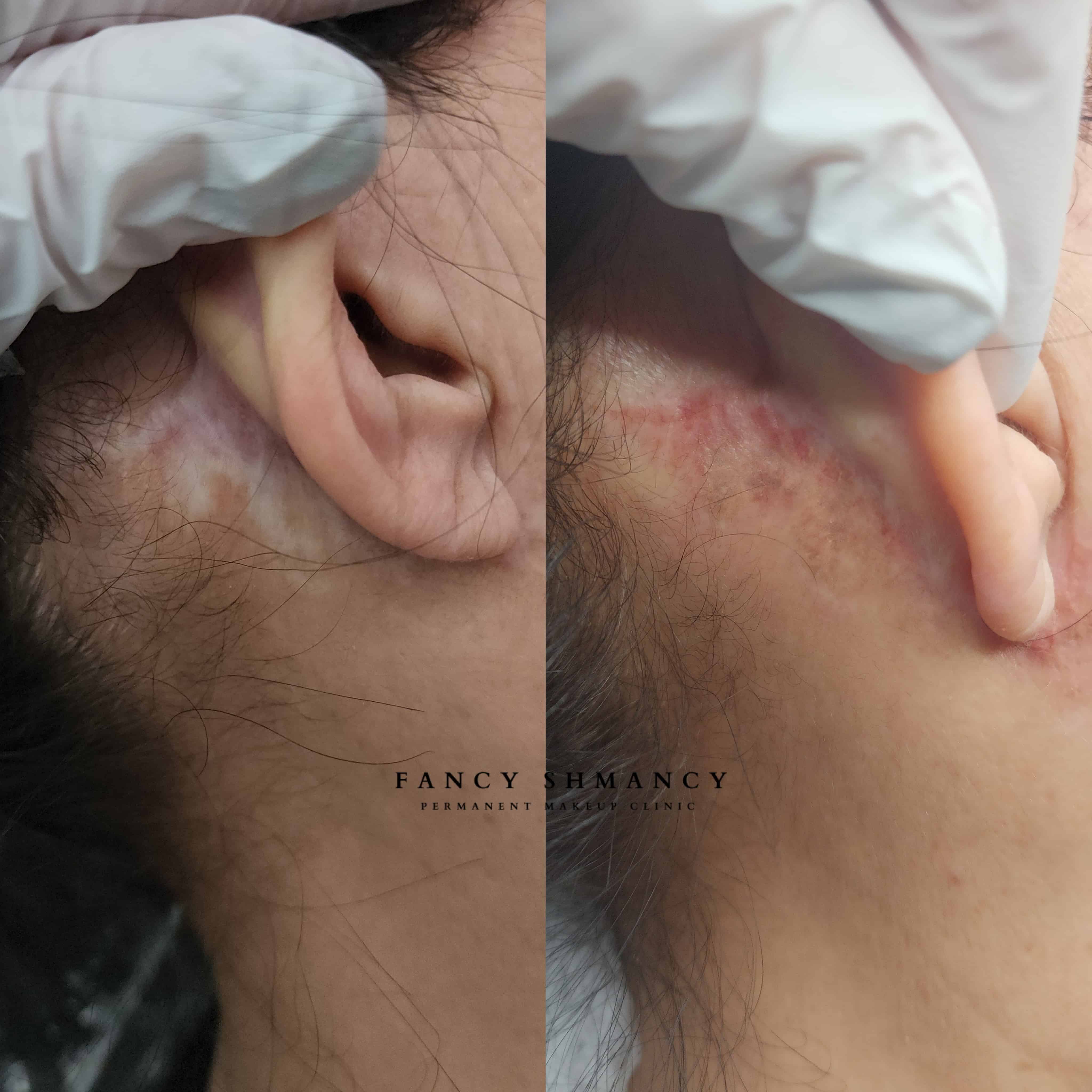
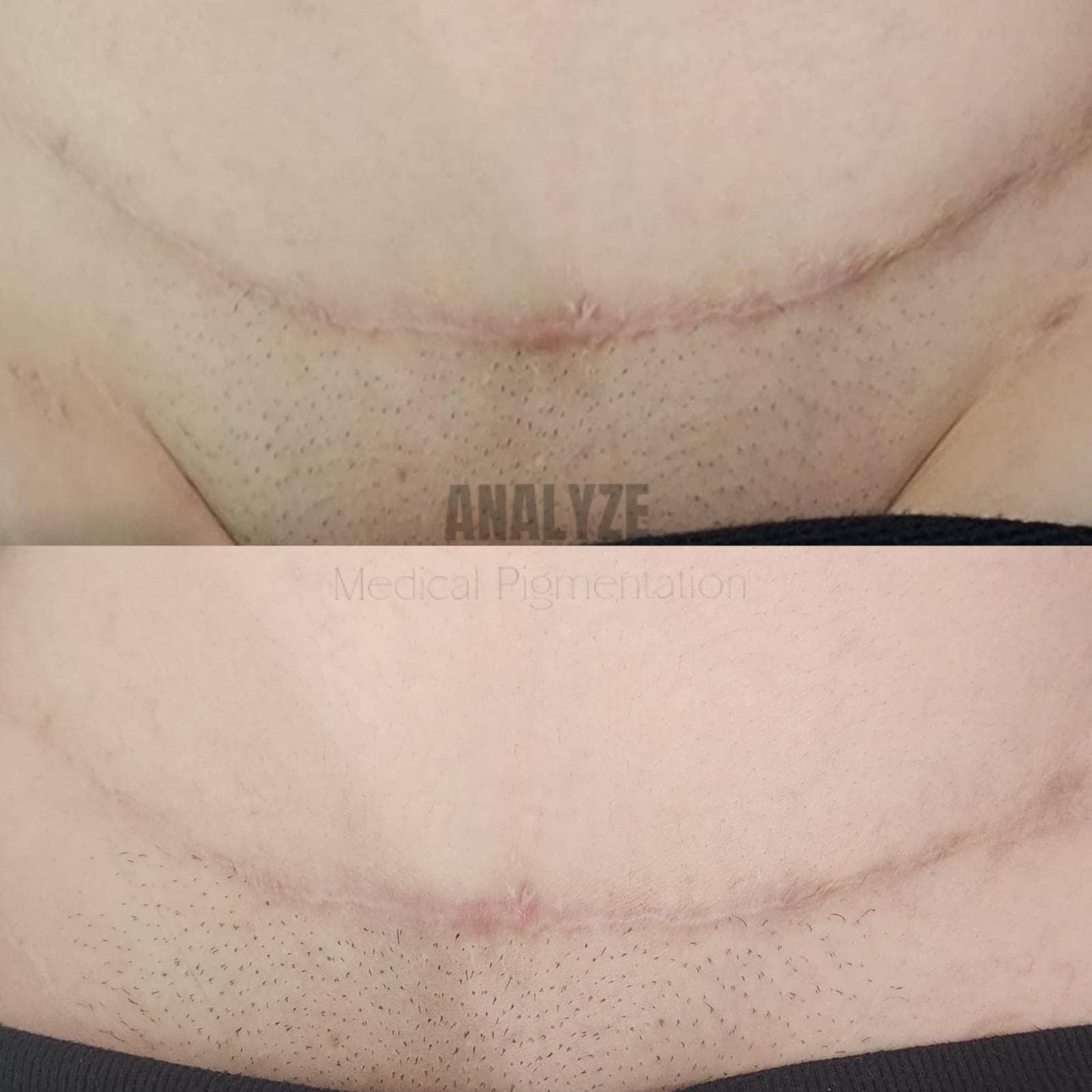
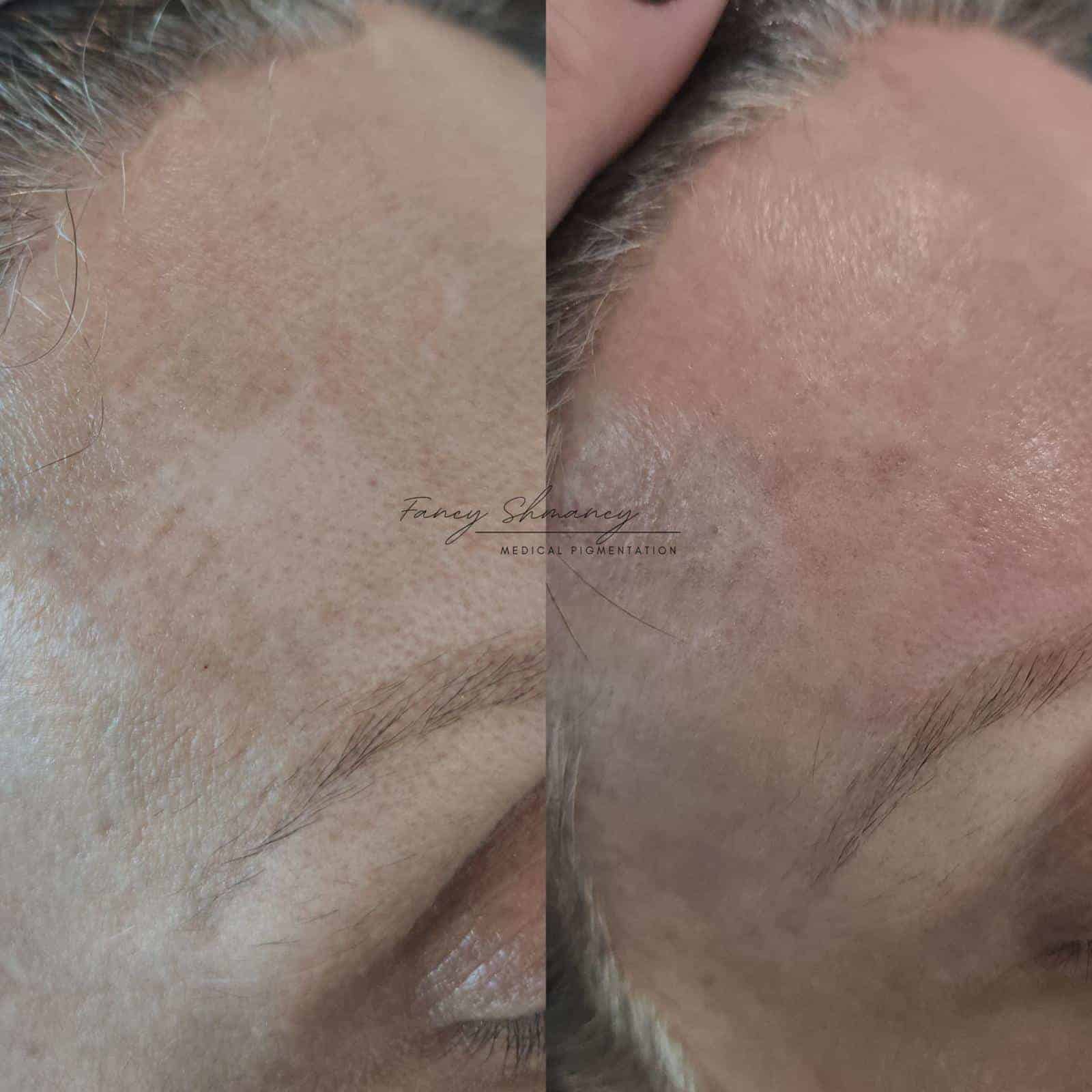
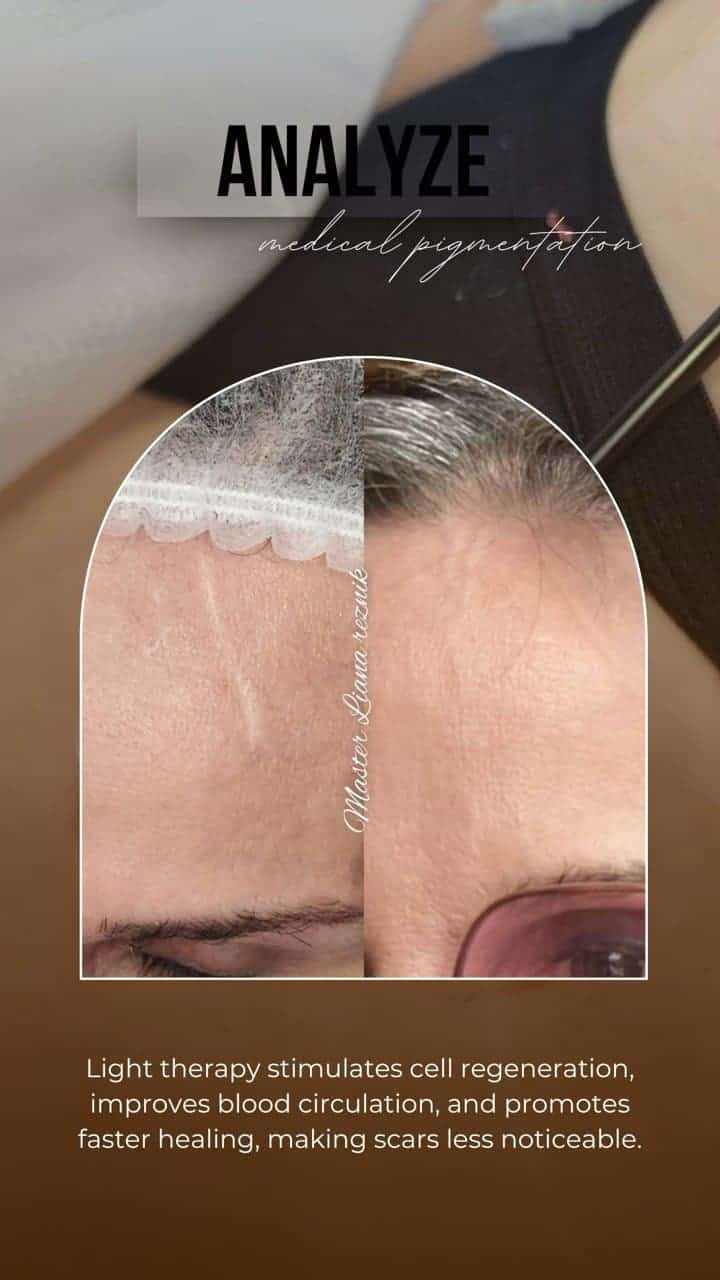
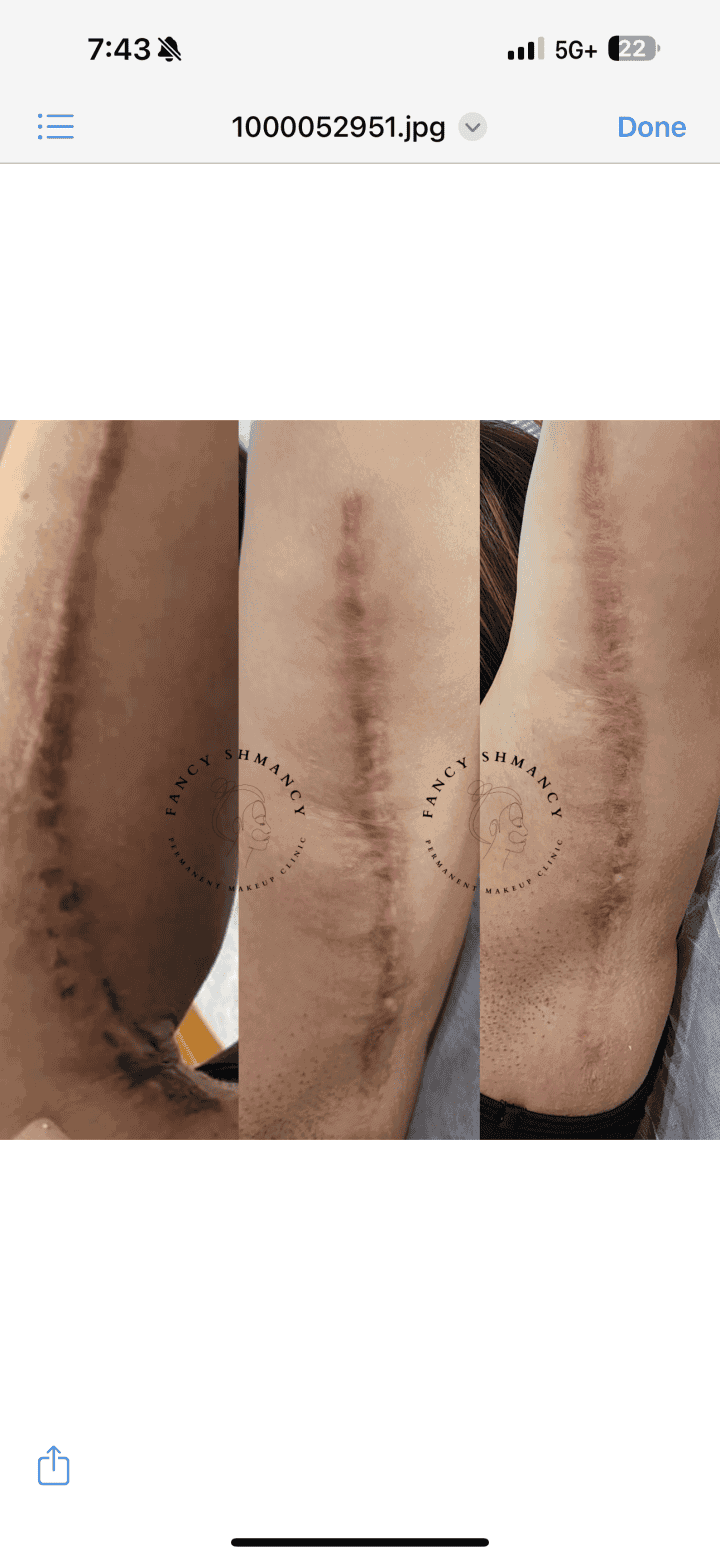
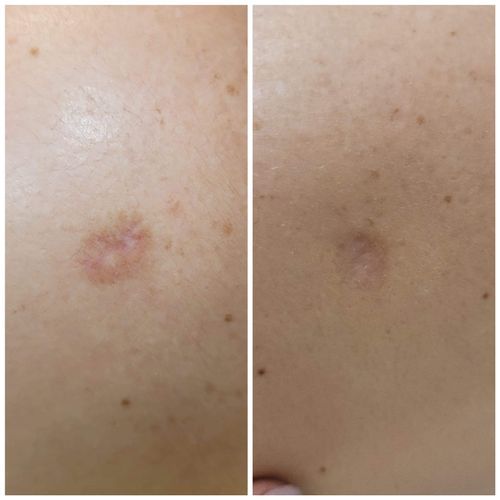
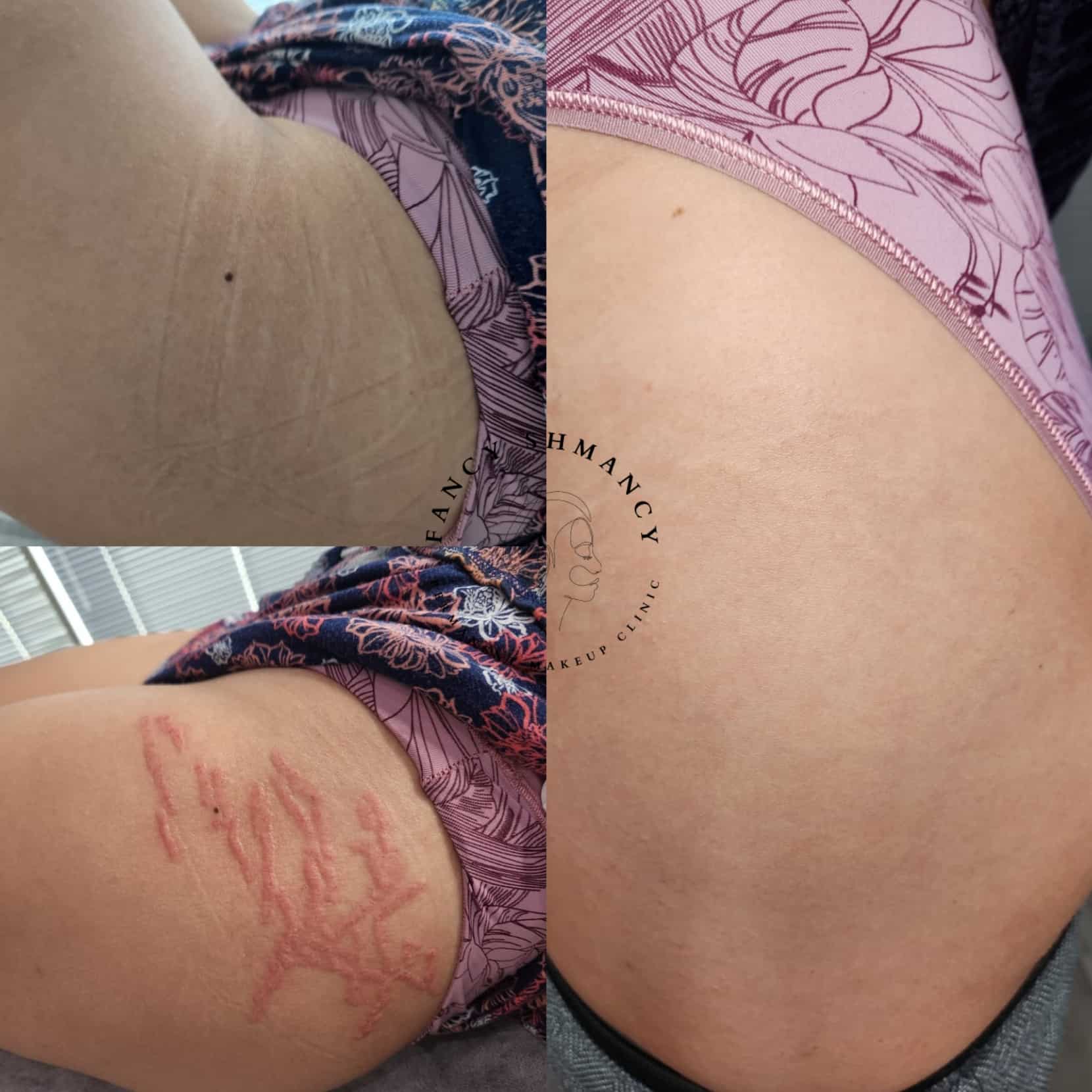
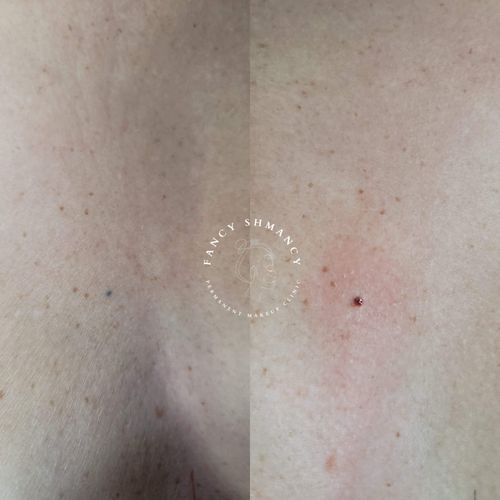
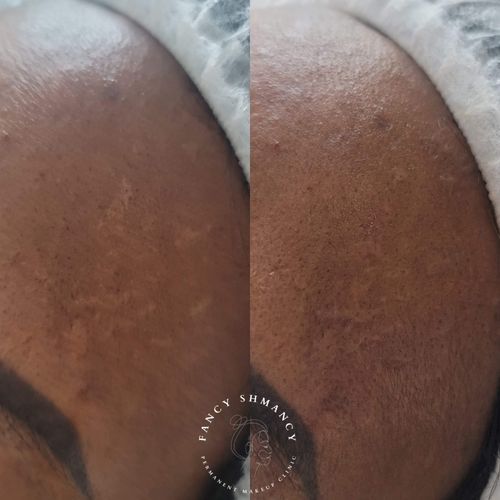
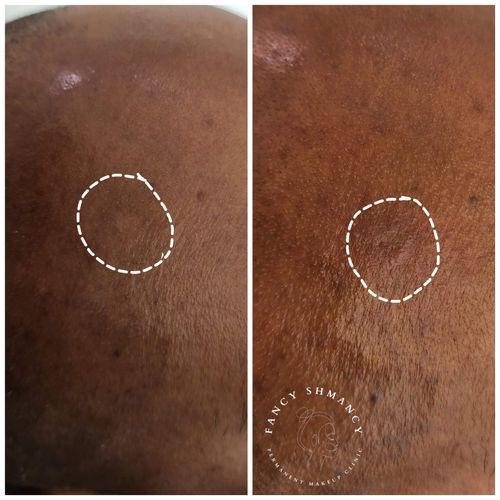
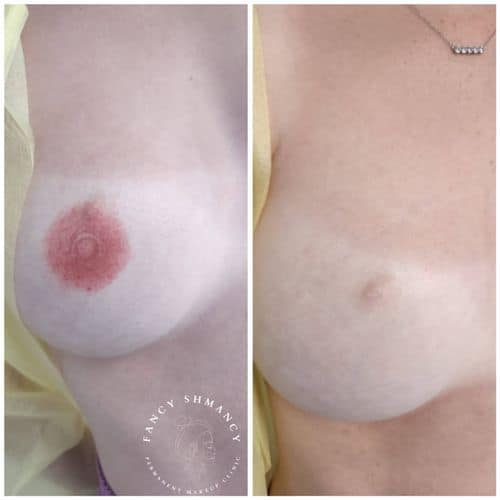
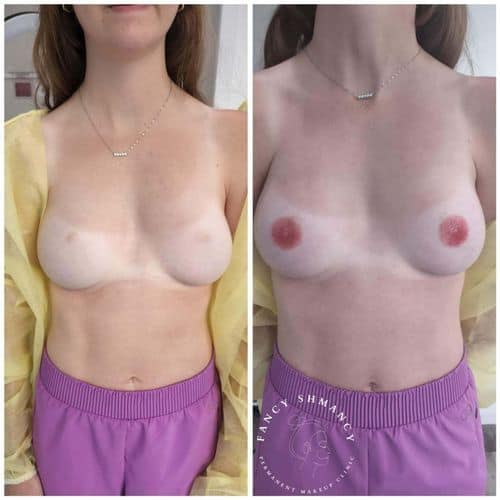
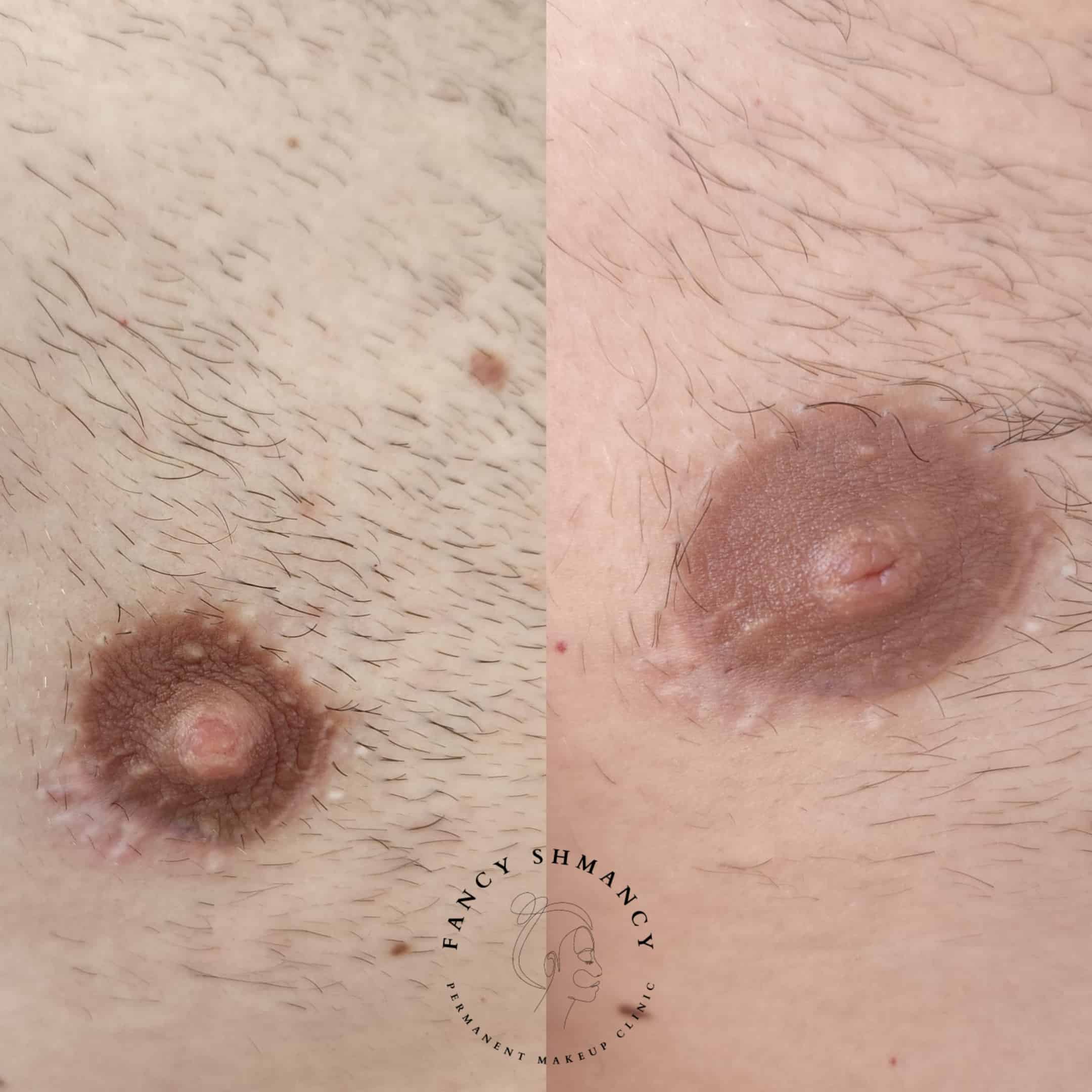
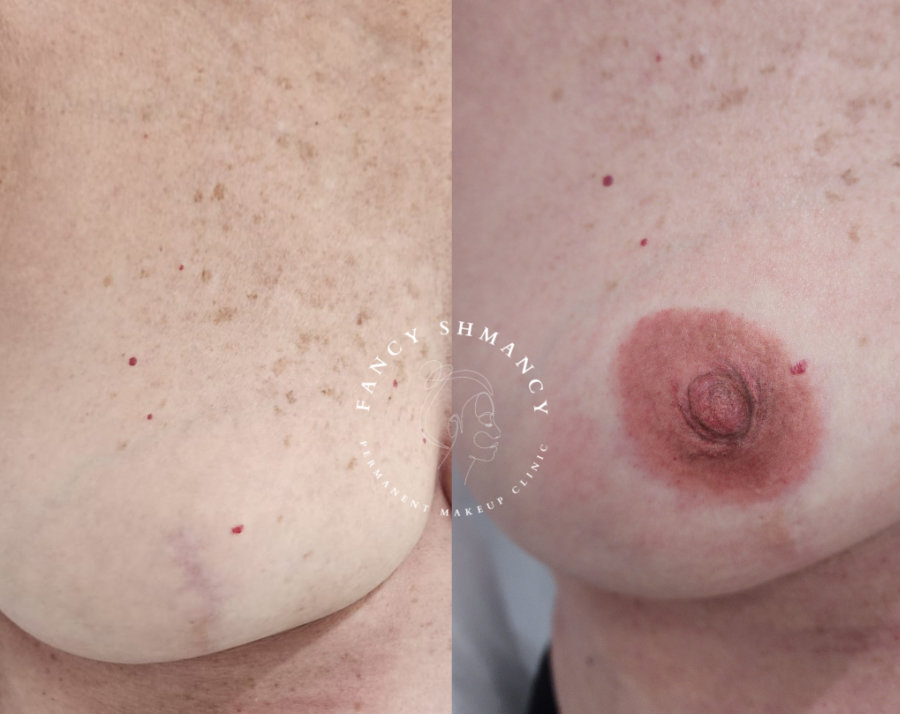
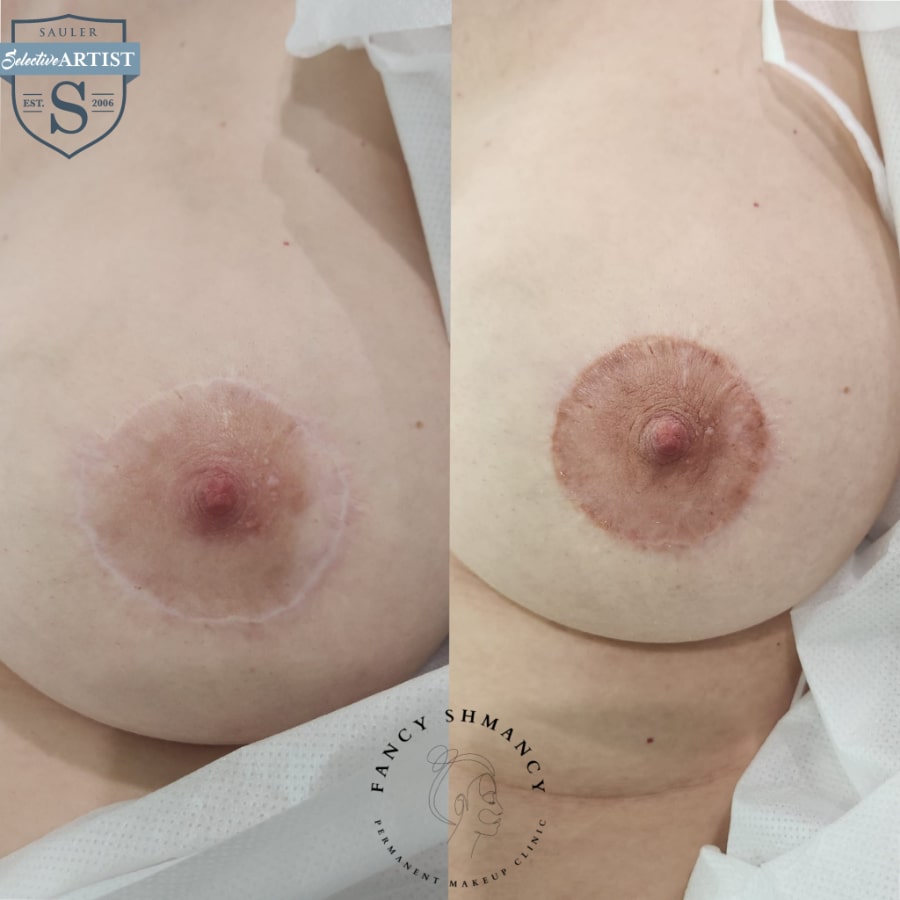
An advanced but very safe technique when the color of the scar is matched to the color of your skin tone and then perfectly camouflaged for smooth and less visible appearance. Almost any scar can be camouflaged if it's at least 18 months old, including scars after an injury, surgery, burns, self-harm, breast reduction, C-section, and many others.
The number of sessions varies and is determined during the consultation.
How much does scar camouflage cost? Pricing starts from $500. Full cost of the procedure will be determined at consultation and is dependent on the number of areas and sessions required.

Skin or scar camouflage is tattooing of the skin with different colors of flesh tone pigments. Its purpose is to disguise a scar or skin area that is missing pigment or color. It is a specialized area of Permanent Cosmetics that falls under the category of Medical or Paramedical Tattooing. This process is also called Corrective Pigment Camouflage (CPC), Corrective Camouflage, Skin Repigmentation, Scar Camouflage, Skin Camouflage, Camouflage Tattooing, and Skin Color Tattooing. The specialist performing these procedures must understand the science behind pigments and the physiology of human skin and tissue.
These procedures require advanced knowledge, training, skills, and experience in Permanent Cosmetics as well as an artistic eye for color and skin tones.
Even if you have a scar or skin abnormality, you may not be a candidate for skin repigmentation. You might be a candidate if you meet the criteria below.
Your scar should be at least 9 to 12 months old with stable color. If it is red or pink or still changing color, the tissue may still be healing. A reputable, experienced medical tattooist will not work prematurely on scar tissue because it may cause further damage to the skin. (Note: If you were under a physician’s care for the condition, ask him/her if you may undergo skin color tattooing before contacting our office.)
Camouflage tattooing cannot disguise or correct extreme changes in skin texture. If your scar or skin area is bumpy or raised, the process may not be effective. (Note: If you have any skin surface irregularity, please consult with a Dermatologist or Plastic Surgeon first to see if any type of medical treatments can first improve the skin texture.)
Dark edges or borders around a scar indicate Post Inflammatory Hyper-pigmentation (PIHP) from the initial trauma or surgery. It is possible that the camouflage tattooing process may increase the hyper-pigmentation and create a wider, darker border. (Note: The risk of this happening is usually greater with darker skin tones.)
If you have any of the following you would not be a candidate for skin color regimentation: Port Wine birthmarks; spider veins; freckles; age spots; under eye circles; hyper-pigmentation; or unstable Vitiligo (not in remission). These skin issues can be improved with non-Micropigmentation medical treatments such as lasers, sclerotherapy, or chemical peels. Please consult with a physician regarding the best course of treatment for these conditions.
Camouflage tattooing will not completely restore skin to the way it looked before it was injured. The process will not “erase” a scar or skin abnormality, so it appears completely gone and the area looks
“perfect” again. It improves color differences to help disguise the scar or anomaly and make it less noticeable to other people. So, you must have realistic expectations. Be sure to discuss this with your technician.
A scar camouflage tattoo will not be a “perfect” match to the surrounding skin color. This is due to the constant changes in skin tones from blood flow, body temperature, and tanning. The pigment in the tattoo will not darken if it is exposed to sunlight or tanning booths, so the tattoo may appear lighter if the surrounding skin tans. When the tattoo color matches tanned skin, it may appear darker once the surrounding tanned skin fades. Therefore, if you spend time outdoors, you will need to adjust your lifestyle or decide to match the tattoo to “winter” or “summer” skin and live with the changes in between.
Camouflage repigmentation is a process, not a one-time “cure.” It is performed on “unhealthy” skin that has been damaged or altered. Its response cannot be predicted—a scar or Vitiligo patch may have areas that absorb pigment, reject it, or both. The area will look dark and red immediately after a tattooing session, and then it takes several weeks to show the healed color (or not). This requires time and patience.
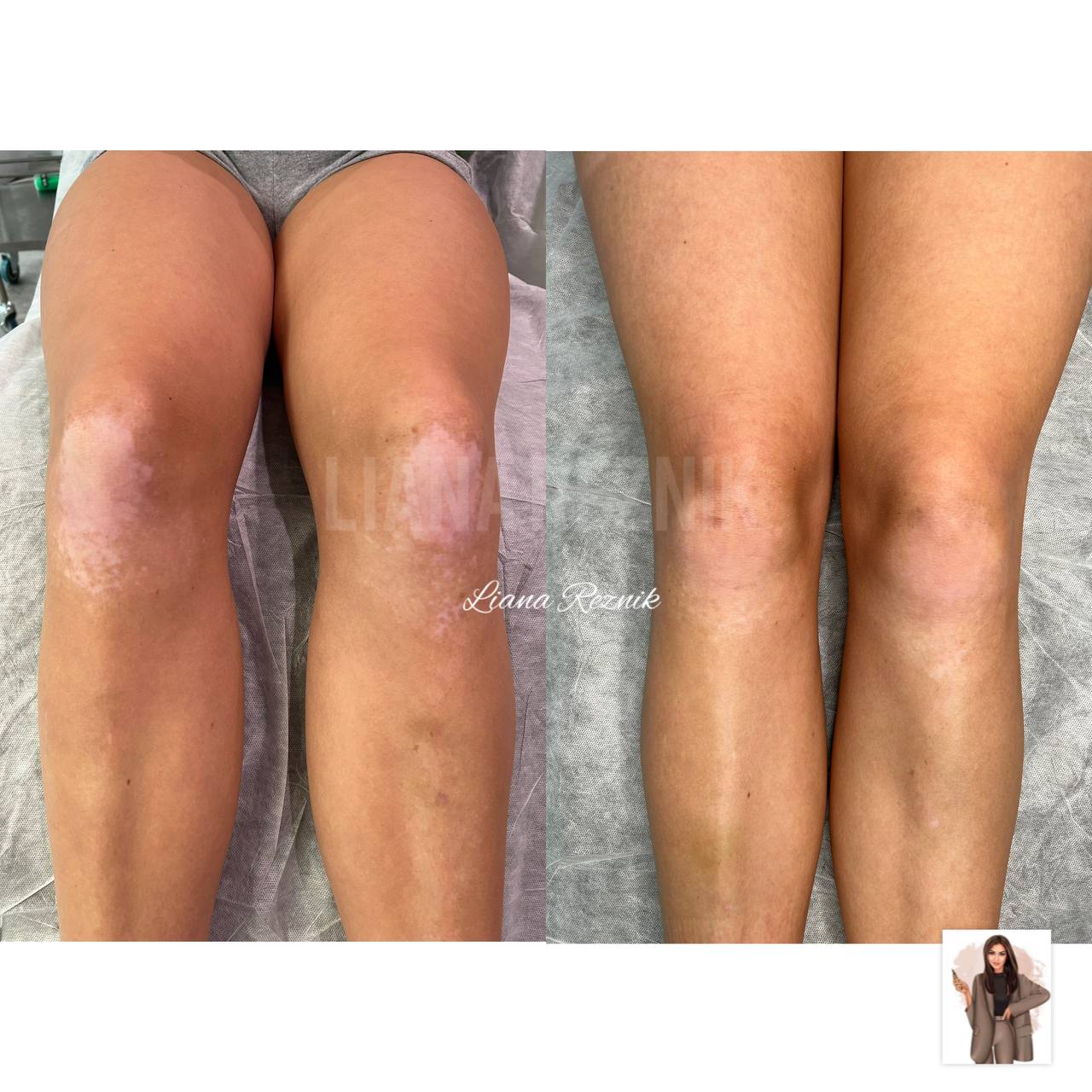
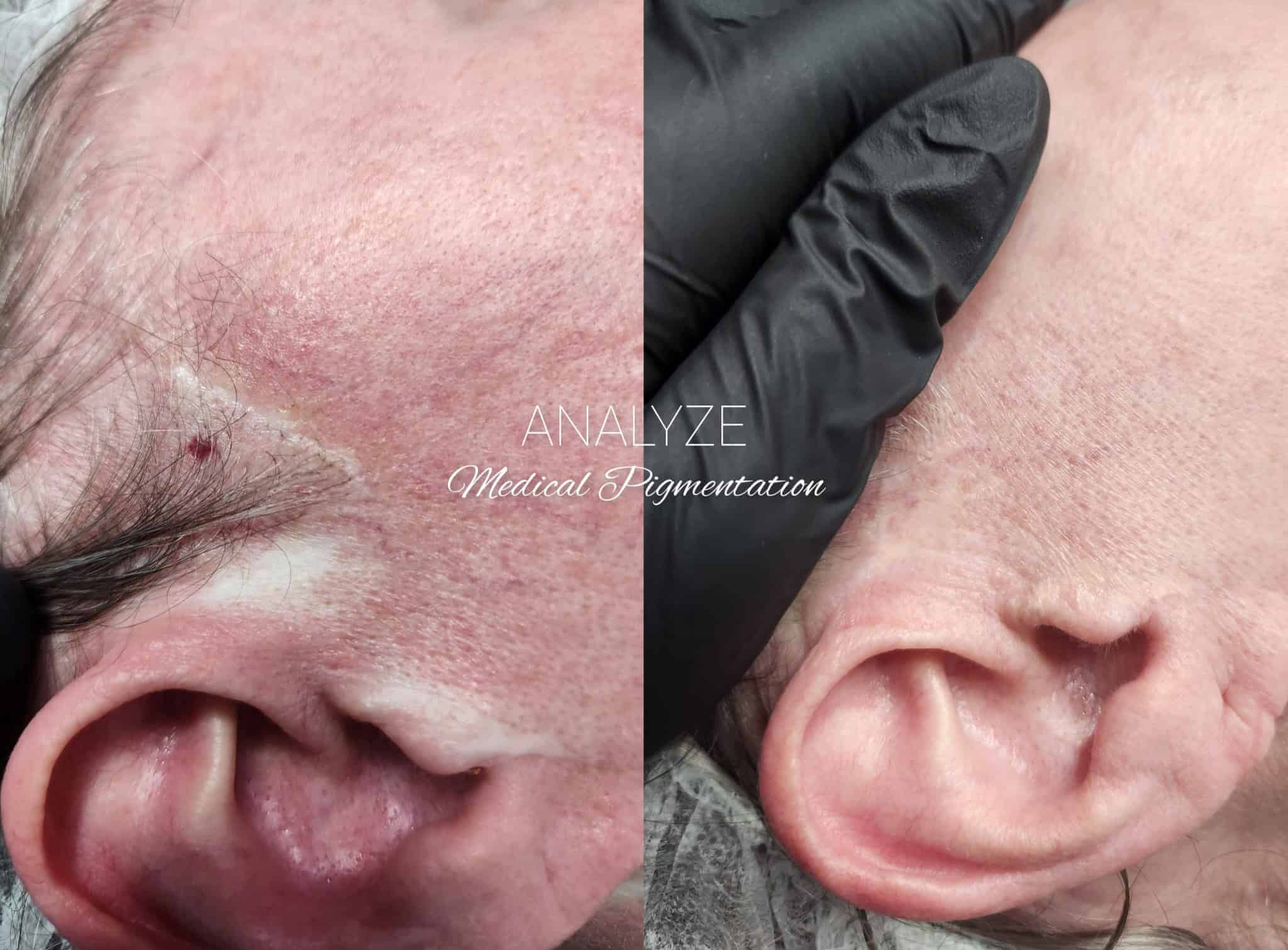
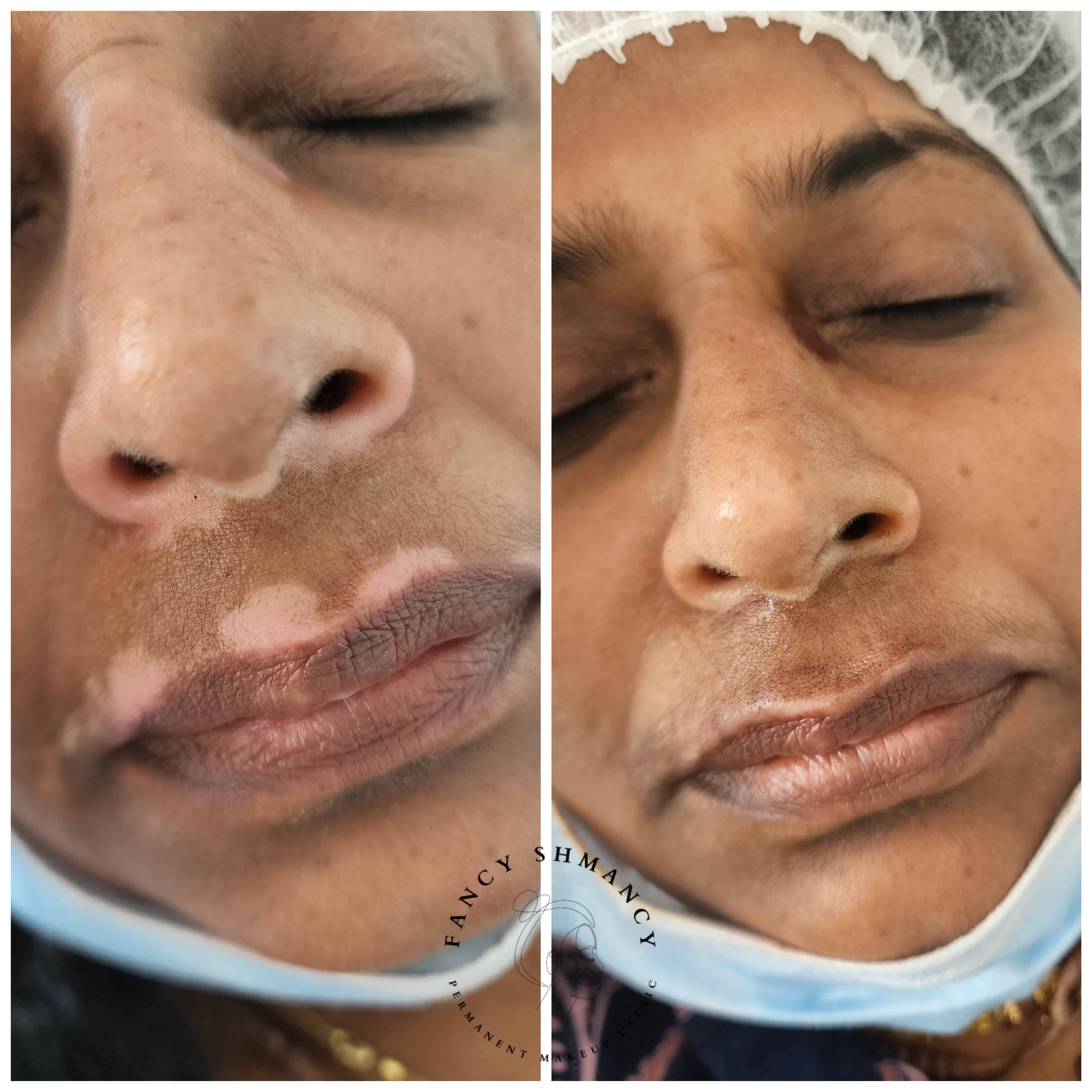
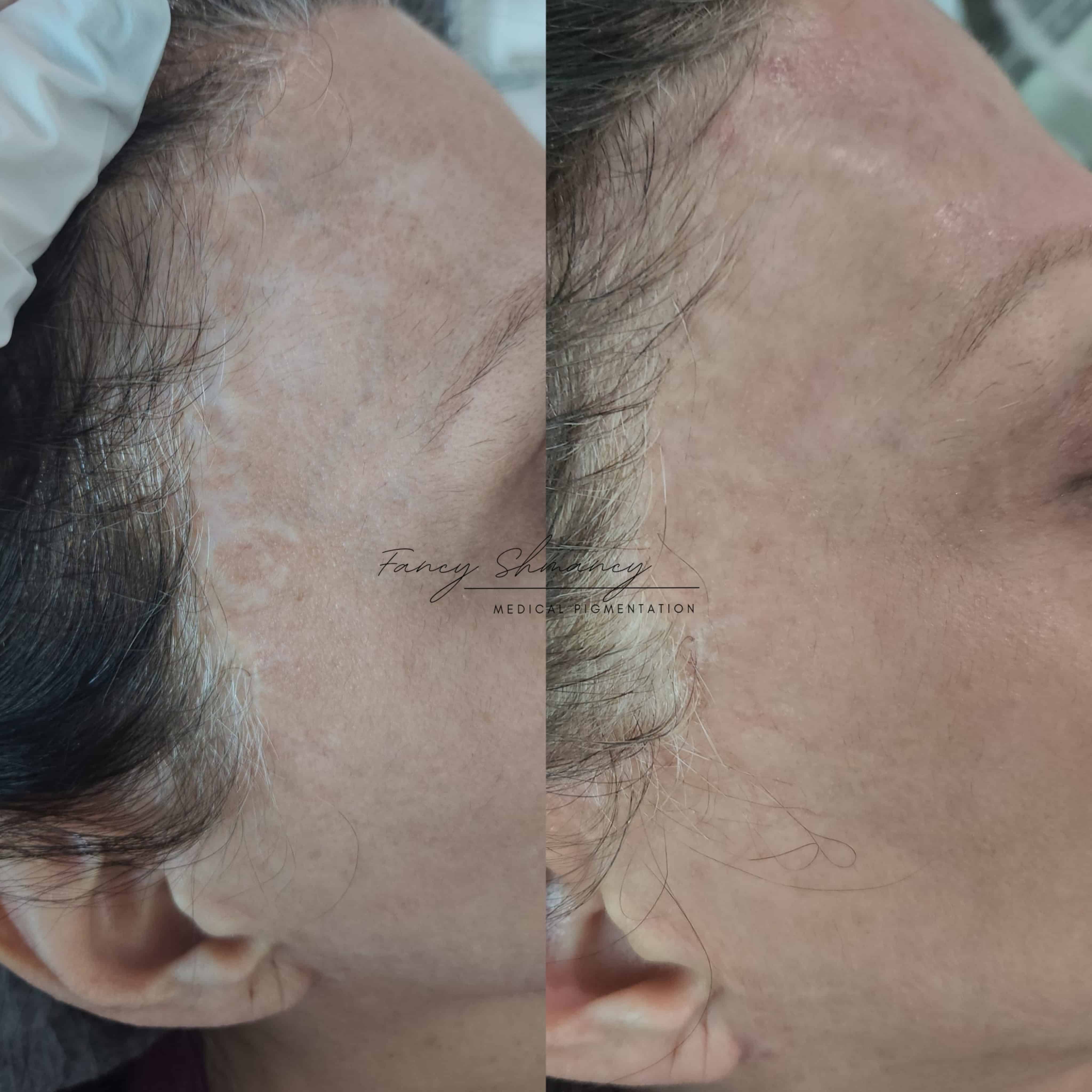
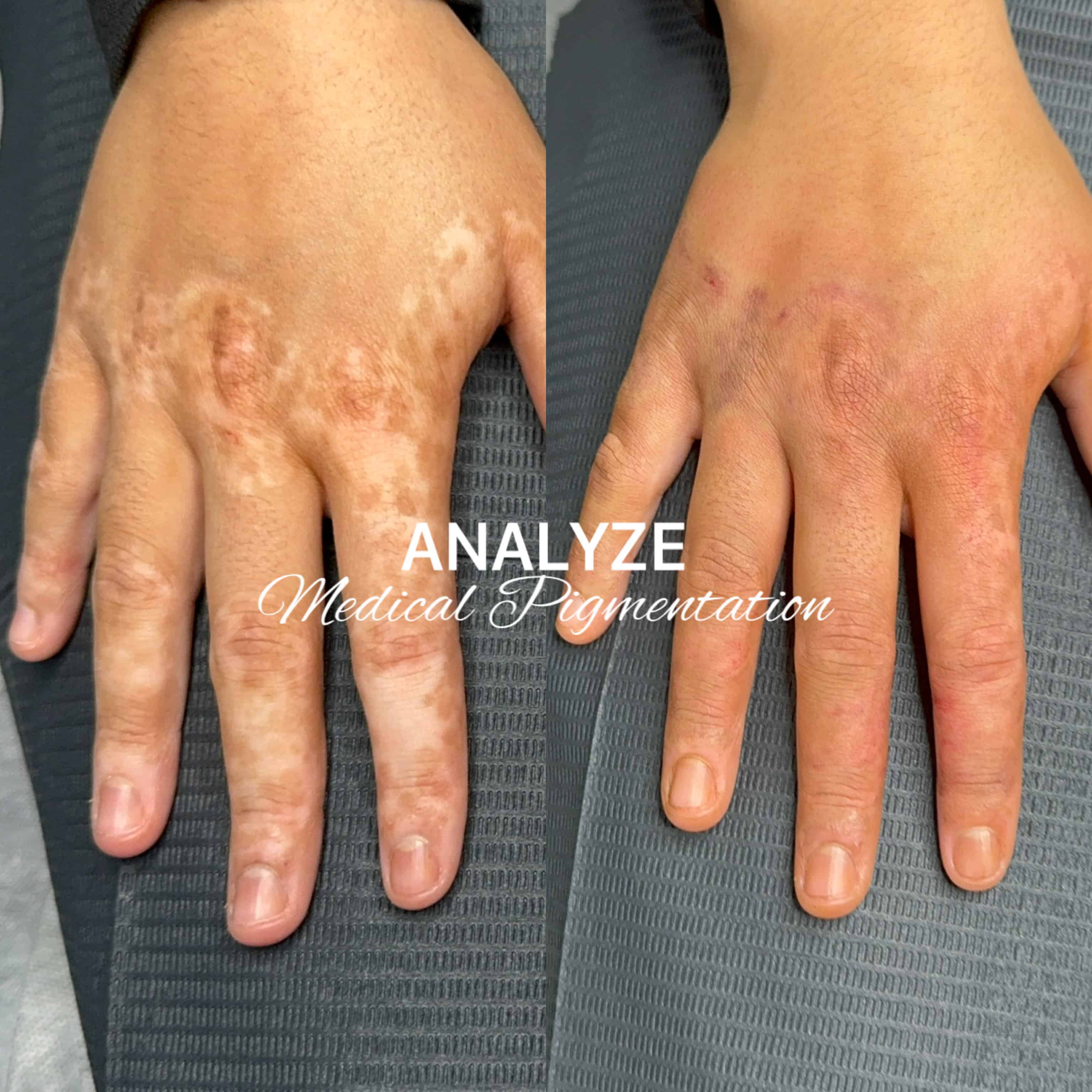
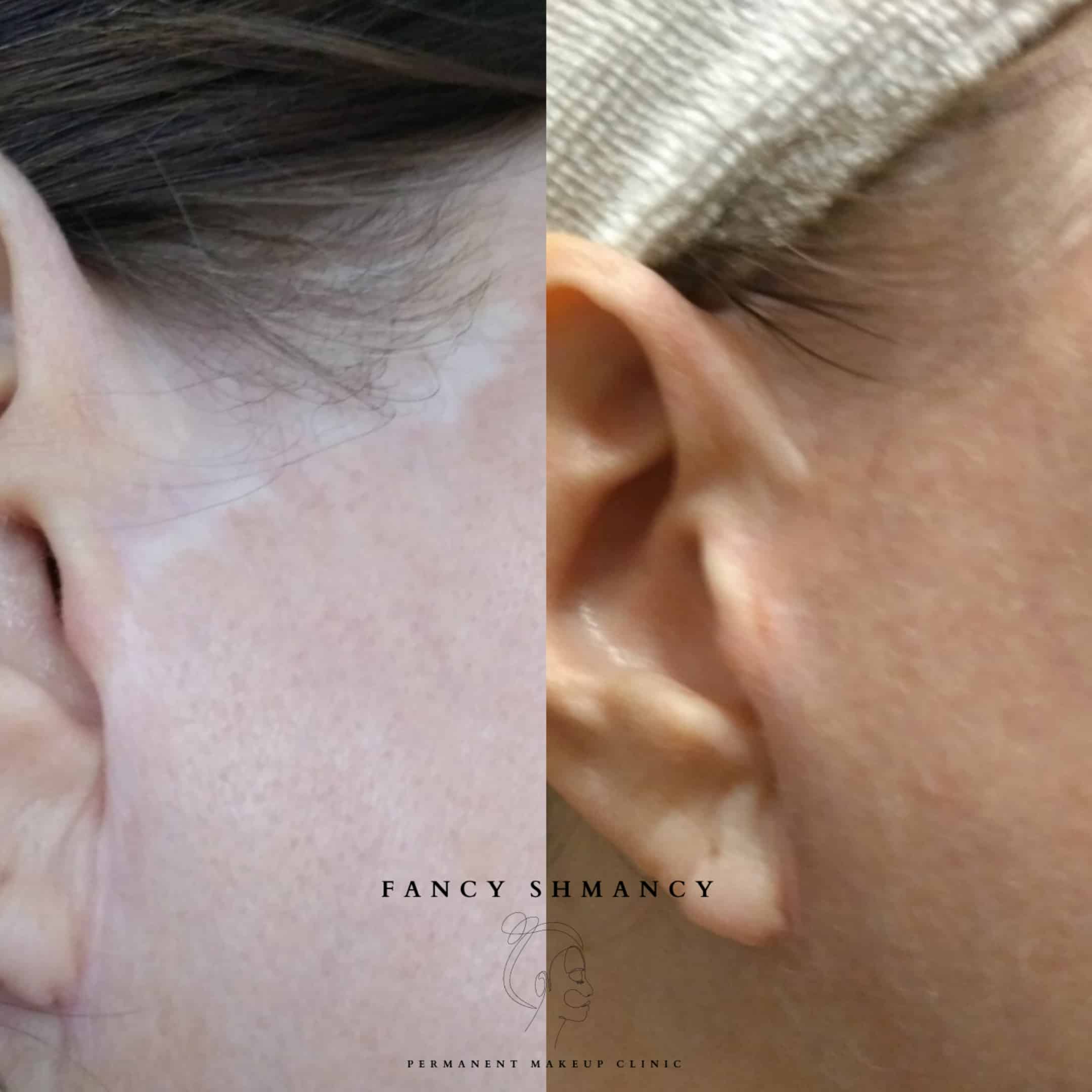
Vitiligo is a skin disease that's causes the skin to lose color and appear lighter. Pigment loss can occur anywhere on our bodies, including our skin, hair (scalp, eyebrows, eyelashes, or beard), inside the mouth, and genitals. The affected skin can lighten or turn completely white. Vitiligo can occur on any skin color and can worsen over time; some people see their vitiligo covers a large area.
There are subtypes of Vitiligo that your Dermatologist may diagnose you with depending on how much vitiligo appears on the body.
Localized: One or a few spots or patches appear, but these are limited to one or a few areas of the body.
Generalized: Most people develop this subtype, which causes scattered patches on the body.
Universal: Most pigment is gone (rare).
Vitiligo is not contagious or life-threatening, but it can be life-altering. Living with vitiligo can cause other symptoms such as low self-esteem and depression.
According to the American Society for Dermatology Surgery, many who suffer from Vitiligo find relief through skin repigmentation with Micropigmentation or Vitiligo Camouflage Tattoo (Paramedical Tattooing). A Certified Permanent Cosmetics Artist trained in Paramedical tattooing and skin repigmentation can accurately match your natural skin tone using special pigments to camouflage affected areas. Repigmentation is safe and virtually pain-free.
A cleft lip is an opening in the upper lip. Normally the lip is formed by the union of two tabs of tissue that grow in from the sides of the face with a central tab that grows down from the lip of the nose. This fusion should take place in the fourth to sixth week of pregnancy. If the union is not complete, the baby is born with a cleft lip. If the cleft extends up into the nostril it is called a “complete cleft lip”.
If the nose is not affected, it is called an “incomplete cleft lip”. The amount of treatment required for a child with a cleft lip depends on how severe the condition is at birth. A small cleft lip may need only one surgical procedure in the first months of life. A child with a complete cleft lip may need several surgical procedures and ongoing care. After all surgical procedures, Micropigmentation restoration camouflage can help create a more symmetrical lip line and fill in with a natural lip color suitable for the client’s skin tone. Our cleft lip procedures include reshaping the lips, camouflaging areas of disproportion, full lip lining, and shading
A lack of symmetry or lip definition is often found in clients with a cleft lip. By Micropigmentation we can reconstruct a new lip contour creating balance, symmetry, and color to the lips.
After cleft lip surgery, a patient is often left with scarring, uneven peaks and without a vermilion line. With Micropigmentation we can recreate the appearance of a natural look around the nose and mouth and define the Cupid’s bow.