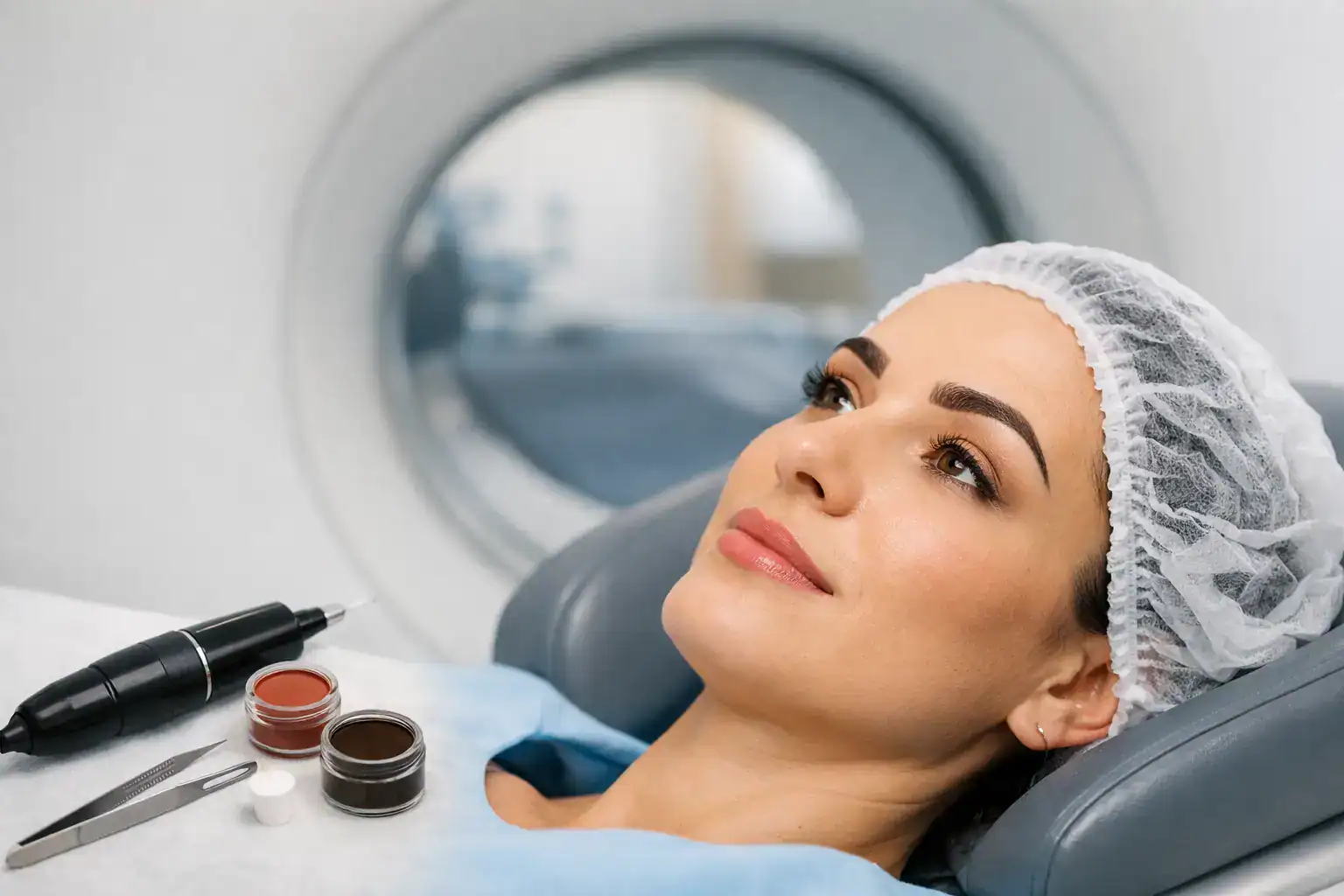
Are Cosmetic Tattoos MRI Safe? What to Know
A permanent brow, soft lip blush, 3D areola tattoo, or scalp micropigmentation treatment can represent a meaningful step toward feeling more like yourself. If an MRI is on your calendar, it is natural to wonder: are cosmetic tattoos MRI safe? For most people, the answer is yes, with thoughtful screening and clear communication with the MRI team.
An MRI does not use radiation. It uses a powerful magnetic field and radiofrequency energy to create detailed images of the body. The concern is not that every cosmetic tattoo is unsafe, but that certain pigments, especially older or unknown pigments, may contain metallic compounds that can occasionally cause warmth, tingling, irritation, or image distortion during a scan.
Are Cosmetic Tattoos MRI Safe for Most Clients?
In the vast majority of cases, people with permanent makeup and paramedical tattoos complete MRI exams without a problem. Cosmetic tattooing is not automatically a reason to cancel, delay, or avoid medically necessary imaging.
Still, an MRI facility needs to know about every tattoo, including permanent eyebrows, eyeliner, lip color, freckle tattoos, scar camouflage, scalp micropigmentation, and areola restoration. Their screening process is designed to identify anything that could affect comfort or image quality. The radiologist and MRI technologist make the final decision based on the location of the tattoo, the body part being scanned, your medical needs, and the information available about the pigment.
This is particularly relevant for clients who received cosmetic tattooing years ago, had a treatment elsewhere, or do not know which pigments were used. Pigment formulations and industry standards have changed over time, so age and product history can matter.
Why an MRI Can Occasionally Affect Tattooed Skin
Some tattoo pigments contain iron oxides or other mineral-based colorants. These ingredients are common in cosmetic and medical pigmentation because they can create soft, natural-looking tones. Yet some formulations may interact with MRI energy.
That interaction is uncommon, and when it happens, it is often mild. A person may feel localized warmth, a prickling sensation, or temporary irritation at the tattoo site. More significant reactions are rare, but any unusual sensation during an MRI should be taken seriously.
Tattoo pigment can also create an artifact on the MRI image. An artifact is an area of distortion or signal change that can make part of the image less clear. Whether this matters depends largely on where the tattoo is located and what the care team needs to evaluate. Eyebrow pigment may be more relevant during an MRI of the head or face than during imaging of a knee, for example. Similarly, scalp micropigmentation could be worth discussing before brain imaging, while areola tattooing may be more relevant for chest or breast-area imaging.
The purpose of disclosure is not to create alarm. It allows the MRI team to plan appropriately and determine whether the tattoo could affect the images they need.
Permanent Makeup Is Different From Temporary Cosmetics
Permanent makeup is placed in the skin, so it should always be reported as a tattoo during MRI screening. Do not assume that a subtle brow, lash enhancement, or neutral lip color does not count. The treatment may look natural, but it is still pigmentation.
Temporary makeup is a separate concern. Some eye shadows, mascaras, foundations, and cosmetic products can include metallic shimmer, iron oxides, or other ingredients that may interfere with imaging or irritate the skin. MRI centers commonly ask patients to arrive with a clean face and without makeup, lotions, hair products, deodorant, or fragrance. Follow the instructions from your specific facility, even if you have worn a product safely before.
A cosmetic tattoo cannot be washed off, which is why honest screening matters. Your technologist can decide whether any additional precautions are appropriate.
What to Tell Your MRI Technologist
Before the scan begins, tell the MRI staff about your cosmetic or paramedical tattoo and be as specific as possible. Share the location, approximate date of treatment, and the type of work you received. If you have pigment records, treatment notes, or aftercare documentation, bring them with you or keep them accessible on your phone.
For example, you might explain that you have healed powder brows completed two years ago, a recent lip blush procedure, or 3D areola tattooing following reconstruction. That level of detail gives the team a clearer starting point than simply saying you have a tattoo.
If you know the pigment brand or color family, mention it, but do not worry if you do not have that information. Your MRI exam should still be discussed with the facility. Never skip a needed scan or try to remove tattoo pigment on your own because of MRI concerns.
During the scan, use the call button if you notice heat, stinging, pulling, burning, or discomfort at the tattooed area. MRI staff can pause the exam and assess what you are feeling. Do not try to push through a concerning sensation just to finish quickly.
Timing Matters After a New Cosmetic Tattoo
A fresh tattooed area is still healing. The skin barrier is recovering, and temporary redness, tenderness, or sensitivity can be part of the normal healing process. For that reason, it is wise to tell both your medical provider and your tattoo artist if you have an MRI planned soon after a procedure.
There is no single waiting period that applies to every person and every MRI. The urgency of the imaging comes first. If the scan is medically necessary, the ordering provider and MRI facility should advise you on next steps. If the scan is elective and your permanent makeup appointment is flexible, scheduling them apart may simply make the experience more comfortable and remove unnecessary variables during healing.
For restorative treatments, this conversation can be especially meaningful. A client recovering from mastectomy, reconstruction, trauma, or surgery may have ongoing imaging needs. Medical pigmentation should fit into the larger care plan, not compete with it. An experienced practitioner will welcome coordination with your physician or surgical team when appropriate.
How Professional Pigment Selection Supports Safer Planning
No artist can promise that any tattoo will be completely MRI risk-free forever, because individual physiology, pigment composition, imaging location, and MRI equipment all play a role. However, professional practice makes a real difference.
A qualified permanent makeup and paramedical tattoo specialist should use reputable pigments, maintain clear treatment records, understand color theory and skin anatomy, and take a complete client history before treatment. Those details support better aesthetic outcomes, but they also help clients answer future medical questions with more confidence.
At Fancy Shmancy, treatment planning is never reduced to choosing a flattering shape or shade. Whether the goal is refined brows or restorative 3D areola tattooing, each procedure should be approached with careful consultation, precise pigment selection, and documentation that respects the client’s long-term health journey.
Be cautious about treatments performed with unknown inks, informal providers, or products that cannot be identified later. This does not mean an MRI will be unsafe, but it can leave you with less information to share at screening.
Common Questions About Cosmetic Tattoos and MRI
Can an MRI pull tattoo pigment out of the skin?
No. MRI magnets do not pull a healed cosmetic tattoo out of the skin. The concern is a possible local sensation or heating effect with certain pigments, not the tattoo being displaced.
Will permanent eyeliner make an MRI unsafe?
Permanent eyeliner should be disclosed, especially for a head or orbital MRI. Most clients can still be scanned safely, but the MRI team should assess the details and monitor for discomfort. Remove all temporary eye makeup before the appointment as instructed.
Can tattoo pigment affect MRI results?
It can, particularly when the tattoo is near the body area being imaged. Pigment-related artifacts may obscure a small area or alter image clarity. The radiologist can determine whether this is likely to affect the diagnostic value of the scan.
Should I get an MRI before permanent makeup?
If you already know that you need a non-urgent MRI of the same area soon, it can be practical to complete the imaging first. This is a scheduling consideration, not a universal rule. Your medical team should guide decisions involving diagnostic timing.
A well-planned cosmetic or restorative tattoo should support your confidence without leaving you uncertain about future care. Keep your treatment information, speak openly during MRI screening, and let your medical team lead whenever imaging is needed. That simple preparation helps you move through both beauty and healing with greater peace of mind.
Author: Liana Reznik