Scalp Micropigmentation for Women’s Hair Loss
Hair loss can change more than a hairstyle. A widening part, visible scalp at the crown, or thinning along the hairline can make getting ready feel unexpectedly stressful. Scalp micropigmentation for women hair loss offers a refined way to restore the appearance of density without pretending to be a hair-growth treatment. With carefully placed medical-grade pigment, it can soften the contrast between hair and scalp so hair appears fuller, coverage looks more even, and your reflection feels more like you.
What scalp micropigmentation can do for women
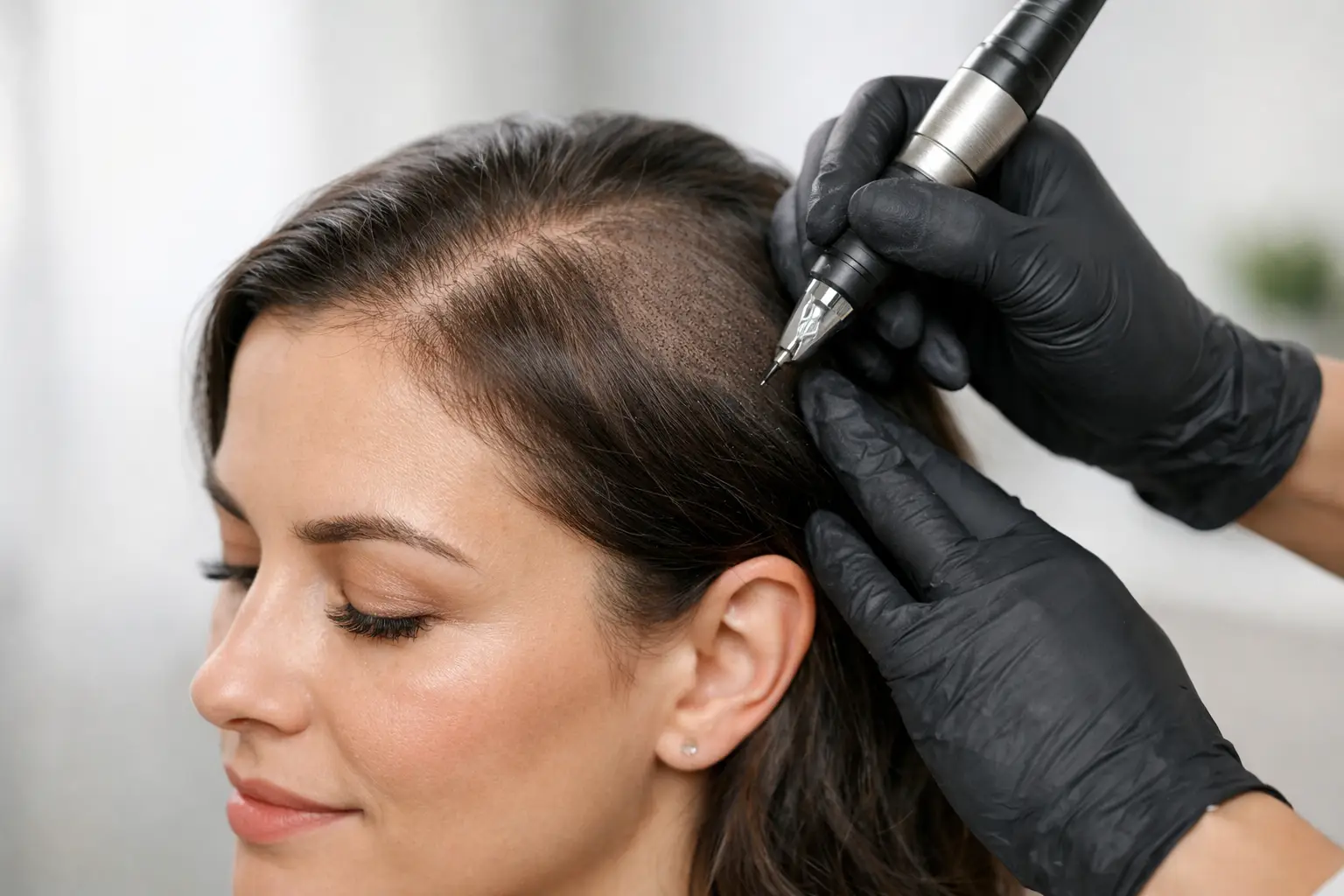
Scalp micropigmentation, often called SMP, is a specialized form of cosmetic and paramedical tattooing. A trained practitioner uses tiny, layered pigment deposits to recreate the visual effect of hair follicles and shadow at the scalp. For women, the goal is usually not a closely shaved-hair appearance. It is subtle scalp shading that reduces scalp show-through beneath existing hair.
The treatment can be particularly effective for a widened part, diffuse thinning at the crown, thinning near the temples, or areas of reduced density around a scar. It may also complement other approaches a client is already using, such as hair fibers, topical treatments, extensions, or a physician-directed hair-loss plan. SMP does not regrow hair or stop the underlying cause of shedding. Its role is visual camouflage, and that distinction matters when setting honest, satisfying expectations.
Results are highly individualized. The most natural work is not the darkest work. It is the work that respects your hair color, scalp tone, density pattern, texture, and the way you actually wear your hair.
Why women need a different SMP approach
Women’s hair loss does not follow one pattern. Some clients see broad, gradual thinning through the top of the scalp. Others notice a part that keeps getting wider, postpartum shedding that does not feel fully resolved, localized loss after traction, or scars from surgery or injury. The right pigmentation plan begins with understanding the visible concern, not applying a one-size-fits-all technique.
A women’s SMP treatment often requires especially soft diffusion. Instead of creating a hard, uniform field of dots, the artist builds tonal depth gradually, concentrating pigment where the scalp is most visible while allowing the result to fade naturally into denser hair. The part line needs particular care. If it is treated too heavily, it can look flat or obvious. If it is treated thoughtfully, it can make the surrounding hair appear noticeably more substantial.
Skin tone is equally important. An experienced provider considers undertones, Fitzpatrick skin type, scalp condition, and the likely long-term behavior of pigment in the skin. Dark hair does not automatically call for black pigment, and a light scalp does not automatically need a pale result. Color selection is a careful balancing act designed to create believable shadow rather than a visible tattoo.
Who may be a good candidate for scalp micropigmentation for women’s hair loss?
Many women with stable or gradually progressing thinning can be good candidates, provided their scalp is healthy and they understand that SMP is camouflage rather than restoration of the hair follicle. It can be a meaningful option for clients who want less daily dependence on concealers or who feel that hair fibers no longer provide the confidence they once did.
It may also be considered for certain scars once they are fully healed and medically cleared. Scar tissue can behave differently from surrounding skin, so this work should be approached with patience, conservative pigment placement, and realistic expectations about retention.
A consultation is especially important if hair loss is sudden, patchy, accompanied by irritation, scaling, tenderness, or active inflammation. In those cases, a dermatologist or medical provider should evaluate the scalp first. Autoimmune hair loss, active scalp conditions, recent chemotherapy, and certain medications can affect timing, treatment planning, and pigment retention. A careful practitioner knows when to proceed and when a medical referral is the more responsible next step.
What the treatment process feels like
The best results begin before the first pigment deposit. During a thorough consultation, your provider should assess the pattern of thinning, discuss your health history, examine the scalp, review your desired level of coverage, and explain what the procedure can realistically achieve. Photos of your usual part and hairstyle can be helpful because the treatment should support your real life, not a temporary styling choice.
Treatment is typically completed over multiple sessions. Building color slowly gives the artist room to evaluate healing, make adjustments, and prevent an overdone appearance. At the first appointment, the work is often intentionally conservative. Subsequent sessions add density and refinement only where the scalp still shows through after healing.
Most clients describe the sensation as manageable, similar to light scratching or a series of tiny pinches. Appointment length depends on the size and complexity of the area being treated. A subtle part-line enhancement may require less time than diffuse crown coverage or scar camouflage.
Pre-care and aftercare are not small details. You may be asked to avoid certain products, excessive sun exposure, or activities that can irritate the scalp before treatment. Afterward, the area needs time to heal without heavy sweating, soaking, scratching, or premature product use. Following those instructions protects both the skin and the clarity of the final result.
The difference between coverage and an obvious tattoo
Natural-looking SMP is an exercise in restraint. It should not read as ink when someone is standing beside you in daylight. It should read as less visible scalp, a softer part, and hair that appears more plentiful where it once looked sparse.
That level of realism comes from artistic judgment and clinical precision. Pigment placement must be consistent but not mechanical. Density should vary as real hair does. The shade should work with your roots as they grow out, not only with freshly colored hair. A practitioner must also understand how pigment heals in different skin types and when to stop adding color.
At Fancy Shmancy, scalp micropigmentation is approached as restorative medical pigmentation, with individualized planning rather than a preset pattern. That attention is particularly valuable for women who want meaningful coverage while keeping the result private, polished, and believable.
Safety, hygiene, and choosing the right provider
Scalp micropigmentation is a skin procedure, so qualifications and hygiene deserve the same attention you would give any aesthetic or paramedical treatment. Look for a provider who can clearly explain their training, sanitation standards, pigments, aftercare process, and experience working with women’s thinning patterns. Before-and-after photos should show healed work in natural light, not only freshly treated results.
You should also feel comfortable asking direct questions. How will the pigment be matched to your hair and scalp? How many sessions are likely? What happens if your hair loss changes over time? How does the provider work on scars or sensitive skin? A trustworthy consultation makes room for those questions and never pressures you into a treatment that is not appropriate.
How long results last
SMP is considered long-lasting, but it is not always permanent in the way a traditional body tattoo may be. Pigment can soften over time because of skin renewal, sun exposure, scalp products, immune response, and lifestyle factors. Many clients choose a refresh appointment after several years to restore depth and maintain a balanced appearance.
The gradual nature of fading can be an advantage. If your hair color changes, your density shifts, or your style evolves, a refresh plan can be adjusted to match. Protecting the scalp from direct sun and following professional aftercare can help preserve the integrity of the color.
Hair loss can ask you to make peace with changes you never invited. A thoughtfully designed SMP treatment does not demand that you hide from those changes. It gives you another way to feel polished, comfortable, and confidently present in your own skin.
Author: Liana Reznik