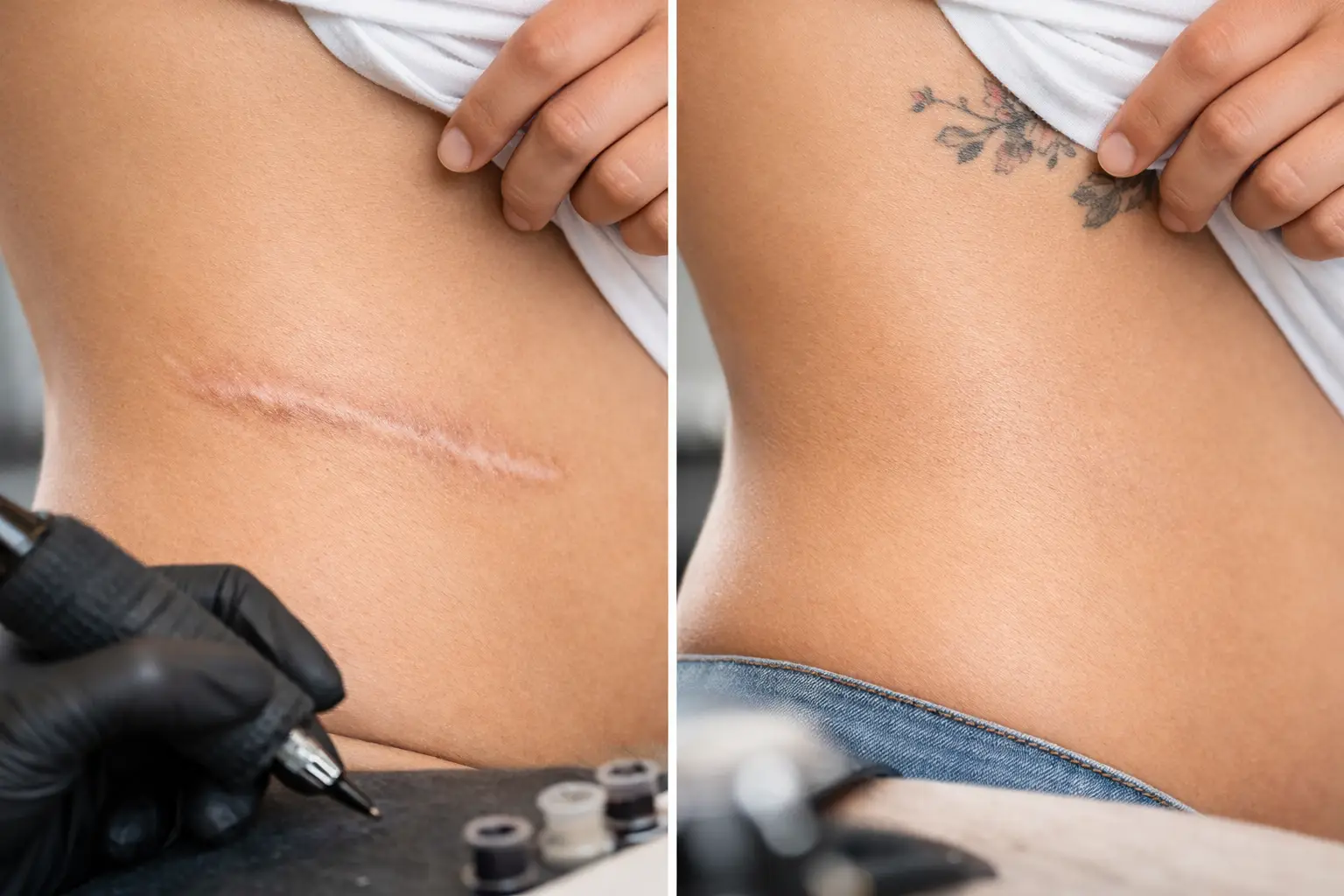
Scar Camouflage Tattoo for Surgery Scars
A scar may represent survival, a long-awaited procedure, or a chapter you are ready to see less prominently in the mirror. A scar camouflage tattoo for surgery scars is not about erasing that story. It is a highly personalized form of medical pigmentation designed to soften the contrast between a healed scar and the surrounding skin, helping the area look more visually continuous and allowing you to feel more at ease in your body.
For the right candidate, the change can be deeply meaningful. But successful scar camouflage depends on much more than selecting a close color match. Scar tissue behaves differently from unscarred skin, so timing, skin assessment, pigment selection, and a skilled hand all matter.
What a scar camouflage tattoo can do
Scar camouflage, sometimes called skin-toned paramedical tattooing, uses carefully blended pigments to reduce the visibility of a light, flat scar. The goal is not to make a scar disappear completely. Instead, the treatment minimizes the difference in color so the eye is less immediately drawn to it.
This approach may be considered for scars from breast surgery, tummy tucks, C-sections, joint replacements, body contouring, facelifts, injuries, or other surgical procedures. It can also complement restorative work following breast reconstruction, including 3D areola and nipple tattooing.
Results are most convincing when they respect the natural variation in real skin. Skin is not one flat shade. It contains undertones, warmth, coolness, freckles, veins, and changes in depth of color. An experienced medical pigmentation specialist assesses those details and builds pigment gradually rather than applying one generic beige tone.
Is a scar camouflage tattoo for surgery scars right for you?
The best candidates generally have scars that are fully healed, stable, and lighter than the surrounding skin. In many cases, that means waiting at least 12 months after surgery, though healing timelines vary. Your surgeon’s guidance should always take priority, especially after reconstructive, cancer-related, or medically complex procedures.
A mature scar is usually no longer red, inflamed, tender, actively changing, or raised. It should not be open, irritated, or under tension. Scar camouflage does not treat the underlying scar tissue itself. It is a color-correction procedure, so it cannot flatten a raised scar, release tightness, or correct a wide indentation.
Not every scar is suitable for pigment camouflage. Darker scars, red or purple scars, hypertrophic scars, keloids, and scars with an unstable texture may need a different approach first. Depending on the concern, that may include medical care, scar revision, laser treatment, microneedling, or inkless scar revision. In some situations, camouflage is still possible later. In others, it may not be the safest or most predictable choice.
Skin tone also affects planning. Fitzpatrick skin type, natural undertones, tanning habits, and the location of the scar all influence how pigment may heal. A thoughtful consultation should never promise that every scar can be made invisible. It should clarify what is realistic for your skin and give you room to decide with confidence.
Why scar maturity matters
Tattooing an immature scar can create unpredictable healing and uneven pigment retention. Fresh scar tissue is still remodeling, and its color and texture may continue to change for months. Introducing pigment too early can compromise the result and may interfere with the careful recovery plan established by your medical provider.
Patience is part of the treatment. Waiting until the scar is ready gives the artist a more stable canvas and gives you a better chance of achieving a natural-looking blend.
The consultation is where the real work begins
A high-quality result starts well before the appointment. During a consultation, the area is evaluated for texture, thickness, color, sensitivity, circulation, and the way it sits against nearby skin. Your medical history, surgery date, medications, history of keloids, and any previous scar treatments should be discussed openly.
At Fancy Shmancy, this planning is approached as both an artistic and clinical process. A specialist considers how the scar will look in natural light, how your skin changes across the body, and whether treatment should be staged over more than one session. For clients recovering from breast surgery, plastic surgery, or trauma, privacy and clear communication are central to the experience.
A patch test may be recommended, particularly for clients with sensitive skin, a history of pigment reactions, or a complex medical background. Your artist may also request medical clearance. This is not an obstacle to treatment. It is a safeguard that respects both your health and your results.
What happens during treatment
The skin is cleansed and prepared, then custom pigments are mixed to complement the surrounding area. The technique is usually gentler and more gradual than a decorative tattoo. Pigment is placed strategically in the scar and sometimes lightly around its edges to avoid a noticeable border.
Most clients describe manageable discomfort, although sensation varies significantly by body area and scar history. Areas with altered nerve sensation may feel less sensitive, while others can be more tender. A topical numbing option may be discussed when appropriate.
One session is rarely the final word. Scar tissue can absorb pigment unevenly, and the true color becomes clearer only after healing. A second session is common and often necessary to refine the tone, improve coverage, or adjust warmth and depth. This measured approach is preferable to placing too much pigment at the first appointment.
Healing and aftercare protect the result
Immediately after treatment, the area may look darker or warmer than the healed result. Mild redness, tenderness, dryness, or flaking can occur. As the skin heals, pigment may appear to fade before settling into a softer, more natural-looking shade.
Your aftercare instructions should be specific to the location and your skin. In general, keep the area clean, avoid picking or exfoliating, and protect it from friction while it heals. Swimming, intense sweating, saunas, and direct sun exposure are often restricted for a period after treatment. Sun protection remains essential long term because tanning can increase the contrast between your natural skin and the camouflaged area.
It is also wise to plan around vacations, workouts, and events. The treatment is designed to support confidence, but it should not be rushed for a deadline. Giving the skin the time it needs is part of honoring your investment.
What results should look like in real life
The most beautiful scar camouflage results are often subtle. In ordinary light, the scar may blend more quietly into the surrounding skin. You may notice that you think about it less when getting dressed, standing at the beach, or looking at yourself after a shower.
Close inspection can still reveal texture, especially if the scar is raised, depressed, or wide. This is normal. Pigment changes color contrast, not the physical structure of skin. Honest expectations are not a limitation of the service. They are the foundation of a result that feels trustworthy.
Longevity varies by skin, body placement, sun exposure, metabolism, and lifestyle. Color may soften over time, and a touch-up can help maintain balance as your skin naturally changes. The right provider will discuss maintenance before treatment, not after.
Choosing a provider with medical pigmentation experience
A beautiful color match is only one part of scar work. Look for a practitioner with specialized paramedical tattooing experience, strong knowledge of skin anatomy, rigorous sanitation standards, and a portfolio that shows healed results across a range of skin tones. Ask how they determine candidacy, how they handle scars that do not retain pigment evenly, and when they involve a surgeon or physician.
You deserve a provider who listens without minimizing what the scar means to you. Whether your procedure was elective, necessary, life-saving, or tied to an accident, your reasons for seeking camouflage are personal and valid. The best next step is a private consultation where your scar, your skin, and your goals are treated with the care they deserve.
Author: Liana Reznik