Areola Tattoo Versus Reconstruction Options
For many people, the final stage of breast reconstruction is not about changing the breast itself. It is about seeing a familiar, complete-looking silhouette again. When considering areola tattoo versus reconstruction, there is no single right answer. Some clients want physical nipple projection; others prefer a realistic 3D areola and nipple tattoo without another surgery. Many choose a combination of both.
The best path depends on your anatomy, surgical history, healing, personal comfort, and the result that feels most like you. A thoughtful conversation with your plastic surgeon and a qualified medical pigmentation specialist can turn an overwhelming decision into a clear, personal plan.
Areola Tattoo Versus Reconstruction: The Core Difference
Nipple-areola reconstruction is a surgical procedure. A plastic surgeon uses local tissue, grafting, or another surgical technique to create physical nipple projection. After the area heals, pigment may be added later through tattooing to restore areola color and detail.
A 3D areola tattoo is a paramedical tattooing treatment that creates the illusion of a nipple and areola through customized color, highlights, shadows, texture, and placement. The skin remains flat, but skilled pigmentation can create remarkable depth when viewed from a normal standing distance.
Neither option is automatically more “complete” than the other. Surgical reconstruction restores a raised form. Medical tattooing restores visual realism, color, and balance. What matters is which result supports your comfort in your body and aligns with what you want from the next stage of healing.
What Nipple Reconstruction Can Offer
Surgical nipple reconstruction may be appealing if having a physical nipple projection matters deeply to you. For some clients, that tactile dimension feels meaningful after mastectomy and reconstruction. It can also create a foundation that a 3D areola tattoo can later enhance with natural-looking pigment.
The trade-off is that it is another procedure. Even when performed as an outpatient treatment, surgery involves healing time, wound care, and the possibility that projection will soften or flatten over time. Scar tissue, skin quality, prior radiation, implant placement, and blood supply can all influence what is medically appropriate and how the result heals.
A reconstructed nipple also does not restore sensation or the function of the original nipple. That can be a difficult reality to hear, but understanding it before making a choice helps set expectations with compassion and clarity.
When surgical reconstruction may make sense
Surgery may be a strong fit when your plastic surgeon feels your tissue can safely support it and you value physical projection more than avoiding another procedure. It may also be appropriate when you are already planning a revision surgery and prefer to coordinate the next step with your surgical care.
For others, especially those who have undergone radiation, multiple surgeries, or complicated healing, the added recovery may not feel worthwhile. Your surgeon can explain the risks specific to your reconstruction rather than offering a one-size-fits-all recommendation.
What a 3D Areola Tattoo Can Offer
A 3D areola and nipple tattoo is designed for visual restoration. Rather than using a standard pigment shade or circular stencil, the artist studies the breast shape, scars, skin tone, undertones, texture, and, when applicable, the remaining natural areola. The goal is to create dimension that belongs naturally on your body.
For clients with one remaining nipple, the tattoo can be tailored to closely match its size, color, position, border softness, and subtle details. For bilateral reconstruction, both areolas can be designed for proportion and symmetry while still avoiding an overly uniform or artificial look.
This option does not require surgical incisions or create physical projection. That is a limitation for someone who wants a raised nipple. For someone who wants a beautiful visual result with less downtime, it can be a powerful alternative.
At Fancy Shmancy, 3D areola work is approached as restorative medical pigmentation, not a cosmetic tattoo service. The artistry matters, but so do skin anatomy, scar behavior, Fitzpatrick skin type, pigment selection, sanitation, and an understanding of how reconstructed skin may respond.
Why the “3D” effect matters
The realistic effect comes from controlled contrast, not from dark pigment alone. Gentle shadowing can make an areola appear softly recessed or naturally contoured. Carefully placed highlights can suggest nipple projection. Fine texture and irregular edges keep the result from looking stamped on.
A qualified artist also considers how pigment will settle during healing. Fresh tattooing can appear darker or warmer than its healed result, particularly in scar tissue. Conservative layering and a planned touch-up appointment often produce a more believable long-term outcome than trying to achieve maximum intensity in one session.
Can You Combine Reconstruction and Tattooing?
Yes. Combining surgical nipple reconstruction with areola tattooing is common. Once the surgical site is fully healed and your medical team approves treatment, tattooing can add color, dimension, and visual refinement around the reconstructed nipple.
The reverse is also true in a practical sense: you can choose a 3D tattoo first as your final reconstruction step and decide later that you are satisfied without surgical nipple creation. This is one reason some clients prefer to begin with tattooing. It allows them to see a finished-looking breast without committing to another operation.
Timing should never be rushed. In many cases, clients wait until breast reconstruction, revisions, radiation treatment, and scar maturation are complete. Your surgeon’s clearance is essential, particularly after cancer treatment or when there are healing concerns. A consultation with a medical tattoo specialist can then assess scar stability, skin integrity, and the best pigmentation plan.
How to Decide Which Option Feels Right
Start with the question beneath the procedure: what would help you feel most comfortable in your body? There is no prize for choosing the most surgical route or the least invasive route. The right decision is the one that honors your health, priorities, and readiness.
Consider whether physical projection is important to you in everyday life. Think about your relationship with additional surgery, anesthesia, recovery, and scar care. Ask whether you want a visual finishing touch only, or whether a tactile change feels essential. If you have had radiation or extensive scarring, ask your surgical team how those factors affect your choices.
It can also help to think about clothing and intimacy without judgment. Some people want projection under fitted clothing. Others prefer a smooth result and feel fully restored once natural-looking areola color is present. Both experiences are valid.
Questions to Bring to Your Consultation
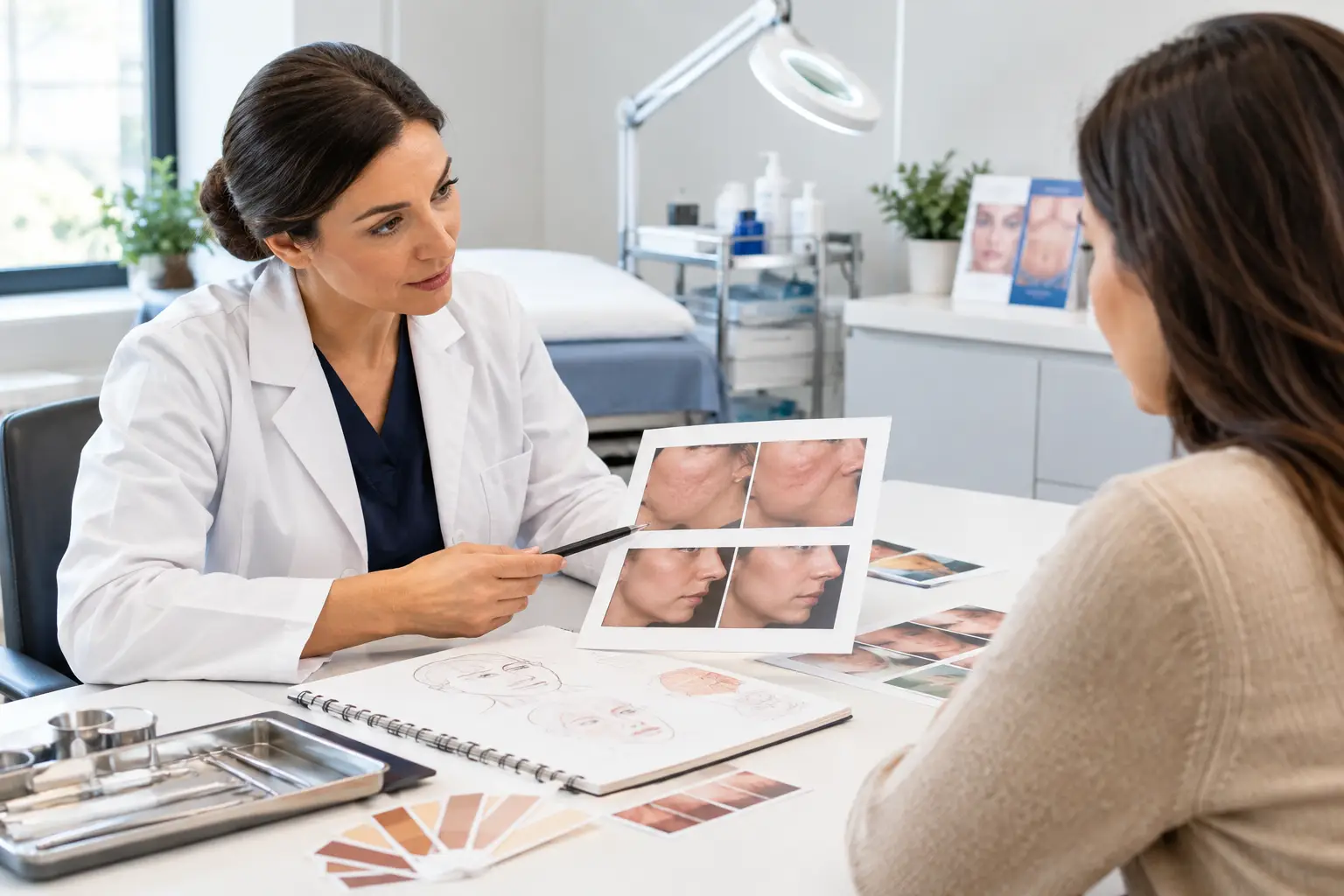
A useful consultation should leave you more informed, not pressured. Ask your plastic surgeon whether nipple reconstruction is medically suitable for your tissue and what healing, scarring, and long-term changes to expect. Ask a paramedical tattoo artist to show healed examples of work on reconstructed breasts, not only fresh treatment photos.
You may also ask how pigment is customized for your skin tone, whether scar tissue requires a different approach, how many sessions are likely, and what aftercare will involve. If you are matching one natural areola, ask how the artist evaluates color and placement. Precision is especially meaningful in restorative work because small details can change the overall sense of balance.
Be cautious of anyone who promises perfect symmetry or guarantees an identical match. Bodies are not perfectly symmetrical, and reconstructed tissue heals in individual ways. A skilled specialist aims for harmony, realism, and a result that feels right on your body.
Healing, Longevity, and Touch-Ups
Both options require patience. Surgical reconstruction must heal before tattooing can be considered. After a 3D areola tattoo, the area may look darker at first and can appear uneven while it heals. Following pre-care and aftercare instructions helps protect the skin and supports even pigment retention.
Areola tattooing is long-lasting, but it is not necessarily permanent in the sense of never changing. Pigment can soften over time, and reconstructed or scarred skin may retain color differently than untouched skin. A touch-up may be recommended after the initial healing period, with future refresh appointments based on your preferences and how the color ages.
The final decision does not need to happen all at once. You are allowed to pause, ask for another consultation, and choose the option that feels like a gentle next step rather than another demand on your body. For many clients, restoring the areola is not about returning to who they were before. It is about recognizing themselves with confidence again.
Author: Liana Reznik