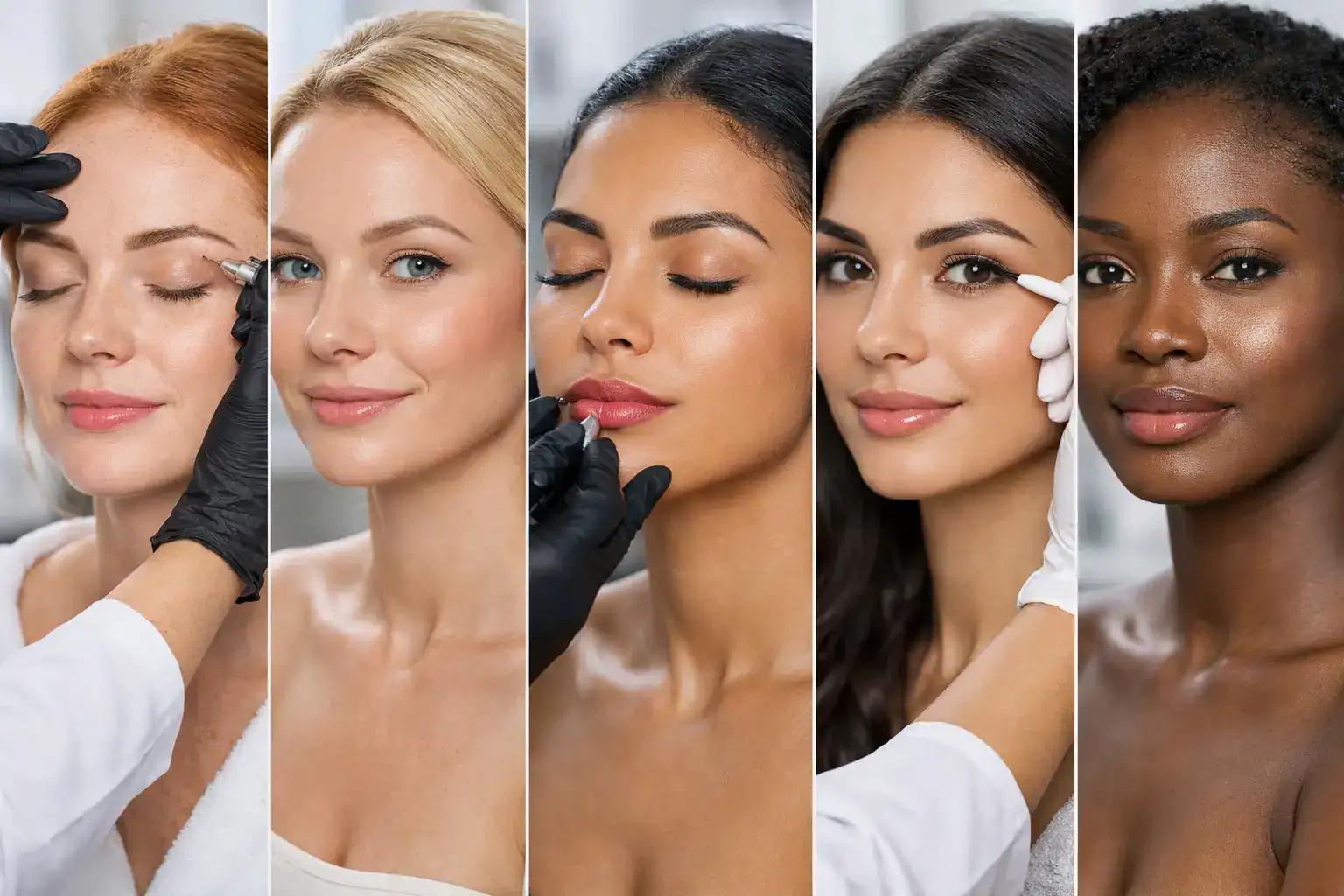
Fitzpatrick Skin Type Permanent Makeup Guide
Permanent makeup should never begin with choosing a color from a chart. Fitzpatrick skin type permanent makeup planning begins with understanding how your individual skin may respond to pigment, inflammation, sun exposure, and the healing process. That thoughtful assessment is what helps create results that look refined when healed, not just beautiful on the day of the appointment.
For cosmetic tattooing and restorative pigmentation alike, skin is part of the artistry. Your complexion, undertone, skin condition, medical history, lifestyle, and treatment goals all influence the approach. A skilled provider looks beyond surface color to plan a result that supports your features, heals predictably, and feels like you.
Why Fitzpatrick Skin Type Permanent Makeup Matters
The Fitzpatrick scale classifies skin by how it typically reacts to ultraviolet light, ranging from Type I, which burns very easily, through Type VI, which rarely burns and has deeply pigmented skin. In permanent makeup, it offers a useful starting point for anticipating sensitivity, pigment behavior, and the likelihood of post-inflammatory hyperpigmentation or hypopigmentation.
It is not a shortcut for selecting a pigment. Two clients with the same Fitzpatrick type can have very different undertones, skin thickness, oil production, scar history, medications, and healing patterns. The scale is one part of a complete consultation, not a substitute for an experienced eye and a careful medical history.
This matters because permanent makeup is implanted into living skin. As the skin heals, it filters and softens the pigment. A shade that appears warm and balanced immediately after a procedure may settle differently depending on melanin activity, undertone, and tissue response. Planning for the healed result is the standard that matters.
Understanding the six types in treatment planning
Clients with Fitzpatrick Types I and II often have fair skin that may become visibly pink or red with irritation. That temporary redness can make an implanted pigment look more dramatic or warmer right after treatment than it will later. Gentle technique, conservative color selection, and patience during healing help prevent overcorrecting based on a fresh result.
Types III and IV include a broad range of complexions and undertones. These clients may tan more readily and can still experience pigment shifts or uneven healing, particularly if the skin is inflamed, compromised, or exposed to sun too soon. Details such as whether the skin leans warm, cool, olive, or neutral become especially meaningful here.
Types V and VI have more melanin-rich skin and can be more prone to post-inflammatory hyperpigmentation after trauma to the skin. This does not mean permanent makeup is off-limits. It means the treatment plan must be especially intentional. Appropriate needle depth, controlled passes, carefully chosen pigment, diligent aftercare, and a willingness to build color gradually can make all the difference.
Skin tone is only one part of the consultation
A responsible consultation considers the whole picture. A practitioner should ask about prior cosmetic tattooing, laser procedures, chemical peels, prescription skin care, acne, eczema, psoriasis, keloid or hypertrophic scarring, allergies, immune conditions, and medications that may affect healing or bleeding.
Sun exposure also deserves an honest conversation. Recently tanned, sunburned, or irritated skin is not a stable canvas for permanent makeup. A client who spends weekends outdoors, uses self-tanner, or receives frequent resurfacing treatments may need different timing and maintenance expectations than someone with a consistent, protected skin-care routine.
For clients seeking scar camouflage, stretch mark camouflage, 3D areola tattooing, or other restorative pigmentation, tissue quality matters as much as Fitzpatrick classification. Mature scar tissue behaves differently from surrounding skin. It may be firmer, thinner, less vascular, or less receptive to pigment. Some scars need more time before treatment, while others may benefit from a staged approach that prioritizes skin quality before color.
If you are healing after surgery, cancer treatment, an accident, or a significant medical event, clearance from your physician may be appropriate. The goal is never to rush a meaningful treatment. It is to choose the right moment and method for your body.
How pigment choice changes with undertone and healing
Permanent makeup pigments do not sit on top of the skin like traditional makeup. They heal beneath the surface, where your natural skin tone influences what the eye sees. That is why a color formula needs to be customized rather than copied from another client’s before-and-after photo.
For brows, an artist may adjust the balance of warm, cool, or neutral modifiers to avoid a healed tone that becomes too ashy, red, gray, or overly saturated. On melanin-rich skin, placing pigment too superficially or working the area aggressively can increase the risk of unwanted color changes. On very fair or reactive skin, an overly warm formula may look stronger during the early healing stage than the final result warrants.
Lips require even more nuance. Natural lip tone varies widely, and darker lips may need neutralization before a client can achieve a softer pink, peach, or rose effect. Lip blush is not about covering the natural lip with opaque color. It is about creating balanced, healthy-looking definition while respecting the tone already present.
With areola restoration, color selection involves more than matching a photograph or a pre-surgery memory. The surrounding skin, breast reconstruction, scar texture, lighting, and desired level of realism all inform the design. Layering subtle tones and creating dimensional detail can produce a result that feels personal and restorative.
Technique protects both the skin and the result
The best pigment choice can still heal unpredictably if the technique is too aggressive. Depth, pressure, needle configuration, machine settings, and the number of passes all affect how the skin responds. More saturation is not always better. In many cases, especially where sensitivity or pigment reactivity is a concern, a lighter first session followed by a carefully assessed touch-up is the safer and more elegant choice.
This is where experience with skin anatomy matters. A provider should know when to pause, when not to chase color, and when a skin response is signaling that treatment needs to be adjusted. Precision is not simply about making clean lines. It is about respecting the integrity of the skin throughout the appointment.
At Fancy Shmancy, that clinical perspective is paired with an artistic focus on natural-looking results. Each procedure is planned around the client in front of us, whether the goal is softly defined brows, balanced lip color, scar blending, or a restorative tattoo that marks an important step forward.
Healing is part of the color process
Fresh permanent makeup is not the final result. In the first days after treatment, color can look darker, warmer, cooler, or more intense than expected. As the skin closes and begins to shed, the pigment may appear lighter or temporarily uneven. This is normal, and it is one reason why early judgment can lead to unnecessary worry.
Aftercare helps protect the work. Clients are typically asked to avoid picking, excessive moisture, sweating, sun exposure, swimming, and active skin-care ingredients around the treated area during the healing window. Exact instructions vary by procedure and skin condition, so personalized guidance should always take priority over general advice.
A follow-up appointment gives the practitioner an opportunity to evaluate retention after the skin has fully settled. Some clients need a small adjustment; others need more intentional layering. Healing is individual, and responsible permanent makeup allows room for that reality.
Questions worth asking before you book
Before choosing a permanent makeup provider, ask how they assess Fitzpatrick type, undertone, and pigment risk. Ask whether they have experience working on a range of skin tones and on the specific area you want treated. For restorative work, ask about their experience with scars, reconstructed tissue, and collaboration with medical professionals when needed.
You should also feel comfortable asking what happens if color heals unevenly, whether a touch-up is expected, and how you will be supported after the appointment. A thorough answer should feel reassuring, not sales-driven. Permanent makeup is a personal investment, and clear expectations are part of excellent care.
Your skin deserves more than a one-size-fits-all color choice. When permanent makeup is planned with respect for your Fitzpatrick type, tissue health, and personal goals, the result has the best chance to feel natural, intentional, and deeply affirming every time you see yourself in the mirror.
Author: Liana Reznik