BB Glow Facial Benefits and Risks Explained
A BB Glow treatment can sound like the answer to the daily foundation routine: brighter-looking skin, softened uneven tone, and a polished finish that lasts beyond one morning. But BB Glow facial benefits and risks deserve equal attention, particularly when pigment-containing serums are introduced into skin with a needling device. The right decision begins with honest expectations, careful skin assessment, and a provider who will tell you when another treatment may be safer.
What Is a BB Glow Facial?
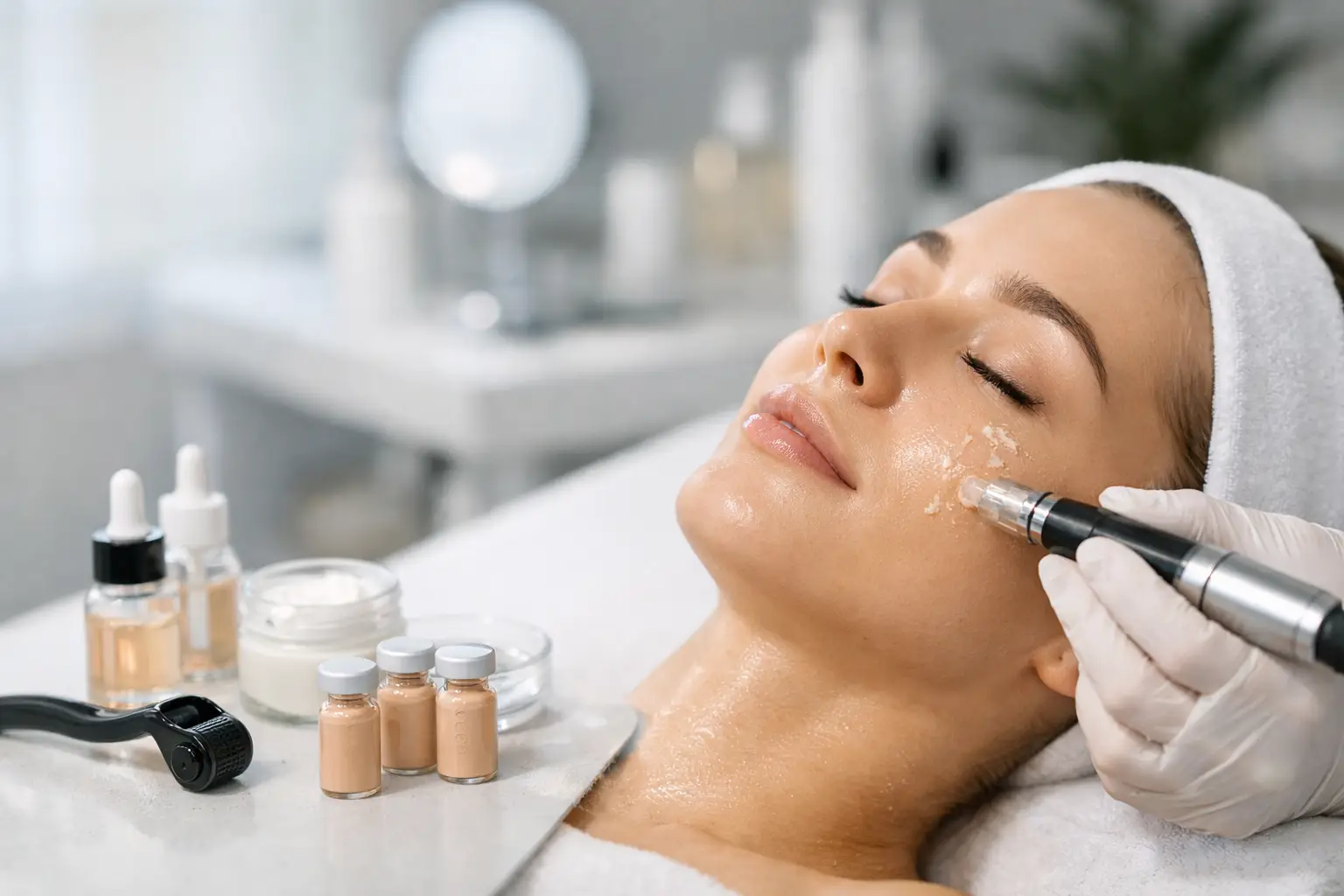
BB Glow is commonly described as a skin-enhancing treatment that uses nano-needling or microneedling techniques to apply a tinted serum intended to create a more even, radiant-looking complexion. Depending on the product and technique, it may be marketed to reduce the visible appearance of redness, dullness, freckles, discoloration, or under-eye shadows.
It is often called a “semi-permanent foundation,” but that phrase can be misleading. Results vary significantly based on the formulation, the depth of the treatment, the client’s skin, skincare routine, sun exposure, and whether the product is designed for superficial topical use or has been placed into the skin. A healthy glow can be a beautiful goal. It should never come at the expense of skin integrity.
A responsible provider distinguishes between a cosmetic surface treatment and procedures that introduce pigment or serum below the skin’s barrier. That distinction matters for safety, healing, and long-term results.
BB Glow Facial Benefits and Risks to Consider
The appeal of BB Glow is understandable. For clients who prefer a low-maintenance beauty routine, it may offer a temporary fresh-faced effect and make the complexion appear more uniform after healing. Some people enjoy feeling more comfortable without daily makeup, especially for events, vacations, or busy seasons of life.
When performed conservatively on an appropriate candidate, a BB Glow-style treatment may create the appearance of enhanced luminosity and softer tonal variation. The process can also encourage clients to become more intentional about hydration, sun protection, and consistent aftercare, all of which support the skin’s overall appearance.
Still, the visible benefit is not guaranteed, and it is not the same as treating the underlying cause of discoloration. Melasma, post-inflammatory hyperpigmentation, vascular redness, acne, and sun damage each behave differently. Camouflaging these concerns with a tinted serum may not improve the condition itself and, in some cases, irritation can make discoloration more noticeable.
The risks are equally real. Any procedure that disrupts the skin barrier can carry a chance of irritation, infection, prolonged redness, swelling, breakouts, allergic or inflammatory reaction, and uneven healing. When colorants or unfamiliar ingredients are involved, there may also be a risk of persistent color change, discoloration, granulomas, or a reaction that develops later rather than immediately.
Clients with deeper Fitzpatrick skin types need especially thoughtful evaluation. Inflammation, even from a minor procedure, can trigger post-inflammatory hyperpigmentation or hypopigmentation. This does not mean deeper skin tones cannot receive skin treatments. It means the device, depth, ingredients, timing, and aftercare must be selected with advanced knowledge of how that individual skin responds.
Why Product Choice and Technique Matter
Not every serum sold for BB Glow is the same, and marketing language can hide critical differences. A product that is appropriate on intact skin is not automatically appropriate for use with needling. Ingredients, manufacturing standards, sterility, pigment composition, and intended use all matter.
In the United States, clients should ask direct questions about what is being used and how it is being used. Is the product sterile? Is it intended for the treatment technique proposed? Is it being applied topically, or introduced through channels created in the skin? What are its ingredients? A knowledgeable practitioner should welcome these questions rather than offer vague reassurance.
Technique matters just as much. Pressing too deeply, treating inflamed skin, making too many passes, or attempting to force dramatic coverage can create unnecessary trauma. With skin, more is rarely better. Natural-looking results depend on restraint, precision, and respect for the skin’s healing process.
At a clinic such as Fancy Shmancy, consultation is not an optional formality. It is where a treatment plan is evaluated against your skin history, goals, medications, prior procedures, and comfort level. Sometimes the most expert recommendation is to postpone a service or choose a different path.
Who May Need to Avoid or Delay BB Glow?
A consultation should identify situations where BB Glow may not be appropriate right now. Active acne, open skin, eczema or dermatitis in the treatment area, rosacea flares, active cold sores, sunburn, and current skin infection are reasons to pause. Treating already compromised skin can increase discomfort and make healing less predictable.
Clients with a history of keloid scarring, significant allergies, pigment sensitivity, autoimmune conditions, or previous reactions to cosmetic tattooing or skincare ingredients should disclose this before booking. So should anyone using prescription retinoids, anticoagulants, immunosuppressive medication, or medications that affect healing. Pregnancy and breastfeeding policies vary by provider and treatment, but postponement is often the cautious choice for elective procedures.
Recent chemical peels, laser treatments, waxing, injectable treatments, or facial surgery can also change the timing. Your provider should know what your skin has experienced, not just what you hope it will look like afterward. If you have melasma, persistent redness, acne scarring, or a changing skin lesion, a dermatologist may be the most appropriate first stop.
What a Thoughtful BB Glow Consultation Should Include
A good consultation is specific. It should begin with your real concern: Are you trying to reduce the appearance of uneven tone, avoid wearing foundation, improve dryness, or feel more confident in photos? The answer helps determine whether BB Glow is aligned with your goals or simply sounds appealing on social media.
Your provider should review your medical and skincare history, assess skin condition and Fitzpatrick skin type, discuss realistic results, and explain the expected healing process. Clear before-and-after photos taken in consistent lighting can be useful, but your result should never be promised to match someone else’s skin.
You should also receive a plain-language explanation of the treatment materials, sanitation protocol, device use, potential side effects, contraindications, and aftercare. If a patch test is appropriate, it should be discussed. A patch test cannot rule out every delayed reaction, but it may identify an immediate sensitivity to a proposed product.
Be cautious if the conversation centers only on a flawless finish, a bargain price, or claims that the treatment works for everyone. Skin is biologically individual. Professional care recognizes that individuality instead of selling a one-size-fits-all result.
Healing and Aftercare Are Part of the Result
Aftercare does not erase a poorly chosen treatment, but it can support more comfortable, predictable healing. Follow your provider’s instructions exactly. In general, clients may be asked to keep the area clean, avoid touching it unnecessarily, pause makeup and active skincare ingredients for a designated period, and protect the skin from heat, sweat, swimming, and direct sun while it recovers.
Do not exfoliate, use retinoids, acids, or aggressively cleanse the area until you have been cleared to do so. Sun protection becomes especially important after any procedure that can stimulate inflammation and pigment change. A broad-spectrum sunscreen and protective habits can help preserve a more even-looking complexion over time.
Contact your provider promptly if you experience worsening pain, spreading redness, warmth, pus, severe swelling, hives, or other signs of infection or allergic reaction. For urgent symptoms or concerns involving your health, seek medical care. It is always better to address a possible complication early than to wait and hope it resolves.
Is BB Glow the Best Option for Your Skin Goal?
For some clients, the desired “glow” may be better achieved through a customized skincare plan, a gentle facial, a professional peel, laser care directed by an appropriate medical provider, or simply a well-matched tinted sunscreen. For others, treating acne, rosacea, or melasma first may produce more meaningful and stable improvement than adding cosmetic coverage.
The best aesthetic treatment is not necessarily the trendiest one. It is the one that respects your skin’s condition, fits your lifestyle, and supports the confidence you deserve without asking you to ignore legitimate safety questions. Your face is not a place for pressure or shortcuts. Give yourself permission to choose care that feels both beautiful and well considered.
Author: Liana Reznik