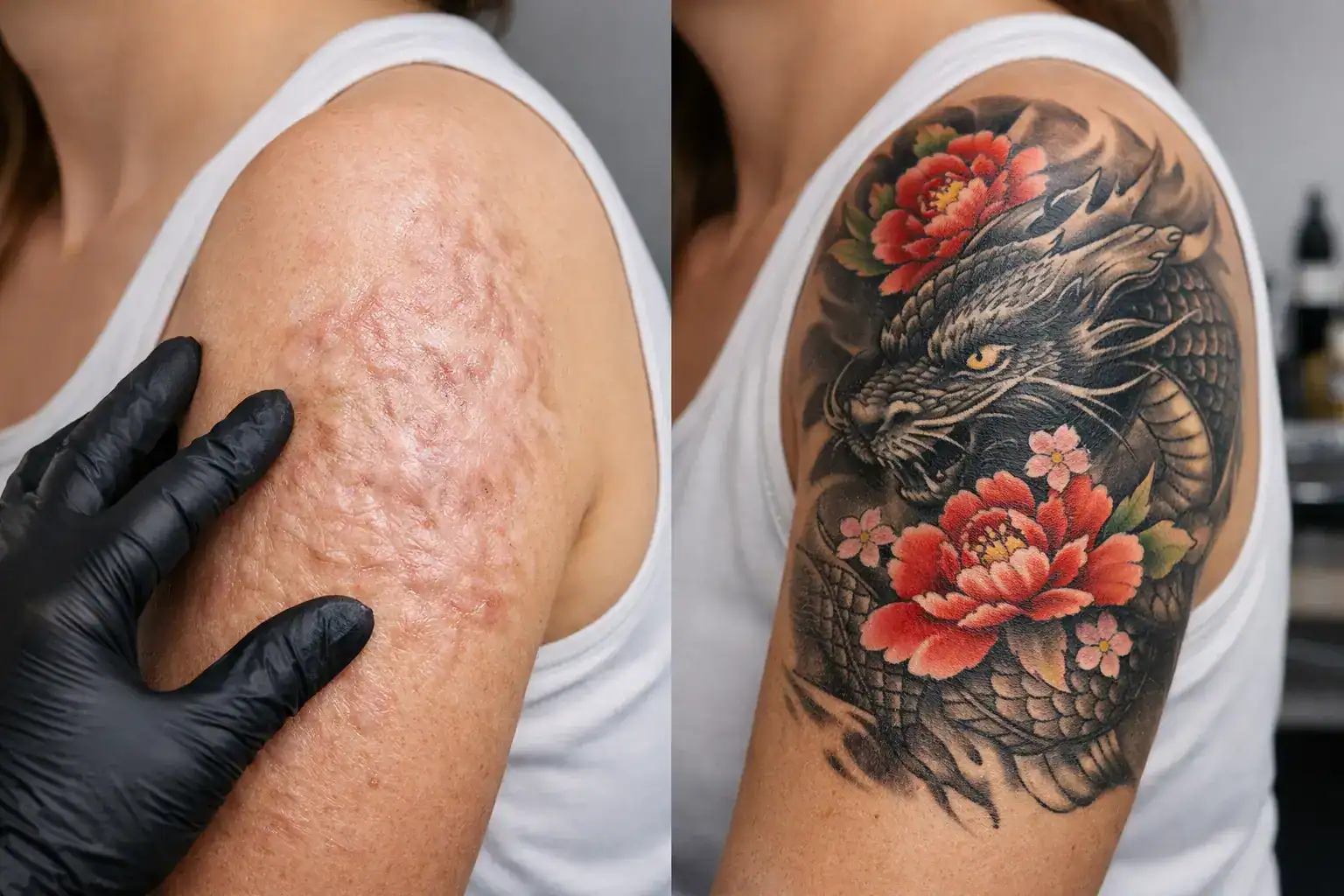
Can Tattoos Cover Burn Scars? What to Know
A burn scar can carry far more than a change in texture or color. It may bring back an accident, a difficult recovery, or years spent choosing clothing around an area of skin you would rather not explain. So, can tattoos cover burn scars? In many cases, yes – but the best approach depends on the scar’s maturity, texture, location, and how the skin has healed.
Burn scar tattooing is not a one-size-fits-all cosmetic service. Whether the goal is skin-tone scar camouflage or a decorative tattoo design, the work requires thoughtful assessment, technical skill, and realistic expectations. A careful plan can help soften visual contrast and support confidence. Rushing the process can lead to disappointing color, irritation, or results that do not age as hoped.
Can Tattoos Cover Burn Scars Safely?
A tattoo may be possible on a burn scar when the scar is fully healed, stable, and cleared by the appropriate medical provider when needed. Full healing is not simply the point at which a wound closes. Scar tissue continues to remodel beneath the surface, often for 12 to 18 months and sometimes longer after a significant burn, graft, or reconstructive procedure.
A suitable scar is generally flat or relatively stable, no longer red or actively inflamed, and not tender, itchy, or changing. The area should not have open skin, recurring breakdown, infection, or ongoing treatment that affects healing. If you have had a skin graft, contracture release, laser treatment, or surgery in the area, timing matters even more.
Some burn scars are not appropriate to tattoo. Raised hypertrophic scars, keloid-prone skin, unstable grafts, scars with limited sensation or circulation, and areas still under medical care deserve special caution. Tattooing can create another controlled injury in already altered skin, so a practitioner should never promise that every scar can be treated.
A consultation is where this distinction becomes clear. At Fancy Shmancy, restorative pigmentation planning considers scar history, skin quality, previous treatments, medication use, your Fitzpatrick skin type, and the emotional outcome you are hoping to achieve. If treatment is not the right next step, an honest recommendation is part of responsible care.
Scar Camouflage and Decorative Tattoos Are Different
People often use the phrase tattooing a burn scar to describe two very different services. A decorative tattoo uses intentional artwork, linework, shading, and color to incorporate or draw attention away from a scar. A paramedical scar camouflage tattoo uses carefully selected pigments to reduce the contrast between healed scar tissue and surrounding skin.
Neither option erases a scar. A tattoo cannot make scar tissue feel like untouched skin, remove a raised edge, or restore the natural behavior of sweat glands and hair follicles. What it can do is change how the area reads from a normal conversational distance. For many clients, that visual continuity can feel deeply meaningful.
Camouflage is often most successful when the main concern is color difference, such as a pale, white, pink, or unevenly pigmented healed scar. The practitioner custom-blends pigment to work with the undertone of the surrounding skin rather than choosing a flat, generic beige. Because skin has variation, the goal is a natural softening effect, not a perfectly uniform patch of color.
Decorative work may be a better fit when a scar has substantial texture or shape that camouflage cannot conceal. An experienced tattoo artist can design around that texture in a way that feels intentional and personal. Even then, the artist should have specific experience working over scars, not just beautiful portfolio work on unscarred skin.
Why Burn Scars Behave Differently During Tattooing
Scar tissue does not respond to pigment the same way healthy skin does. It can be thicker, thinner, tighter, more fragile, or less predictable in how it absorbs and retains color. Blood supply and nerve sensation may also be altered, particularly after deeper burns or skin grafting.
That means a pigment that looks balanced immediately after a procedure may heal lighter, cooler, warmer, or unevenly in different parts of the scar. Sometimes the skin needs more than one session to build a believable result. Other times, adding too much pigment too quickly can make the area look unnatural, so restraint is the better artistic choice.
Color selection requires particular care. Scar tissue can shift as it heals, and your surrounding skin changes with sun exposure, seasons, hormones, and time. A skilled medical pigmentation specialist plans for these variables, uses conservative layers, and explains that touch-ups may be needed. This is precision work, not a quick cover-up.
Pain is also difficult to predict. Some burn scars have reduced sensation, while others are unusually sensitive. Numbing options, treatment pacing, and clear communication can make the appointment more manageable, but no provider should assume how an individual scar will feel.
What a Thoughtful Consultation Should Cover
A consultation should feel private, unhurried, and specific to you. Bring information about when the burn occurred, whether you received grafts or reconstructive surgery, any prior laser or steroid treatments, and relevant medical conditions or medications. Photos from earlier stages of healing can also provide helpful context.
Your provider should examine the area in person when possible, including the scar’s color, thickness, mobility, sensitivity, and relationship to the surrounding skin. They should ask whether the scar has changed recently and whether you have a personal or family history of keloids. If there is any concern about medical stability, clearance from your dermatologist, plastic surgeon, or treating physician may be recommended.
A patch test may be useful for select cases, especially when skin is highly reactive, pigment retention is uncertain, or a client has a history of sensitivity. It does not guarantee the final result, but it can offer useful information before treating a larger area.
The conversation should also include candid expectations. Ask to see healed examples of work on scars, not only fresh procedure photos. Fresh pigment often appears more vivid because of temporary redness and swelling. Healed results reveal the practitioner’s true ability to blend color and work respectfully with scar texture.
Preparing for a Burn Scar Tattoo Appointment
Once you are approved for treatment, follow pre-care instructions closely. Avoid sunburn and tanning on the area, as active sun exposure changes skin tone and can make accurate color matching difficult. Stay hydrated, avoid picking or exfoliating the scar, and disclose any new medications or skin treatments before the appointment.
Your provider may advise postponing if you are ill, have a rash, are taking medication that affects healing or bleeding, or have recently undergone a procedure in the treatment area. This is not an inconvenience. It protects both your skin and your outcome.
During the appointment, the practitioner may work in small sections and evaluate how the tissue responds. Scar camouflage is often built gradually. A slower approach allows the skin to heal between sessions and gives the specialist a more accurate view of retained color.
Healing and Aftercare Matter as Much as the Procedure
Aftercare supports clean, even healing. Follow the instructions you receive rather than relying on generic tattoo advice, because your plan may differ based on the scar and technique used. Keep the area clean, avoid friction, protect it from direct sun, and do not scratch, peel, or pick as it heals.
Temporary darkening, light scabbing, or uneven color during healing can be normal. The final healed shade takes time to reveal itself. Contact your provider promptly if you notice increasing pain, spreading redness, unusual warmth, drainage, fever, or any sign of infection.
Sun protection remains especially important after healing. UV exposure can darken surrounding skin, alter scar color, and make camouflage contrast more visible over time. A broad-spectrum sunscreen and sensible coverage help preserve the result.
The Result Should Feel Like Yours
The right burn scar tattoo is not necessarily the one that makes a scar disappear in a photograph. It is the one that respects your skin, your medical history, and the way you want to feel in your body. For some people, that means a carefully blended camouflage treatment. For others, it means artwork that transforms a difficult reminder into something chosen.
You deserve a provider who sees both the technical and personal sides of that decision. Give your skin the time it needs, ask detailed questions, and choose a specialist who is willing to say when waiting is the safest path. Thoughtful treatment can be part of a larger journey toward feeling comfortable being seen – on your own terms.
Author: Liana Reznik