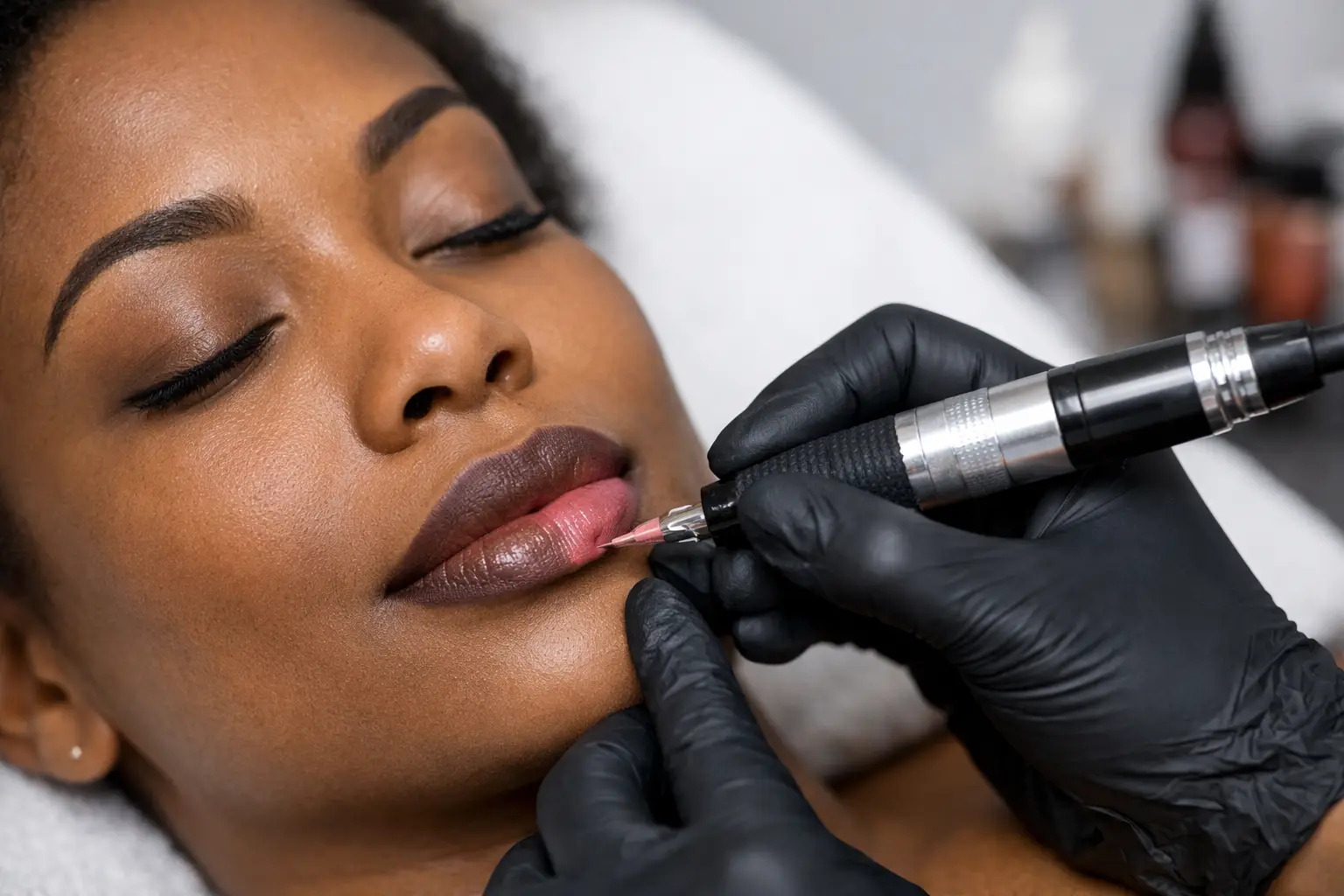
Is Permanent Lip Blush for Dark Lips Right for You?
For clients with naturally deeper lip tones or visible lip hyperpigmentation, permanent lip blush for dark lips is not about covering your features with a pale cosmetic shade. It is a precise color-correction process designed to create a more even, softly defined, healthy-looking lip tone while honoring the natural beauty of your complexion.
The difference lies in the planning. Dark lips can heal unpredictably when treated with a one-size-fits-all approach. A skilled permanent makeup artist evaluates the undertone beneath the surface, the level of pigmentation, skin behavior, and your desired result before choosing a pigment strategy. The goal is believable enhancement – not an opaque lipstick effect.
Why Dark Lips Need a Different Lip Blush Approach
Dark lips may have brown, gray, purple, blue, or cool-toned areas, often with uneven pigmentation around the border or center of the lips. This can be completely natural and is especially common in deeper Fitzpatrick skin types. Sun exposure, smoking, dehydration, prior lip procedures, hormones, and some medications may also affect the appearance of lip color.
Standard pink or nude lip blush pigments are not automatically the answer. When a cool or dark undertone is present, placing a light, cool pigment directly over it can heal ashy, gray, or less visible than expected. In some cases, it can make unevenness more apparent.
Instead, the first stage may focus on lip neutralization. Warm, carefully selected pigments are layered into the lips to help balance cool or deep undertones. Once the lips have healed and stabilized, a second session may build toward the preferred finished color. Some clients achieve their desired result in two appointments; others need additional sessions to reach an even, lasting outcome.
That is not a sign that the treatment has gone wrong. It is often the responsible path for working gradually with richly pigmented lips.
What Results Can Permanent Lip Blush for Dark Lips Create?
When performed with the right technique and pigment selection, lip blush can create a more balanced lip tone, restore soft definition to the lip line, and make the lips look fresher without daily liner or lipstick. Many clients appreciate waking up with lips that look naturally more alive, especially when their natural lip color has faded into the surrounding skin.
The most refined result usually looks understated. You may still choose gloss, lipstick, or liner whenever you want a more dramatic look, but your bare lips can appear more symmetrical and polished on their own.
It is equally important to have realistic expectations. Lip blush does not change the natural structure of the lips, add volume, or erase every variation in pigmentation. It also should not be expected to create a very pale beige or baby-pink result on deeply melanated lips. A thoughtful treatment respects the skin’s natural undertone and aims for harmony rather than an unnatural contrast.
Fresh Color Is Not Healed Color
Immediately after treatment, lips often look brighter, warmer, and more saturated than the final result. Swelling is typically mild, and the color can appear intense for the first few days. As the lips heal, they may flake lightly and look much softer or even temporarily faded.
This healing stage can be emotionally surprising, particularly after a neutralization session. The pigment needs time to settle into the skin. Final color is assessed after the lips have fully healed, usually at the follow-up appointment, not in the first week.
Who Is a Good Candidate?
A consultation is the most valuable first step because lip pigmentation is highly individual. A good candidate generally has healthy lips without active cracking, infection, or irritation and is comfortable with a gradual color-building process.
Clients with a history of cold sores should disclose it before booking. Lip tattooing can trigger an outbreak, so a medical provider may recommend preventive antiviral medication. Pregnancy, nursing, certain immune conditions, blood-thinning medications, recent fillers, active skin treatments, or a history of challenging pigment healing may require postponement, physician clearance, or a different approach.
A consultation should also include an honest conversation about prior permanent makeup or lip tattooing. Existing pigment can influence the correction plan, especially if it has healed gray, purple, or unevenly. Covering old work without understanding what is already in the skin can compromise the result.
The Consultation Matters More Than the Trend
A social-media photo cannot tell you whether a particular lip shade is appropriate for your skin. Professional lip blush begins with examining the lips in person or through a detailed virtual consultation. Your artist should assess the lip border, natural asymmetry, pigmentation pattern, hydration, scar tissue, and the skin tone surrounding the mouth.
At Fancy Shmancy, this planning is informed by a deep understanding of skin anatomy and Fitzpatrick skin types. For dark lips, that expertise matters because pigment selection is not simply an aesthetic choice. It is a technical decision that affects how color heals, fades, and blends with your natural melanin.
A trusted provider should never promise an identical result to someone else’s photo. They should explain whether neutralization is needed, how many sessions may be appropriate, what the healed color may look like, and where results can vary. Clear expectations protect both your investment and your confidence.
What Happens During the Procedure?
Your appointment begins with mapping and color planning. The shape is refined conservatively to preserve your natural lip proportions. Topical numbing is used throughout the service to keep you as comfortable as possible, and pigment is implanted gradually with a specialized permanent makeup device.
For darker lips, the artist may work selectively across areas of deeper discoloration instead of applying one uniform shade everywhere. This careful layering helps create a balanced transition across the full lip. The process is detailed and should never feel rushed.
Most clients return for a perfecting session after the initial treatment has healed. This is where the artist evaluates pigment retention and adjusts the tone or saturation as needed. Because every person’s skin retains pigment differently, the touch-up is part of the treatment plan, not an afterthought.
Healing and Aftercare Protect the Investment
Your artist will provide specific pre-care and aftercare instructions tailored to your treatment. In general, lips should be kept clean, protected, and allowed to heal without picking or scrubbing. Avoiding sun exposure, swimming, steam, intense workouts, and makeup directly on the healing lips helps reduce irritation and supports better pigment retention.
Hydration matters as well. Dry, chapped lips do not provide an ideal canvas, so preparing the lips before the appointment and following the recommended healing balm routine afterward can make a meaningful difference.
Long-term retention varies. Lip blush is considered permanent makeup, but it is not permanent in the way a traditional body tattoo is permanent. It fades gradually over time because lips regenerate quickly and are exposed to food, skincare, UV light, and natural moisture. Most clients benefit from a color refresh when they notice the tone becoming softer or less even.
Choosing the Right Artist for Dark Lip Neutralization
This treatment deserves more than a quick appointment chosen by price alone. Look for a specialist whose healed portfolio includes a range of skin tones and genuine dark-lip correction work, not only freshly completed procedures. Ask how they determine whether neutralization is necessary and whether your goal is realistic for your starting lip tone.
Clean technique, appropriate licensing, medical-grade hygiene practices, thorough consent, and detailed aftercare are essential. So is a provider who listens. You should feel comfortable asking questions about pigment ingredients, healing time, touch-ups, and what happens if your lips retain color unevenly.
Your lips do not need to be lighter to be beautiful. The right permanent makeup plan simply gives their natural color the chance to look more balanced, defined, and confidently yours.
Author: Liana Reznik