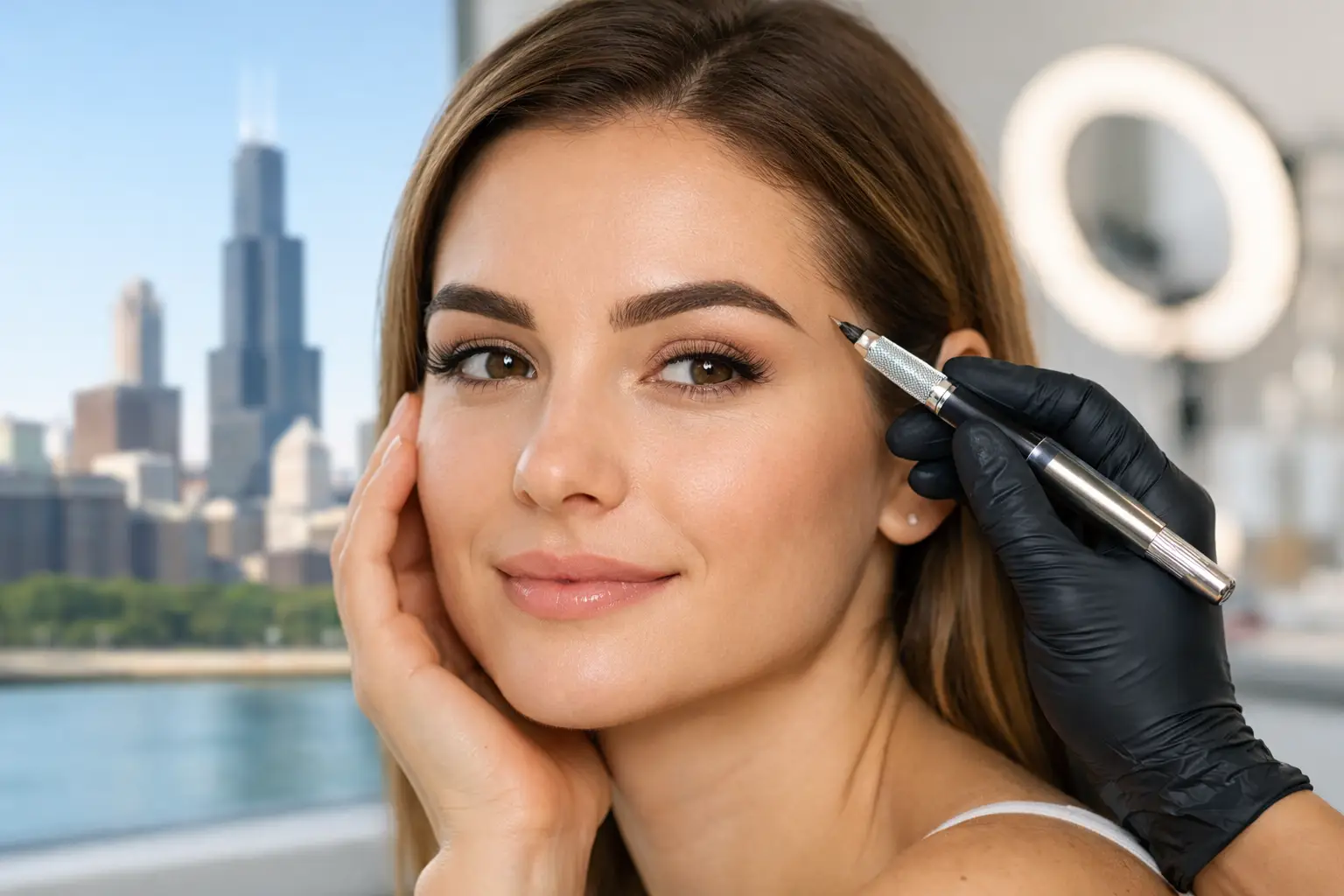
Natural Looking Permanent Eyebrows in Chicago
A beautiful eyebrow result should not announce itself before you do. For people searching for natural looking permanent eyebrows Chicago, the goal is rarely a heavy, stamped-on brow. It is the quiet confidence of a shape that restores balance to the face, fills sparse areas thoughtfully, and still feels like you when you look in the mirror.
Permanent makeup is highly personal. The right technique, pigment, and brow design can simplify your mornings and bring definition back to features that have changed with age, hair loss, over-tweezing, skin conditions, or medical treatment. The wrong approach can feel too dark, too sharp, or disconnected from the rest of your face. That is why refined results begin long before pigment is placed.
What Natural-Looking Permanent Eyebrows Really Mean
Natural-looking does not mean one universal brow style. A soft, airy brow that flatters one client may disappear on another. Natural results are created by studying your facial structure, existing hair pattern, skin tone, undertone, lifestyle, and desired level of definition.
For some clients, that means delicate hairstrokes placed only where natural hair is missing. For others, a soft powder effect creates the most believable finish, especially when there is little brow hair to blend with or the skin is oilier. Many clients benefit from a combination approach, where fine strokes add texture and subtle shading gives the brow depth and staying power.
The best permanent brows are intentionally restrained. They have a considered beginning, a gentle arch suited to the face, and a tail that does not pull the features downward. Rather than copying a trend or a social media filter, the design should support your individual proportions.
The Consultation Is Where a Great Result Begins
A consultation is not simply an appointment to choose a brow color. It is the planning stage for your treatment, and it should feel unhurried, clear, and collaborative. You should have space to explain what you like about your current brows, what frustrates you, how much makeup you normally wear, and what “natural” means to you.
Your artist should assess skin quality and skin behavior, including texture, oil production, previous tattooing, sun exposure, and any scarring in the brow area. Fitzpatrick skin type also matters because it helps inform pigment selection and how the skin may heal. A pigment that appears ideal in the bottle can heal differently depending on the client’s undertone, skin characteristics, and aftercare.
Medical history matters as well. Certain medications, active skin conditions, recent cosmetic treatments, pregnancy, breastfeeding, and health concerns may affect candidacy or timing. An experienced provider will ask the necessary questions without making you feel rushed or judged. In some cases, postponing treatment is the safest and most appropriate choice.
Brow Mapping Creates Structure Without Making Brows Identical
Faces are naturally asymmetrical. One brow may sit slightly higher, have a different hair pattern, or move differently with expression. The goal of brow mapping is not to force identical brows onto an asymmetrical face. It is to create visual harmony while respecting the features that make your face your own.
Mapping typically considers the inner brow, arch, and tail in relation to your eyes, nose, bone structure, and facial movement. Before the procedure begins, you should be able to review the proposed shape and request adjustments. This shared approval is essential. You are not choosing a template. You are approving a design made for you.
Choosing the Right Permanent Brow Technique
Technique is one of the biggest decisions in achieving natural looking permanent eyebrows in Chicago. Each approach has strengths, but none is automatically best for every client.
Microblading uses a handheld tool to create fine, hairlike marks. On the right skin and with the right amount of existing brow hair, it can offer a soft, textured result. However, it may not be the best choice for very oily, mature, thin, sun-damaged, or heavily textured skin. In those situations, strokes may blur, fade unpredictably, or not retain as cleanly during healing.
Machine hairstrokes can also create a hairlike appearance with a different method of pigment implantation. They may be appropriate for certain skin types, but the decision should still be based on the individual rather than a blanket promise.
Powder brows use gentle pixelated shading to build soft definition. Despite the name, a skilled powder brow does not need to look like solid makeup. It can be as subtle as a tinted brow gel, with a lighter front and a diffused finish. This option is often a strong choice for clients who fill in their brows daily, have minimal hair, or want reliable visual balance.
Combination brows blend hairstrokes and shading. They can offer dimension without looking overly dense, particularly for clients who need both the suggestion of hair and the structure of soft color. The right choice depends on how your skin is likely to heal, not just the look you see immediately after the appointment.
Pigment Should Complement, Not Compete
A common fear is that permanent eyebrows will heal too dark or turn an unwanted color. While all pigment changes somewhat as it heals and fades over time, careful color theory and appropriate pigment selection reduce that risk.
Your brow pigment should work with your natural brow hair, skin undertone, and overall coloring. It does not always need to match the hair on your head exactly. A cool black-brown may be too harsh for a client with soft features, while an overly warm shade may not suit someone with a cooler complexion. The ideal healed color is usually softer than the initial application and supports the face without creating a distracting border.
It is also important to understand that permanent makeup is not truly permanent in the way a body tattoo can be. Brows gradually fade as the skin renews, the immune system processes pigment, and sun exposure influences color retention. Many clients choose a color refresh over time to maintain the result. A thoughtful artist plans for that evolution from the start rather than placing pigment too dark in an attempt to make it last forever.
Healing Is Part of the Artistry
The first few days after a brow procedure are not the final result. Brows often appear darker, warmer, or more defined at first. As healing progresses, the area may flake lightly and then seem to fade more than expected before the color settles back in. This process can require patience.
Following pre-care and aftercare instructions protects your investment and supports clean healing. Depending on your treatment plan, you may need to avoid excess moisture, sweating, swimming, direct sun, makeup on the brow area, and exfoliating skincare products during the initial healing period. Picking or scratching at flaking skin can interfere with pigment retention and should be avoided.
A follow-up appointment is often an important part of the process. It allows the artist to assess healed retention, refine areas that need more definition, and make adjustments with precision. Healing varies from person to person, so a touch-up is not a sign that anything went wrong. It is part of creating a result that looks settled rather than rushed.
Why Expertise Matters for Chicago-Area Clients
Chicago weather, busy schedules, varied skin concerns, and the desire for polished-but-believable beauty all make personalization essential. A procedure that looks good in a single photo is not enough. Your brows should make sense in daylight, at work, after a workout, and on the days when you wear no other makeup.
At Fancy Shmancy in Highland Park, permanent brow treatment is approached with the same precision, skin knowledge, and individualized care that guide both cosmetic and restorative medical pigmentation services. The focus is not on giving every client the same bold brow. It is on creating a result that fits the person in the chair, with attention to hygiene, facial anatomy, pigment behavior, and long-term wear.
The most reassuring question to ask is not, “What brow trend should I get?” It is, “What will heal naturally on my skin and still feel like me?” A skilled consultation should give you an honest answer, even when that answer is more subtle than the look you first imagined.
Your eyebrows frame expressions that are entirely yours. When they are designed with care, they do not change who you are. They simply let you meet the day feeling more recognizable, more balanced, and more at home in your reflection.
Author: Liana Reznik