How to Prepare for Nipple Tattooing Safely
For many people, nipple tattooing is the final visual step after breast reconstruction, revision surgery, or mastectomy. To prepare for nipple tattooing, think beyond the appointment itself: your surgical healing, skin condition, health history, and comfort plan all help shape a safe experience and a beautifully natural result.
3D areola and nipple tattooing is a form of medical pigmentation designed to restore dimension, color, and visual balance to the breast. Although the procedure does not create physical projection, skilled shading and color placement can create the appearance of a nipple and areola that feels personal and complete. The goal is never a one-size-fits-all result. It is to create a result that supports the way you want to see yourself.
Start With the Right Timing
The most meaningful preparation happens before you choose an appointment date. Your body needs adequate time to heal from reconstruction, mastectomy, breast lift, reduction, implant surgery, or any revision procedure. Tattooing skin that is still inflamed, fragile, or changing can affect pigment retention and may interfere with the surgical healing process.
Many clients are ready several months after their last breast surgery, but the correct timing depends on your procedure, scar maturation, radiation history, and your surgeon’s guidance. Swelling should be resolved, incisions should be fully closed, and scars should be stable rather than raised, red, tender, or actively changing. If you have received radiation, healing can take longer and skin may require more individualized planning.
A qualified paramedical tattoo artist will assess the tissue in person or through a consultation. When appropriate, your plastic surgeon or medical provider may need to clear you before treatment. Waiting can be emotionally difficult when you are eager to move forward, but patience protects both your skin and your final result.
Prepare for Nipple Tattooing With a Consultation
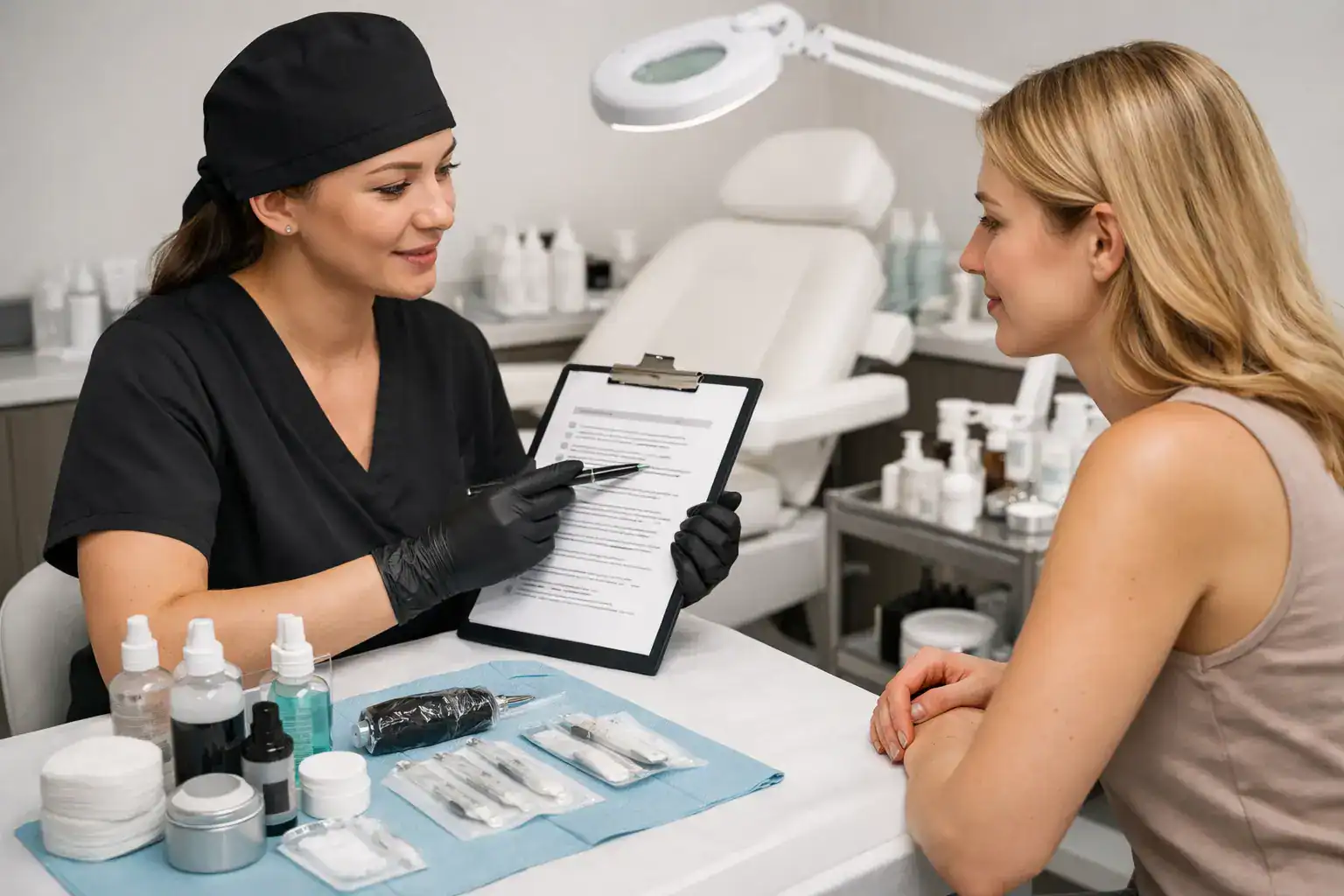
A thoughtful consultation is not a formality. It is where artistry and medical awareness come together. Your artist should review your health history, surgeries, medications, allergies, prior tattoo experience, skin type, and desired outcome. This is also the time to discuss whether you want a soft, subtle areola, more visible nipple dimension, color correction, scar blending, or a result modeled after a remaining natural areola.
Bring any details that help communicate your preferences. Some clients bring a photo from before surgery. Others prefer to use the opposite breast as a reference for size, tone, placement, and shape. If neither option feels right, your artist can guide the design process using proportions that suit your body and your comfort level.
Do not feel pressured to know exactly what you want before the consultation. Your preferences may be clear, or they may still be evolving. Both are completely valid. The best plan is one that considers your anatomy, Fitzpatrick skin type, scar tissue, and the way pigment is likely to heal in your skin.
Support Healthy, Calm Skin Before Your Appointment
In the week leading up to your appointment, treat the breast area gently. Avoid sun exposure, tanning, and anything that could irritate or compromise the skin. Sunburned, peeling, rash-prone, or broken skin should not be tattooed. If you notice a new irritation, open area, unusual tenderness, or signs of infection, contact your provider and tattoo artist before your session.
Stay hydrated and maintain your normal nourishing routine. Well-hydrated skin is generally easier to work with than dehydrated skin, although hydration cannot replace proper healing time or medical clearance. Avoid trying unfamiliar creams, exfoliants, retinoids, or skin treatments on the treatment area shortly before your appointment. Even products that are normally well tolerated can cause an unexpected reaction.
If you are prone to cold sores, autoimmune flares, eczema, psoriasis, keloid scarring, or pigment changes after injury, disclose this during your consultation. These factors do not automatically rule out nipple tattooing, but they can change the treatment plan, timing, or expectations for healing.
Discuss Medications Honestly
Your artist needs an accurate picture of medications and supplements that may affect bleeding, healing, immunity, or pigment retention. This includes prescription medications, over-the-counter pain relievers, blood thinners, steroids, certain acne treatments, vitamins, herbal supplements, and injectable weight-loss medications when relevant to your overall health and recovery.
Never stop or adjust a prescribed medication simply for a tattoo appointment without approval from the clinician who prescribed it. Your medical care comes first. A responsible artist will explain any pre-care adjustments they recommend and will ask you to seek medical guidance when a medication could affect the procedure.
Alcohol can increase bleeding and sensitivity for some clients, so it is generally best to avoid it for at least 24 hours before treatment. Caffeine may also make you feel more anxious or sensitive, especially if you are already nervous. You do not have to eliminate your usual morning coffee unless your provider advises it, but consider keeping it moderate and eating a balanced meal beforehand.
Plan for Comfort, Privacy, and Emotional Ease
Nipple tattooing is a personal procedure. Even when you feel ready, it can bring up emotions connected to surgery, diagnosis, body changes, or recovery. That response is normal. A compassionate clinical setting should make room for both the excitement and vulnerability of this moment.
Wear a soft, loose top that opens in the front, such as a button-down shirt or zip-up hoodie. This makes it easier to avoid pulling fabric over freshly tattooed skin afterward. Choose comfortable bottoms, eat before you arrive, and allow enough time so you do not feel rushed. If your clinic permits it, bring headphones, calming music, or a small comfort item.
Sensitivity varies greatly after surgery. Some reconstructed breasts have reduced sensation, while others remain tender or have areas of heightened sensitivity. Your artist can work deliberately, check in throughout the session, and use an appropriate topical numbing approach when suitable. Be open about what you are feeling. Clear communication helps the procedure stay comfortable and controlled.
Know What to Expect From Healing
Fresh medical pigmentation often looks deeper or more saturated than the healed result. As the area heals, the color will soften and settle. Mild redness, tenderness, or light flaking can be expected, but significant swelling, increasing pain, heat, drainage, or fever are not typical and should be addressed promptly with a medical provider.
Your aftercare instructions may include keeping the area clean, using a recommended protective product, avoiding friction, and skipping swimming, hot tubs, saunas, and intense sweating during the initial healing period. Avoid picking at flakes or scabs. Letting the skin heal naturally gives the pigment its best chance to settle evenly.
A touch-up session is common with 3D areola and nipple tattooing. Healed skin, scar tissue, prior radiation, and individual pigment response can all influence how much color remains after the first session. A touch-up is not a failure of the initial treatment. It is often part of the precision process, allowing your artist to refine tone, depth, and symmetry once the skin has fully healed.
Choose Expertise Over Convenience
Nipple tattooing requires more than an eye for color. It calls for knowledge of skin anatomy, scar behavior, color theory, sanitation, and the emotional context of restorative work. Look for a practitioner with specific paramedical pigmentation experience, a thorough consultation process, clear pre-care and aftercare standards, and a portfolio of healed results.
At Fancy Shmancy, this work is approached as both a technical and deeply personal service. Every treatment plan is designed around the client’s healing journey, skin characteristics, and vision for a natural-looking result.
The appointment may be one day on your calendar, but it can represent a much longer journey back to feeling at home in your body. Give yourself permission to ask every question, wait until the timing is right, and choose care that makes you feel seen as a whole person.
Author: Liana Reznik