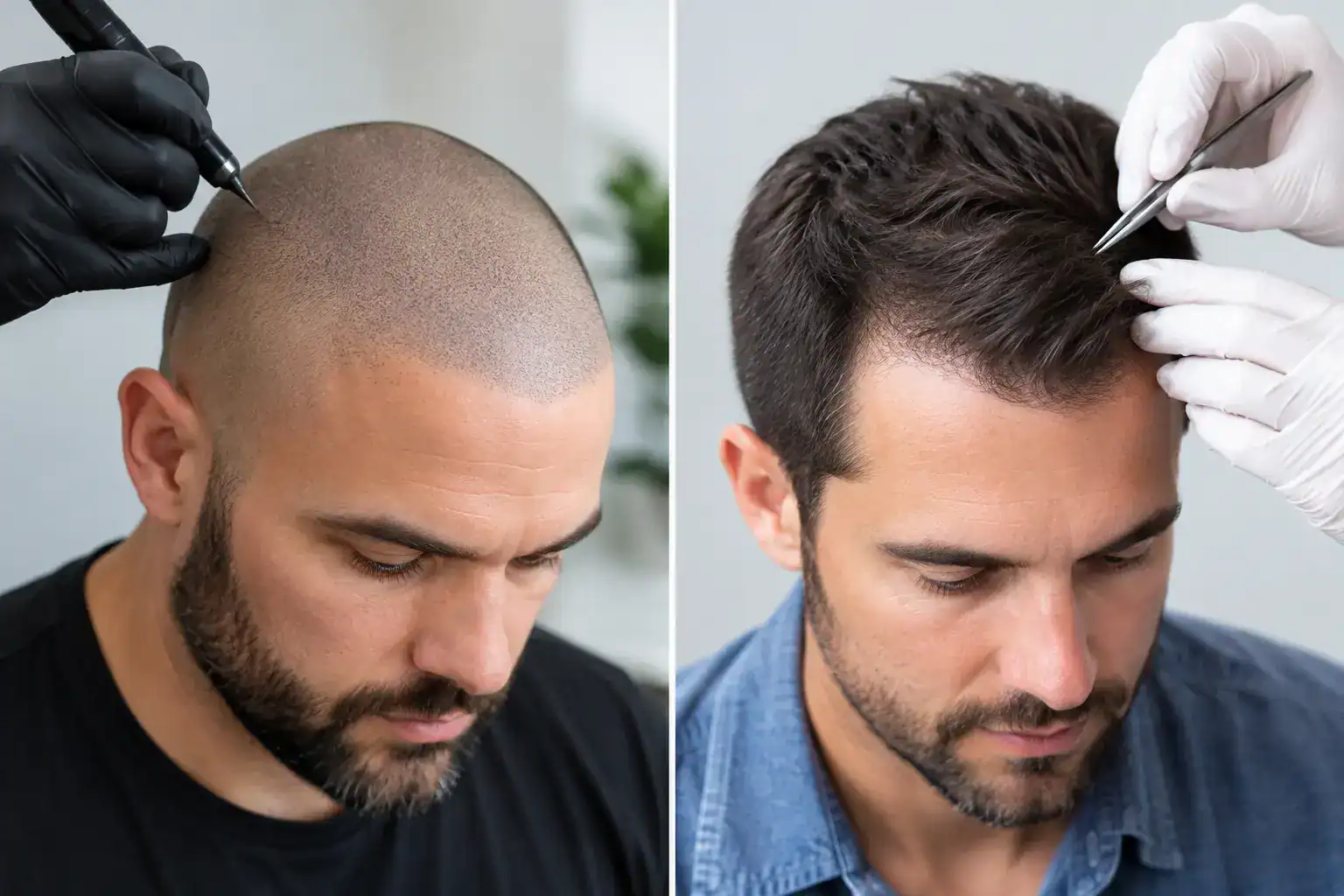
Scalp Micropigmentation Versus Hair Transplant
A thinning hairline can change the way you see yourself long before anyone else notices it. When comparing scalp micropigmentation versus hair transplant, the best choice is not simply the one that promises more hair. It is the treatment that fits your pattern of loss, your health, your lifestyle, your budget, and the result you want to see in the mirror.
Both options can be meaningful. One creates the appearance of closely cropped, fuller hair through precisely layered medical pigmentation. The other moves living follicles from one area of the scalp to another in an effort to regrow hair. They solve different parts of the same concern, and understanding that distinction can make the decision feel far less overwhelming.
Scalp Micropigmentation Versus Hair Transplant: The Core Difference
Scalp micropigmentation, often called SMP, is a non-surgical tattooing technique that replicates the look of natural hair follicles. Using specialized pigments, needle configurations, and carefully planned density, a trained practitioner places tiny impressions across the scalp. On a shaved or closely cropped head, the effect can resemble a naturally full buzz cut. For clients with longer hair, it may reduce the contrast between the scalp and existing hair, helping thinning areas appear denser.
A hair transplant is a surgical procedure. A physician removes hair follicles from a donor area, usually the back or sides of the scalp, and transplants them into areas experiencing thinning or baldness. The goal is living hair growth, which can later be cut, styled, and colored like the rest of the client’s hair.
That difference matters. SMP creates a visual result immediately after the treatment series heals. A transplant relies on the survival and growth of grafted follicles, which takes time and can vary from person to person.
What Results Can You Expect?
For the right candidate, scalp micropigmentation can create a remarkably natural hairline and the appearance of even follicle density. The artistry is in restraint: a hairline should suit your age, facial proportions, skin tone, and likely future hair-loss pattern. An overly low or sharply drawn hairline may look convincing at first but feel less natural over time.
SMP is especially effective for clients who prefer a short hairstyle, have diffuse thinning, want to camouflage scars, or have limited donor hair for transplantation. It can also help soften the appearance of transplant scars, including linear scars from older procedures. Because it does not depend on existing follicles, it can be an option for many people whose hair loss has progressed beyond what surgery alone can address.
Hair transplant results can look very natural when the procedure is performed by a skilled, ethical surgeon and the client has strong donor supply. It is the only one of these options that may produce actual growing hair in the transplanted area. Still, transplanted hair does not create unlimited density. A surgeon must distribute a finite number of donor grafts strategically, often prioritizing the hairline and frontal scalp.
Native hair loss can continue after a transplant. That means a client may need medical hair-loss management, additional procedures, or a plan that accounts for future thinning. A transplant is not necessarily a one-time answer, particularly for someone with progressive androgenetic alopecia.
The Waiting Period Is Very Different
SMP is generally completed over two to four sessions, spaced to allow the skin to heal and the artist to assess how the pigment settles. Clients typically notice a visible change after the first session, with the finished look building gradually. There is brief aftercare, including avoiding heavy sweating, swimming, and direct sun exposure while the scalp heals.
With a hair transplant, the early phase can require more patience. Temporary redness, swelling, scabbing, and shedding of the transplanted hairs are common parts of recovery. New growth may begin several months later, while final maturation can take 12 months or longer. That timeline is worth considering if you have an upcoming wedding, career milestone, or personal event driving your decision.
Candidacy: Who May Benefit From Each Option?
A consultation should look beyond the bald spot. The right recommendation considers your age, family history, current hair-loss pattern, donor density, scalp health, medications, goals, and comfort with either a shaved style or a surgical process.
Hair transplantation may be appropriate for clients with stable or well-managed hair loss, adequate healthy donor hair, realistic density expectations, and medical clearance for surgery. It is often less suitable for people with very limited donor supply, certain scalp conditions, uncontrolled medical concerns, or rapidly progressing hair loss that has not yet been evaluated.
Scalp micropigmentation may be a strong fit for people with full baldness, receding hairlines, diffuse thinning, alopecia-related hair loss, transplant scars, or hair loss following injury or surgery. It can be particularly empowering for someone who is ready to embrace a close-cropped appearance but wants it to look intentional, polished, and balanced.
Skin assessment also matters. A practitioner experienced in skin anatomy, healing, and Fitzpatrick skin types can choose pigment tones and placement strategies that complement your complexion and support a natural result. Active scalp irritation, infection, severe psoriasis flares, or certain dermatologic conditions may require medical evaluation before any procedure.
Cost, Maintenance, and Long-Term Commitment
Hair transplantation is usually the larger upfront financial investment because it is surgery performed by a medical team. Costs depend on the number of grafts, technique, geographic market, anesthesia, and the surgeon’s experience. You may also need to account for consultations, post-procedure care, medications, and potential future sessions.
SMP is generally less expensive than a transplant, although pricing varies based on the size of the treatment area, scar work, level of hair loss, and number of sessions required. It is not permanent in the same way a traditional body tattoo can be. Over several years, pigment naturally softens and may need a refresh to maintain definition and color balance.
Maintenance looks different, too. Transplanted hair can be washed, cut, and styled, but it may still require hair-loss treatment to protect surrounding native hair. SMP requires sun protection and occasional touch-ups, along with a willingness to maintain a close shave if the goal is a buzzed-hair appearance. Neither route is maintenance-free, but the maintenance should feel compatible with your routine rather than burdensome.
Can You Combine SMP and a Hair Transplant?
Yes. For some clients, the most satisfying plan is not an either-or decision. SMP can be used after a hair transplant to increase the appearance of density between transplanted hairs, reduce scalp contrast, or camouflage a donor scar. It may also help a client make the most of a limited number of grafts without pursuing repeated surgical sessions.
The order and timing should be individualized. A transplant surgeon and pigmentation specialist should both understand the overall plan, especially when healing tissue, scar maturation, or ongoing hair-loss treatment is involved. Rushing into either procedure without a long-term strategy can lead to a result that feels disconnected as your hair changes.
Questions Worth Asking Before You Choose
Ask a transplant provider how they assess donor capacity, how they plan for future hair loss, and what density is realistically achievable in your case. Ask to see healed results from clients with hair characteristics similar to yours, not only immediate post-procedure photos.
For SMP, ask who performs the procedure, what training they have in scalp-specific pigmentation, how they design age-appropriate hairlines, and how they approach your skin tone and hair color. Review healed work in natural lighting. A quality result should not read as a flat, dark helmet of ink. It should have softness, variation, and a believable transition into existing hair.
At Fancy Shmancy, the consultation is designed to be a thoughtful part of the treatment, not a formality. A personalized plan considers the visual details that make a result feel like you: hairline shape, pigment selection, skin behavior, scar texture, and what confidence looks like in your everyday life.
Choose the Result That Supports You
If your priority is real hair growth and you have suitable donor hair, a transplant may be worth the surgical investment and longer timeline. If you want a non-surgical, immediate-looking solution, have advanced hair loss, or want to camouflage thinning or scarring with a close-cropped style, scalp micropigmentation may offer the freedom and polish you have been looking for.
The most helpful next step is a candid consultation with qualified professionals who will discuss limitations as carefully as possibilities. The right plan should leave you feeling informed, respected, and closer to an appearance that feels comfortably your own.
Author: Liana Reznik