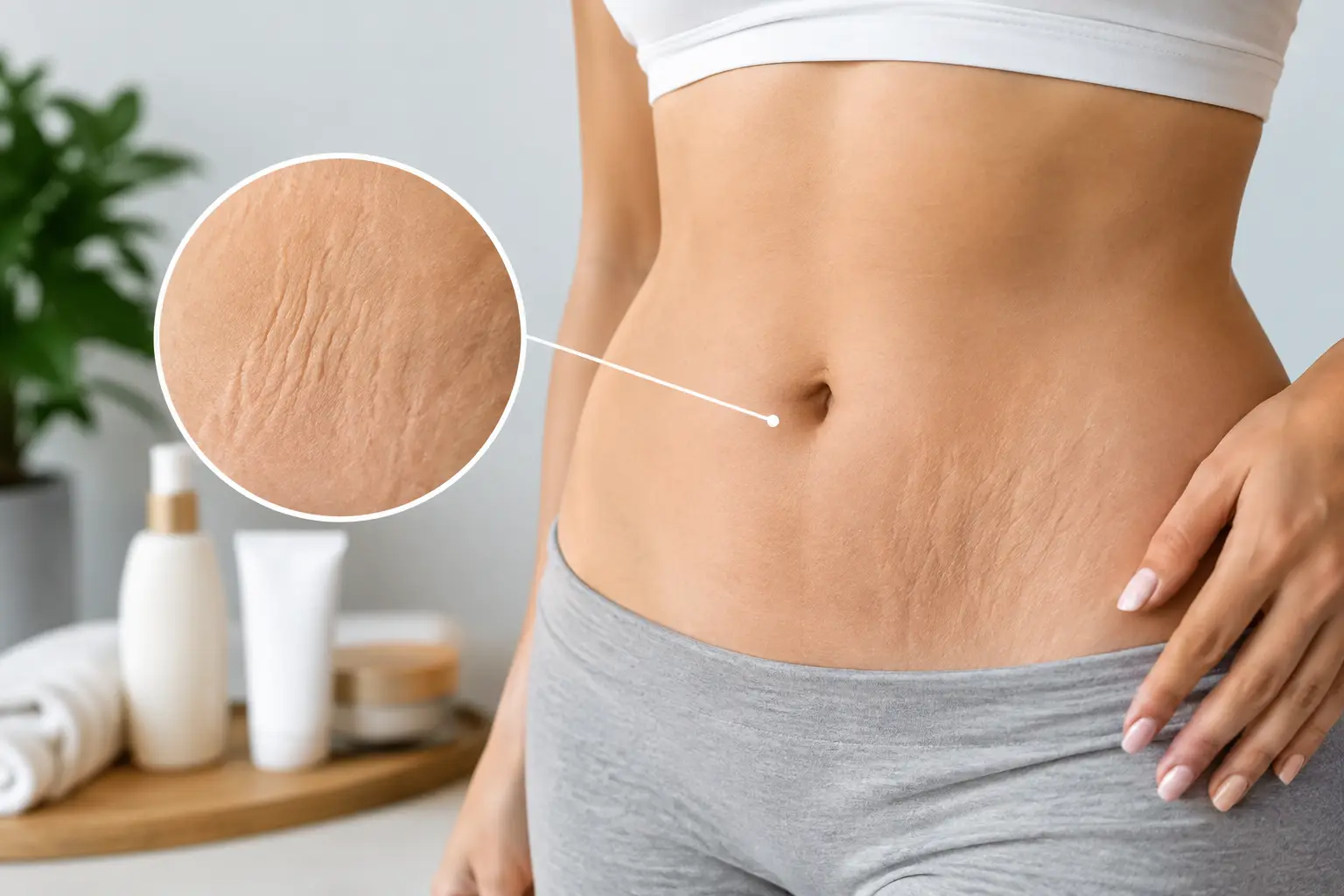
Abdominal Stretchmark Camouflage Explained
A changing body can leave a visual reminder long after pregnancy, weight change, growth, or surgery has passed. Abdominal stretchmark camouflage is a restorative medical pigmentation treatment designed to reduce the color contrast between mature stretch marks and the surrounding skin, helping the area look more visually even in clothing, swimwear, and everyday life.
This is not about erasing a chapter of your life or promising flawless skin. It is about thoughtful artistry, precise color work, and the confidence that can come from seeing your abdomen feel more like your own again.
What Abdominal Stretchmark Camouflage Does
Stretch marks develop when skin stretches faster than its supportive structure can comfortably adapt. Early marks may appear red, purple, brown, or pink, depending on the individual’s skin tone and the age of the marks. Over time, they often become lighter, silvery, or pale, creating a noticeable contrast against surrounding abdominal skin.
Camouflage tattooing places customized pigment into the superficial layers of the skin to blend that lighter or darker appearance more closely with the client’s natural tone. The goal is not to tattoo a flat block of color over the abdomen. A skilled practitioner studies the skin’s undertone, natural variation, and the direction and density of the marks, then builds color gradually so the result looks soft rather than obvious.
The treatment does not remove stretch marks, rebuild lost collagen, or completely change texture. If marks are indented, raised, or crepey, those textural qualities may still be present when skin is touched or viewed in certain lighting. What camouflage can change is the visual interruption created by contrast, which is often the feature clients notice most.
Who Is a Good Candidate for Stretch Mark Camouflage?
The strongest candidates generally have stretch marks that are fully healed, stable in color, and no longer actively changing. Fresh marks need time. Treating skin that is still inflamed or evolving can lead to unpredictable pigment retention and a result that no longer matches as the marks mature.
For many people, this means waiting until abdominal stretch marks have been stable for an extended period. The right timing depends on the cause of the marks, the condition of the skin, recent procedures, and personal healing history. A detailed consultation is more valuable than a one-size-fits-all timeline.
Clients should also be realistic about sun exposure. Camouflage pigment is selected to match the skin as it appears at the time of treatment. A deep tan can alter that relationship, and skin may change seasonally. For this reason, many practitioners recommend treating untanned, stable skin and protecting the area from UV exposure afterward.
Skin tone matters as well, but it should never be reduced to a simple light-versus-dark assessment. Fitzpatrick skin types, undertones, healing patterns, and tendencies toward post-inflammatory hyperpigmentation all influence the treatment plan. Experienced medical pigmentation work begins with careful evaluation, not a pigment selected from a chart.
When treatment may need to wait
Camouflage may not be appropriate when there is an active rash, infection, open skin, sunburn, uncontrolled diabetes, a current tendency toward problematic scarring, or a medical condition that affects healing. Pregnancy and nursing can also be a time to postpone elective pigmentation, particularly while the body and skin are still changing.
Certain medications, recent chemical peels, laser treatments, or abdominal surgery may require a longer waiting period. If a client has a history of keloids, autoimmune concerns, allergies, or is under medical care, clearance from the appropriate physician may be recommended. A responsible provider will be comfortable saying “not yet” when that is the safest answer.
Why Color Matching Is More Complex Than It Looks
Abdominal skin is rarely one uniform color. It may be warmer at the center, slightly deeper near the waist, cooler around older scars, or affected by freckles, veins, and natural shadow. Stretch marks themselves can vary from one section of the abdomen to another.
That is why successful abdominal stretchmark camouflage depends on layering and restraint. The practitioner may create and adjust a custom pigment blend, then implant it conservatively over more than one session. Freshly treated pigment can look stronger or warmer before it settles, and healed results reveal how the skin has truly accepted the color.
No ethical artist should promise an exact match after one appointment. Skin heals individually, pigment can shift as it settles, and some areas retain color more readily than others. A refined result is often built over time, with room for assessment and adjustment between sessions.
What the Appointment Process Can Look Like
A high-touch treatment experience begins before pigment ever touches the skin. During a consultation, the provider evaluates the age and condition of the stretch marks, discusses health history and expectations, reviews the skin’s natural tones, and explains whether camouflage is likely to offer a meaningful improvement.
At Fancy Shmancy, this planning reflects the same clinical care used in restorative pigmentation services. The treatment area is assessed closely, pre-care instructions are provided, and every decision is made around the individual client rather than a standardized formula.
On the day of treatment, the abdomen is cleansed and prepared. The provider works methodically across the selected area, using a tattoo device to deposit pigment in controlled passes. Sensation varies. Some clients describe light scratching or vibration, while sensitivity can be greater in areas that are thin, recently stretched, or close to scar tissue.
The appointment length depends on the size of the area, the density of the marks, and whether the work is being completed in stages. Afterward, the skin may look red and the pigment may appear more pronounced than the healed result. This is normal in the early healing period, but every client should receive clear, personalized aftercare instructions.
Healing and Aftercare Affect the Result
Camouflage is a partnership between technical skill and proper healing. The area needs to stay clean, protected from friction, and shielded from sun exposure. Clients are commonly asked to avoid swimming, soaking, heavy sweating, and tight clothing for a period specified by their practitioner. Picking, exfoliating, or using unapproved products can interfere with pigment retention.
As the skin heals, it may look temporarily patchy, lighter, or uneven. That early stage is not the final result. A follow-up appointment is typically scheduled only after the skin has completed its initial healing cycle, allowing the provider to assess where more blending is needed.
Long-term maintenance varies. All cosmetic and medical pigmentation can fade over time due to metabolism, sun exposure, skin turnover, lifestyle, and the original depth and color of the marks. Some clients enjoy their results for years before choosing a refresh, while others may need earlier refinement. Honest expectations make maintenance feel like a planned part of the process, not a surprise.
Camouflage, Inkless Treatments, and Skin Texture
People often ask whether they need camouflage tattooing, an inkless stretch mark treatment, or both. The answer depends on the concern they want to address. Camouflage focuses on color discrepancy. Inkless approaches are intended to support the appearance of skin texture through a different technique and may be considered when texture is the primary concern.
For some clients, a staged plan makes sense: address skin quality first, allow adequate healing, then evaluate whether pigment camouflage would add value. For others, color correction alone provides the visual change they hoped for. The most appropriate approach is the one that respects the skin’s condition rather than forcing every concern into one procedure.
Choosing a Practitioner for Abdominal Camouflage
This treatment sits at the intersection of artistry, sanitation, skin knowledge, and emotional sensitivity. Look for a practitioner with specific experience in paramedical tattooing and a clear understanding of healed skin behavior, not simply someone who offers conventional body tattoos.
Ask to see healed work across a range of skin tones, not only immediate after photos. Discuss how pigment selection is approached, how many sessions may be recommended, what aftercare looks like, and what happens if the skin does not retain pigment evenly. You deserve direct answers, a clean professional setting, and a provider who treats your concerns with privacy and respect.
Your stretch marks do not need to be justified before they are cared for. A consultation can simply be a place to ask questions, understand your options, and decide whether a softer, more blended appearance feels right for you.
Author: Liana Reznik