Areola Tattoo Preparation Before Your Appointment
A 3D areola tattoo can be a meaningful final step after breast reconstruction, mastectomy, reduction, lift, or other breast surgery. Thoughtful areola tattoo preparation gives your skin the best possible conditions for precise, natural-looking pigmentation while helping you arrive feeling informed, comfortable, and cared for.
This is not a treatment to rush. The most beautiful restorative results begin with fully healed tissue, clear medical guidance, and a personalized plan that respects both your health and the story your body carries.
Areola Tattoo Preparation Begins With Healing
Your skin must be completely healed before areola or nipple tattooing. That means all surgical incisions should be closed and stable, with no scabs, open areas, drainage, active irritation, or signs of infection. Scar tissue should be mature enough to tolerate treatment, rather than pink, raised, tender, or changing quickly.
The right timing varies widely. Your plastic surgeon or medical provider may have a specific recommendation based on your procedure, reconstruction method, radiation history, medications, and healing progress. Many clients need several months of healing after surgery, but a calendar alone cannot determine readiness. Your surgeon’s clearance and an in-person assessment of the tissue matter more than a standard timeline.
If you have had radiation, skin grafting, implant reconstruction, flap reconstruction, or a history of slow healing, your preparation may require additional patience. These factors do not automatically rule out tattooing. They simply affect how the skin responds to pigment and how conservatively the treatment should be planned.
Start With a Personalized Consultation
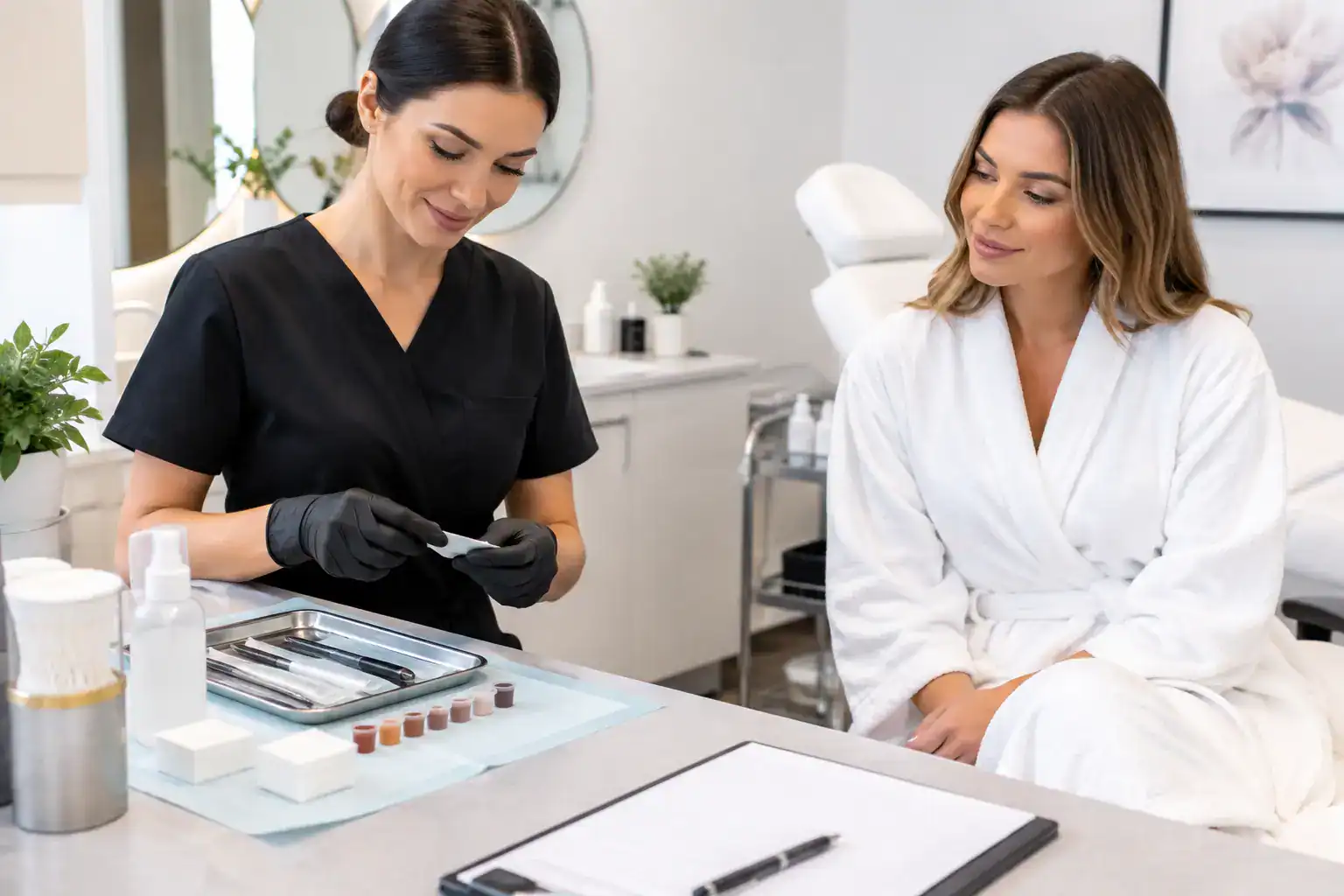
A consultation is where restorative artistry meets clinical attention to detail. Your artist should review your medical history, surgery or reconstruction details, skin sensitivity, allergies, current medications, and healing concerns. Be open about prior tattoos, pigment reactions, autoimmune conditions, diabetes, immune suppression, keloid scarring, and any history of infection or delayed wound healing.
Photos of your breasts before surgery can be helpful when they are available, especially if you would like the new areola to reflect your original size, placement, and color. They are never required. Some clients prefer to use their remaining natural areola as a reference, while others choose a shape and tone that feels balanced with their reconstructed breast and personal goals.
At Fancy Shmancy, planning also considers scar placement, breast symmetry, skin texture, and Fitzpatrick skin type. A realistic 3D areola is created through layered shading, highlights, and carefully selected pigment tones. The aim is not a one-size-fits-all circle of color. It is an individualized visual restoration that looks harmonious on your skin.
Protect the Treatment Area in the Weeks Before
Once your appointment is scheduled, protect the skin from anything that could cause unnecessary inflammation or alter its tone. Avoid tanning, sunburn, self-tanner, and tanning beds on the chest and breast area. Fresh sun exposure can make skin more sensitive, complicate color matching, and increase the chance that pigment heals differently than expected.
Keep the area gently moisturized if your surgeon has cleared you to do so, but do not use aggressive exfoliants, retinoids, strong acids, bleaching products, or medicated creams near the treatment site unless your medical provider specifically instructs you to. The goal is calm, intact skin. Do not pick, scratch, or attempt to fade scars with at-home treatments shortly before your appointment.
If you are considering scar revision, laser treatment, microneedling, or another procedure on the breast area, discuss the sequence with your medical team before scheduling tattooing. These treatments can change scar texture and skin integrity. In some cases, it makes sense to complete them first and allow sufficient healing. In others, the timeline may be different. Your care plan should reflect your body, not a generic checklist.
Medication planning deserves the same care. Never stop prescription medications, anticoagulants, supplements, or pain relievers without direction from the clinician who prescribed them. Some medications and supplements can increase bleeding or bruising, which may affect the tattoo process and pigment retention. Your artist can provide pre-care instructions, but your prescribing provider is the right person to advise you about medication changes.
Areola Tattoo Preparation for Appointment Day
The day before and the morning of treatment, focus on helping your body feel steady. Eat a nourishing meal, drink water, and get as much rest as you reasonably can. Arriving hungry, dehydrated, or exhausted can make any cosmetic or paramedical procedure feel more difficult than it needs to.
Avoid alcohol for the period specified in your pre-care instructions, as it can contribute to bleeding and sensitivity. Limit caffeine if your artist recommends it, particularly if caffeine makes you anxious or shaky. Do not apply numbing cream, lotion, oil, self-tanner, or any topical product to the breast area unless your artist has expressly approved it. The wrong topical product can interfere with skin assessment or treatment.
Wear a soft, clean top that is easy to remove and put back on without rubbing against the chest. A button-front or zip-front shirt is often more comfortable than a tight pullover. If you have a favorite soft bra, camisole, or post-surgical garment that does not create pressure on the treatment area, bring it along for afterward if advised.
You may also want to bring reference photos, questions from your consultation, and emotional support in whatever form feels right to you. For some people, this appointment feels exciting. For others, it brings up grief, vulnerability, or complicated memories of treatment. Every response is valid. A professional restorative tattoo experience should make room for both the technical details and the human ones.
Know What Can Affect Your Result
Healed pigment does not always look exactly like fresh pigment. It commonly appears darker immediately after treatment, then softens as the skin recovers. Scarred, radiated, or reconstructed skin can retain pigment differently from untouched skin, and some clients need a touch-up session to refine saturation, color balance, or small details.
That is not a failure of the procedure. It is part of working honestly with living skin. A skilled artist plans for this possibility and builds the result gradually rather than overworking delicate tissue in a single visit. Patience protects both the skin and the final appearance.
Contact your artist before the appointment if you develop a rash, illness, cold or flu symptoms, a skin reaction, a new wound, or any unexpected change around the treatment area. Rescheduling may be the safest choice. You should also postpone if your surgeon has not yet cleared you or if your scars are still actively healing.
Give Yourself Permission to Take This Step Slowly
Areola tattooing is often described as the finishing touch of reconstruction, but it can mean far more than that. It may be a moment of visual completion, a return to familiar contours, or simply a choice made for yourself after a long medical journey. Preparation is not about perfection. It is about creating the safest, most supported setting for an outcome that helps you feel more at home in your body.
Author: Liana Reznik