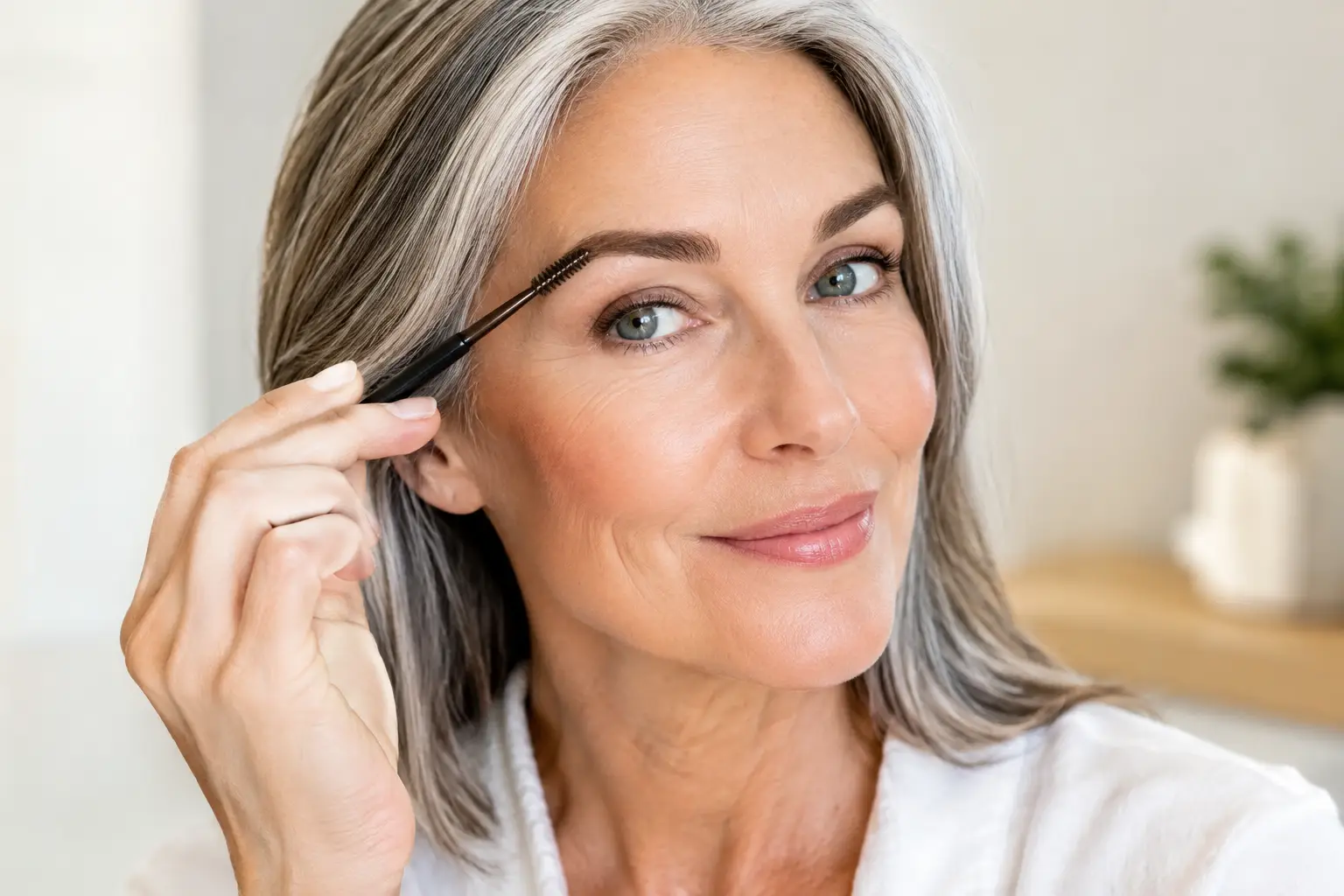
Best Brows for Mature Skin That Look Natural
A brow that once felt effortless can begin to disappear gradually: the tail thins, the front loses density, and years of tweezing or hormonal change leave uneven growth behind. The best brows for mature skin do not try to recreate a heavy, sharply drawn brow from decades ago. They restore gentle structure, lift the expression, and bring definition back to the face without competing with it.
For many clients, that change is about far more than saving time in the morning. A thoughtfully designed permanent brow can make the face feel familiar again – polished, balanced, and confidently yours.
Why mature skin needs a different brow approach
Skin evolves with age. It may become thinner, drier, more textured, or less elastic. Collagen loss can change how the skin holds pigment, while sun exposure, skincare ingredients, medications, and medical history may affect healing. Brow hair can also become finer, lighter, or sparse due to genetics, menopause, thyroid conditions, alopecia, or past over-tweezing.
That is why a brow service should never begin with a one-size-fits-all technique. Mature skin deserves a careful assessment of skin texture, oil production, existing pigment, natural hair pattern, facial symmetry, and the client’s daily makeup preferences. The goal is not to chase a trend. It is to create a result that settles softly into the skin and remains flattering as the face moves and changes.
A highly structured, dark, or overly warm brow can look harsher over time. By contrast, a well-chosen shape and translucent pigment can create the appearance of fuller brows while preserving softness around the eyes.
The best brow styles for mature skin
For many mature clients, a soft powder brow is the most reliable choice. This technique uses fine layers of pigment to create a diffused makeup effect, much like a softly filled brow pencil or powder. It can add definition through sparse areas without relying on crisp lines that may blur or heal unpredictably in delicate skin.
Powder brows are especially useful when there is little remaining brow hair, when the skin has visible texture, or when a client usually wears brow makeup. The front should remain airy rather than blocky, with the color gradually building toward the arch and tail. This gives the face lift and presence without an obvious tattooed appearance.
Ombré brows can create a polished, gentle finish
An ombré brow is a variation of powder shading with a lighter front and more depth through the arch and tail. When performed with restraint, it can be a beautiful option for mature skin. The key is subtlety. The transition should be soft, and the tail should not become too elongated or dramatically angled.
This approach works well for clients who want dependable daily definition and a more finished appearance, especially if their natural brows have faded significantly. It can also be adjusted to suit someone who prefers minimal makeup by keeping the overall color sheer and understated.
Nano brows may work for the right skin, but they are not universal
Nano brows use a machine to create hair-like strokes. They can be ideal for someone with stable, healthy skin and enough natural brow hair to blend with the strokes. The result can be delicate and realistic when the skin quality and hair pattern support it.
Still, hair strokes are not automatically the best choice simply because they look natural in a photo. On thin, crepey, very dry, highly textured, or sun-damaged skin, individual strokes may heal softer than expected, spread, or become less distinct over time. In those cases, a powder or hybrid technique may produce a cleaner, more graceful healed result.
A hybrid brow combines selective hair strokes with soft shading. It can provide a touch of natural texture at the front while using shading to create lasting density through the body and tail. Whether this is appropriate depends on the skin, not just the desired style.
Why microblading is not always the answer
Microblading has become a familiar term, but it is only one method of brow tattooing. It uses a manual blade to create superficial hair-like incisions in the skin. On some skin types, particularly younger, resilient skin with a supportive natural hair pattern, it can heal beautifully.
For mature skin, however, microblading can present more variables. Delicate skin may not retain crisp strokes consistently, and repeated blading over time can create unwanted trauma or scar tissue. This does not mean every mature client is automatically unsuitable for microblading. It means an experienced artist should be honest about whether it is likely to heal well for that individual.
The most beautiful choice is the technique that respects the skin. A soft, dimensional powder brow that heals evenly is far more valuable than a stroke pattern that looks impressive immediately after the appointment but loses clarity during healing.
Shape matters as much as technique
The right brow shape can visually open the eye area and restore balance, but small adjustments have a significant effect. Mature brows generally benefit from a soft lift rather than a high, dramatic arch. An arch placed too high can create a surprised expression, while a tail that drops too low can make the eyes appear downturned.
An artist should map the brows in relation to your bone structure, eye placement, natural muscle movement, and existing hair. Perfectly identical brows are not the goal because faces are naturally asymmetric. Instead, the focus is on harmony: brows that appear balanced when you are relaxed, speaking, smiling, and looking straight ahead.
Width matters, too. Brows that are too thin can disappear, while brows that are too wide or heavy can overwhelm fine features. The most flattering result is often slightly fuller than the client’s current natural brow, but still believable for her face and lifestyle.
Choosing pigment that will age gracefully
Pigment selection is where artistry and skin knowledge meet. The best brows for mature skin are rarely created with a single flat color. Skin undertone, natural brow hair, hair color, Fitzpatrick skin type, and prior permanent makeup all influence the pigment plan.
Cool-toned skin may need warmth balanced into the formula to prevent an ashy healed result. Warm or olive undertones may require a different approach so the brows do not heal overly red or orange. Gray hair does not automatically mean gray brows. In fact, a soft taupe, neutral brown, or muted ash-brown often looks more natural because it supports the skin and remaining hair rather than mimicking silver strands exactly.
Existing brow tattooing deserves special attention. If old pigment has faded to red, gray, blue, or orange, simply placing a new brown color over it may not correct the issue. Color correction, saline or laser removal, or a staged treatment plan may be needed before a fresh design is possible. A responsible consultation includes that conversation upfront.
Healing, skincare, and realistic expectations
Permanent makeup is a process, not a single finished moment. Brows look darker and more defined immediately after treatment, then often appear softer as the skin heals. Temporary flaking and a light or patchy-looking phase are normal parts of the healing cycle. A perfect-looking result on day one is not a predictor of the final healed result.
Mature skin may retain pigment differently from client to client. Some people need a planned perfecting session to build evenness and longevity. Retention can also be influenced by sun exposure, exfoliating acids, retinoids, chemical peels, swimming, sweat, and certain medications. Following pre-care and aftercare instructions protects both your skin and your investment.
Before treatment, disclose any history of blood thinners, autoimmune conditions, diabetes, active skin concerns, allergies, recent cosmetic procedures, or medical treatments. Clearance from a physician may be appropriate in some circumstances. Safety should always lead the conversation.
What to look for in a brow artist
For mature skin, credentials and experience matter. Look for an artist who can explain why they recommend a particular technique, not one who pushes the same style for every face. Review healed results, especially on clients with skin texture and age ranges similar to yours. Fresh photographs can be beautiful, but healed work reveals how an artist understands pigment, placement, and long-term softness.
At Fancy Shmancy, the consultation is where this precision begins. A personalized brow plan should consider your health history, skin anatomy, current brow condition, facial features, and the result that will make you feel most like yourself.
The right brows should not announce themselves before you enter the room. They should quietly bring your features into focus, giving you one less thing to correct in the mirror and one more reason to recognize your own confidence.
Author: Liana Reznik