Cosmetic Tattooing Versus Microblading: Key Differences
A beautifully shaped brow can make getting ready feel easier, but the wrong technique can leave you with results that heal too cool, fade unevenly, or simply do not suit your skin. When considering cosmetic tattooing versus microblading, the most useful question is not which treatment is more popular. It is which approach can create the most natural, stable result for your skin, lifestyle, existing brow hair, and long-term goals.
Both services fall under the permanent makeup umbrella, yet they are not interchangeable. Microblading is one specific method of eyebrow tattooing. Cosmetic tattooing is the broader category, encompassing several machine-applied techniques for brows, lips, eyeliner, freckles, and restorative medical pigmentation. Understanding the distinction helps you make a decision based on thoughtful planning rather than a trend or a photo taken immediately after treatment.
Cosmetic Tattooing Versus Microblading: The Core Difference
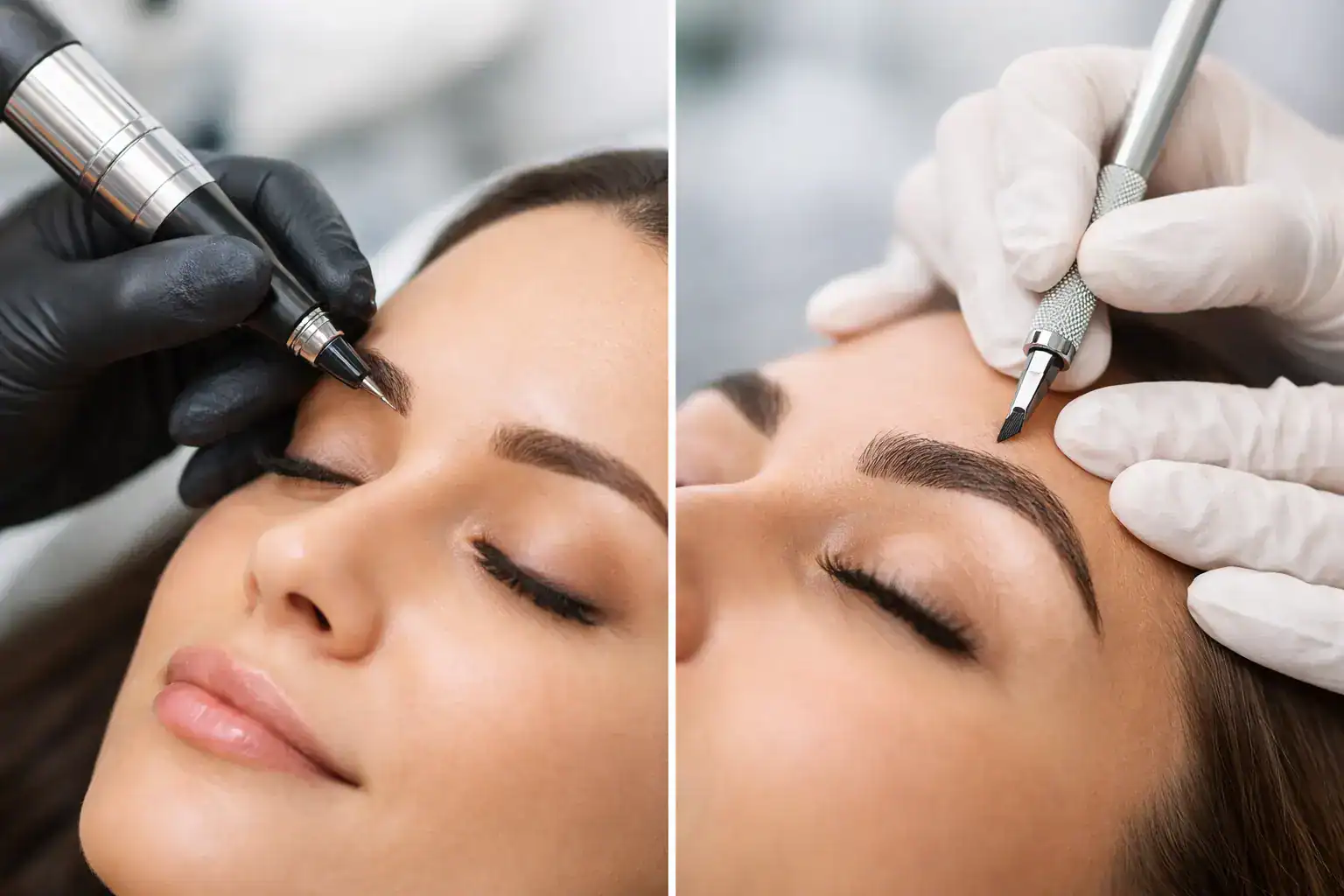
Microblading uses a handheld tool fitted with tiny needles arranged in a blade-like row. The artist creates fine, hair-inspired strokes manually in the skin, then works pigment into those strokes. When it heals well on the right candidate, microblading can create a soft, realistic effect that blends with natural brow hair.
Cosmetic tattooing for eyebrows is usually performed with a professional digital machine and a single-use needle cartridge. Rather than making manual cuts, the artist implants pigment with controlled movements to build powder brows, ombré brows, pixelated hairstrokes, shading, or a customized combination of strokes and soft density.
The distinction matters because the skin responds differently to each technique. A machine allows for highly controlled pigment placement and can create a delicate, airy finish that is far from the solid tattooed brows many people remember from decades ago. Modern permanent makeup is designed around facial balance, skin tone, hair color, and a result that fades gracefully over time.
What Microblading Does Best
Microblading may be a lovely choice for someone with normal to dry skin, relatively small pores, and healthy natural brow hair to blend with the new strokes. It can be especially appealing to clients who want to fill a few sparse areas without the appearance of makeup.
The best microblading results are intentional rather than overly dense. Fine strokes should follow the direction of natural hair growth, respect the brow’s existing structure, and leave enough negative space for the design to look believable once healed. A skilled artist does not simply add more strokes because an area appears empty. They assess symmetry, facial movement, and the way the brows frame the eyes.
Still, microblading has limitations. Because it relies on crisp, narrow incisions, the strokes may soften or blur over time. On oily skin, enlarged pores, or skin with significant sun damage, strokes can spread, fade unpredictably, or heal with less definition. Repeated microblading over already saturated pigment can also create a muddy appearance and compromise the skin.
Microblading is not automatically the most natural choice. On the wrong skin type, a soft machine technique can heal far more natural than hairstrokes that lose their clarity.
When Cosmetic Tattooing May Be the Better Fit
Machine-applied cosmetic tattooing gives an experienced permanent makeup artist a wider range of options. Powder brows, for example, use thousands of tiny pixels of pigment to create a misty, makeup-like background. They can be exceptionally soft and subtle, or more defined for clients who regularly wear brow pencil or powder.
Ombré brows are a variation with lighter color at the front of the brow and more depth through the arch and tail. This gradual effect can add structure without looking harsh. For clients who have little to no natural brow hair, a carefully planned powder brow often creates more visual continuity than microblading alone.
Machine hairstrokes can also be appropriate for selected clients. Unlike traditional manual microblading, the artist uses the machine to implant individual strokes with a different type of control. In some cases, a combination brow – hairstrokes at the front with gentle shading through the body and tail – delivers the most balanced result.
This flexibility is particularly valuable for mature skin, oily skin, clients with previous brow tattooing, and those who want longer-lasting definition. It can also be useful for clients with scars, though scar tissue needs individual evaluation. No two scars heal alike, and timing after surgery or injury is essential.
Skin Type Is Not a Minor Detail
Your skin is part of the treatment plan. Oil production, pore size, texture, sensitivity, previous pigment, skincare products, and sun exposure all influence how permanent makeup heals. A style that looks perfect on one client can be inappropriate for another.
At Fancy Shmancy, treatment planning considers skin anatomy and Fitzpatrick skin types, not just a reference photo. This is especially important for clients with melanin-rich skin, where pigment selection and technique must be approached with care to avoid unwanted undertones or uneven healing.
Clients using retinoids, exfoliating acids, prescription acne treatments, or certain medications may need to pause or adjust their regimen with guidance from their prescribing provider. Pregnancy, breastfeeding, active skin conditions, blood-thinning medications, and a history of poor wound healing can also affect candidacy. A reputable artist will ask direct questions, explain any concerns, and recommend postponing treatment when that is the safest choice.
Longevity, Fading, and the Reality of Touch-Ups
Neither microblading nor cosmetic tattooing should be thought of as truly permanent in the way a body tattoo often is. Brow pigment is intentionally placed more superficially and is selected to fade over time. This allows the shape and color to evolve as your face, preferences, and natural hair change.
Microblading often requires more frequent maintenance because the fine strokes are delicate. Cosmetic tattooing techniques such as powder or ombré brows may retain a more consistent overall appearance as they fade, although every client’s retention is different. Sun exposure, skin type, immune response, skincare, and lifestyle all play a role.
A perfect-healing fantasy is not a treatment plan. Most permanent makeup services involve an initial session followed by a perfecting appointment after the skin has healed. The first session establishes the design and color foundation; the follow-up allows the artist to assess retention and refine areas that need it. Future color refreshes are normal and should be planned as maintenance, not viewed as a failure of the original work.
Healing Requires Patience and Discipline
Immediately after either procedure, brows can look darker, warmer, sharper, or more dramatic than the final healed result. Swelling is usually minimal for brows, but the skin must still go through a controlled healing process. The color will often appear to fade, then settle back as the skin regenerates.
For the best chance of even healing, clients need to follow personalized aftercare instructions. That generally means keeping the area clean, avoiding picking or scratching, and temporarily limiting sweat, swimming, steam, sun exposure, and products that can disrupt the healing skin. Your artist may also ask you to avoid brow makeup during the initial recovery period.
Do not judge your final result in the first week. Pigment color and intensity can shift noticeably during healing. If something concerns you, contact your provider rather than trying to correct it at home with exfoliants, makeup, or extra washing.
Safety and Skill Matter More Than the Tool
A handheld microblading tool is not inherently safer, and a machine is not inherently more intense. The quality of the outcome depends on the practitioner’s training, sanitation standards, understanding of pigment behavior, and willingness to choose the right technique rather than the easiest sale.
Look for a provider who conducts a real consultation, reviews your health history, maps the brow shape before beginning, uses sterile single-use supplies, and gives clear pre-care and aftercare guidance. Ask to see healed results, not only fresh photographs. Healed work shows how the artist’s color choices, depth, and technique perform in real skin.
If you have old permanent makeup, resist the urge to cover it immediately. Previous pigment may need removal, color correction, or a different design strategy before new work can be safely added. An honest assessment protects both your skin and your investment.
Choosing the Result That Feels Like You
The right brow treatment should support your confidence without making you feel unlike yourself. Microblading may be ideal for a client with dry skin and a desire for delicate hair-like enhancement. A soft powder brow may be better for someone with oily skin, mature skin, sparse brows, or a preference for polished definition. A combination technique may offer the best of both approaches.
Bring inspiration photos to your consultation, but remain open to professional guidance. The goal is not to copy someone else’s brows. It is to create a shape, color, and level of density that honors your features, heals beautifully, and still feels right when you look in the mirror months from now.
Author: Liana Reznik