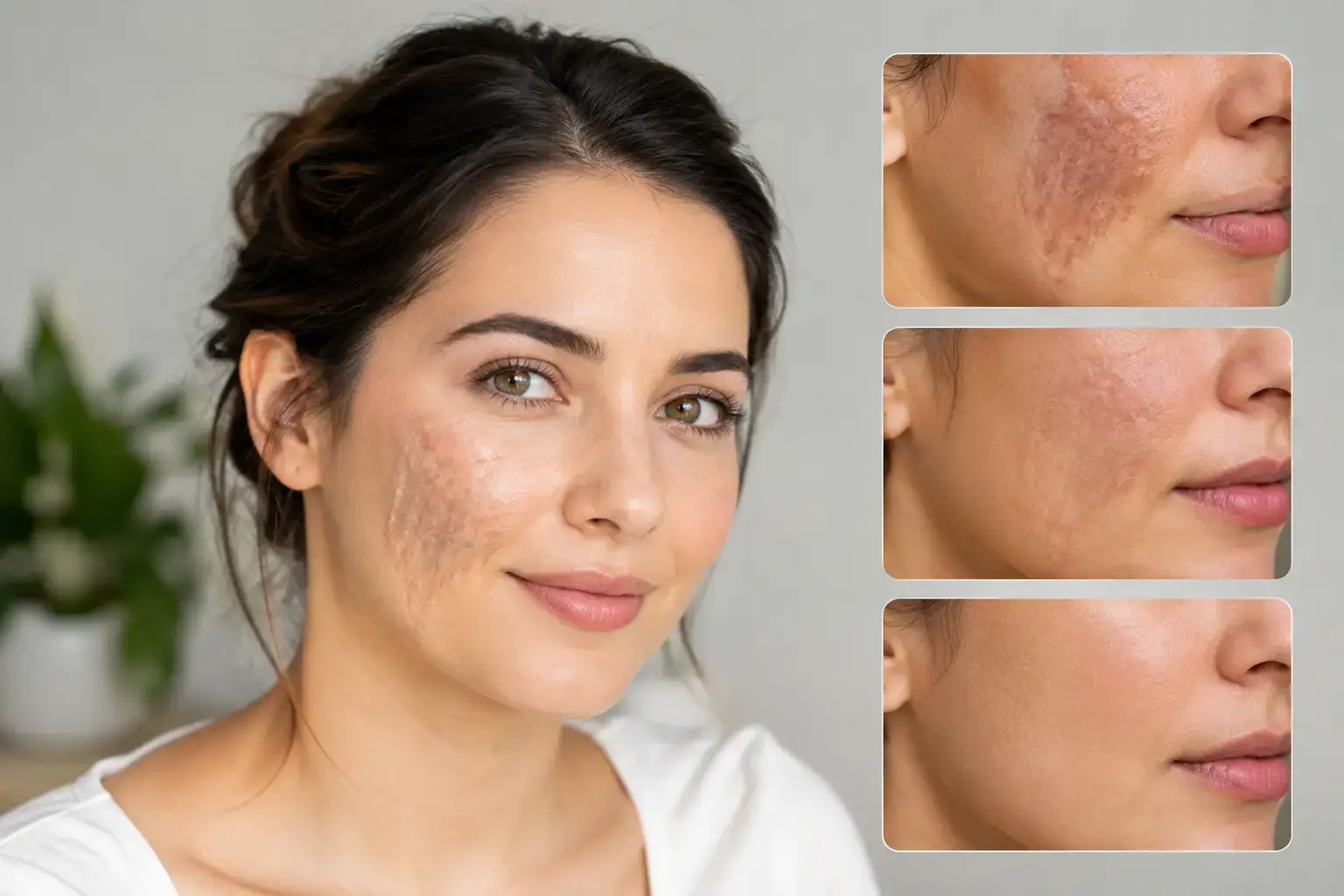
Burn Scar Camouflage Examples and What They Show
A burn scar can carry more than a change in skin tone. It may be a daily reminder of an accident, a surgery, or a difficult season of healing. Reviewing burn scar camouflage examples can help clarify what restorative pigmentation may accomplish: not erasing a scar, but reducing the contrast that draws the eye to it and helping the area look more visually connected to the surrounding skin.
For the right candidate, paramedical tattooing can be a meaningful final step in a long healing process. The work is highly individualized. Scar age, texture, location, skin tone, and the way the scar responds to light all influence the treatment plan and the result.
What Burn Scar Camouflage Is Designed to Do
Burn scar camouflage is a form of medical pigmentation. A trained specialist custom-blends pigment to soften a difference in color between a healed scar and the surrounding skin. The objective is visual continuity. When color contrast is reduced, the scar may appear less noticeable from a typical conversational distance.
This treatment works differently from a decorative tattoo. The practitioner evaluates undertones, Fitzpatrick skin type, scar tissue behavior, and the client’s natural skin color before selecting pigments. The pigment is placed with measured technique to create a soft, skin-like effect rather than a flat block of color.
Camouflage does not remove scar tissue, restore hair follicles, or make a raised, indented, tight, or shiny scar disappear. It also cannot reproduce the exact texture of unaffected skin. That distinction matters because the most satisfying outcomes come from a realistic goal: helping the scar blend more gracefully, not promising perfection.
Burn Scar Camouflage Examples: What Results Can Look Like
A photograph can be helpful, but it never tells the full story. Lighting, scar maturity, skin hydration, and camera exposure can make a result look different from one day to the next. These common examples show the types of changes a thoughtful camouflage plan may create.
A Pale Scar Against Deeper Skin Tone
A mature burn scar may heal noticeably lighter than the surrounding skin, especially on the arms, legs, chest, or torso. In this case, the eye is often drawn first to the pale patch because of the strong color contrast.
Camouflage pigmentation can introduce carefully layered warmth and depth, moving the scar closer to the client’s surrounding tone. A skilled artist will rarely choose one simple color. Natural skin contains variation, so the best result may involve subtle shifts in pigment rather than a single opaque match. The goal is for the area to look less separate, not overly tattooed.
A Darker Burn Scar on Fair or Medium Skin
Some healed scars appear deeper, redder, brown, or gray compared with surrounding skin. This can be more complex because scar tissue can hold pigment differently than healthy skin, and darker areas do not always respond predictably to lighter pigment.
Depending on the scar, the plan may include color correction before camouflage, or it may be better to avoid depositing a light pigment that could heal ashy or unnatural. A consultation should address whether pigment can improve the contrast or whether other scar-management treatments should come first.
A Large, Flat Scar With Uneven Tone
Large areas often require a staged approach. Rather than attempting to cover every inch in one appointment, a practitioner may begin with a test area and assess healing before expanding treatment. This gives the artist and client useful information about retention, color shift, and how the scar tissue accepts pigment.
In a successful result, the full scar may still be visible up close. Yet its outline can feel less obvious because the dramatic difference between scar and skin has been softened. This is often where clients experience the most emotional impact: getting dressed, going to the pool, or seeing themselves in the mirror without their attention immediately landing on the scar.
A Scar With Texture Changes
A scar can be light in color but raised, uneven, or shiny. Pigmentation may still be appropriate once the scar is medically stable, but the expectation must shift. Color can be improved; texture remains.
For some clients, adding natural-looking pigment makes the texture less noticeable because there is no longer a sharp color boundary around it. For others, particularly with pronounced hypertrophic or keloid scarring, tattooing may not be advisable. A responsible specialist will not treat a scar simply because it is visible.
When a Burn Scar May Be Ready for Camouflage
Timing is one of the most important safety factors. Burn scars need to be fully healed, stable, and cleared for treatment when appropriate. Many clients are advised to wait at least 12 months after the injury or surgery, although the correct timeline depends on the individual scar and medical history.
A scar that is still red, actively changing, painful, irritated, or prone to reopening is not ready for cosmetic camouflage. Raised scars, scars with a history of keloid formation, and areas affected by radiation or skin grafting require especially careful assessment. Your physician or plastic surgeon may be part of the decision-making process.
At Fancy Shmancy, this begins with an in-person or virtual consultation, not a one-size-fits-all promise. The treatment area is evaluated closely, goals are discussed honestly, and clients receive clear pre-care and aftercare guidance before proceeding.
Why Skin Tone Matching Takes Expertise
Skin tone is not one color. It contains undertones that may be golden, olive, peach, rosy, neutral, or cool, along with natural variation caused by sun exposure and circulation. A pigment that appears ideal in the bottle can heal differently in scar tissue than it does in healthy skin.
That is why advanced scar camouflage requires more than choosing a beige or brown shade. The practitioner considers the surrounding skin, the color of the scar, the body location, and the likelihood of pigment fading or shifting over time. Custom blending and conservative layering give the skin the best chance of healing into a believable result.
A patch test or small test spot may be recommended, particularly for extensive scars or clients with highly reactive skin. This adds time to the process, but it can protect the quality of the final result.
The Trade-Offs to Understand Before Treatment
Camouflage pigmentation is long-lasting, but it is not necessarily permanent in the way clients may imagine. Pigment can fade gradually, and touch-ups may be needed as skin changes, sun exposure accumulates, or the treated area reveals a different undertone over time.
Healing is also part of the result. The color immediately after treatment is not the final color. It may initially appear stronger, then soften as the skin recovers. Scar tissue can retain pigment unevenly, which is why more than one session is common and not a sign that something has gone wrong.
There are risks with any procedure that breaks the skin, including irritation, infection, pigment changes, and poor retention. Choosing a practitioner who understands sanitation, skin anatomy, and paramedical pigmentation is essential. Clients should also follow aftercare closely, including keeping the area clean, avoiding picking, and protecting healed skin from excessive sun exposure.
Questions Worth Asking at Your Consultation
A good consultation should leave room for direct, specific questions. Ask whether your scar appears mature enough for treatment, whether its texture affects candidacy, how many sessions may be needed, and what a realistic improvement would look like for your skin. You should also ask to see healed work on scars similar in color, texture, and location to yours.
Listen for candor. An experienced medical pigmentation artist will explain limitations as clearly as potential benefits. They will not guarantee an exact color match or suggest that every burn scar can be tattooed safely. Careful expectations are not discouraging – they are part of a treatment plan built around your well-being.
The right result is not about making your experience invisible. It is about giving you an option to see your skin with greater ease, on your own terms, when you are ready.
Author: Liana Reznik