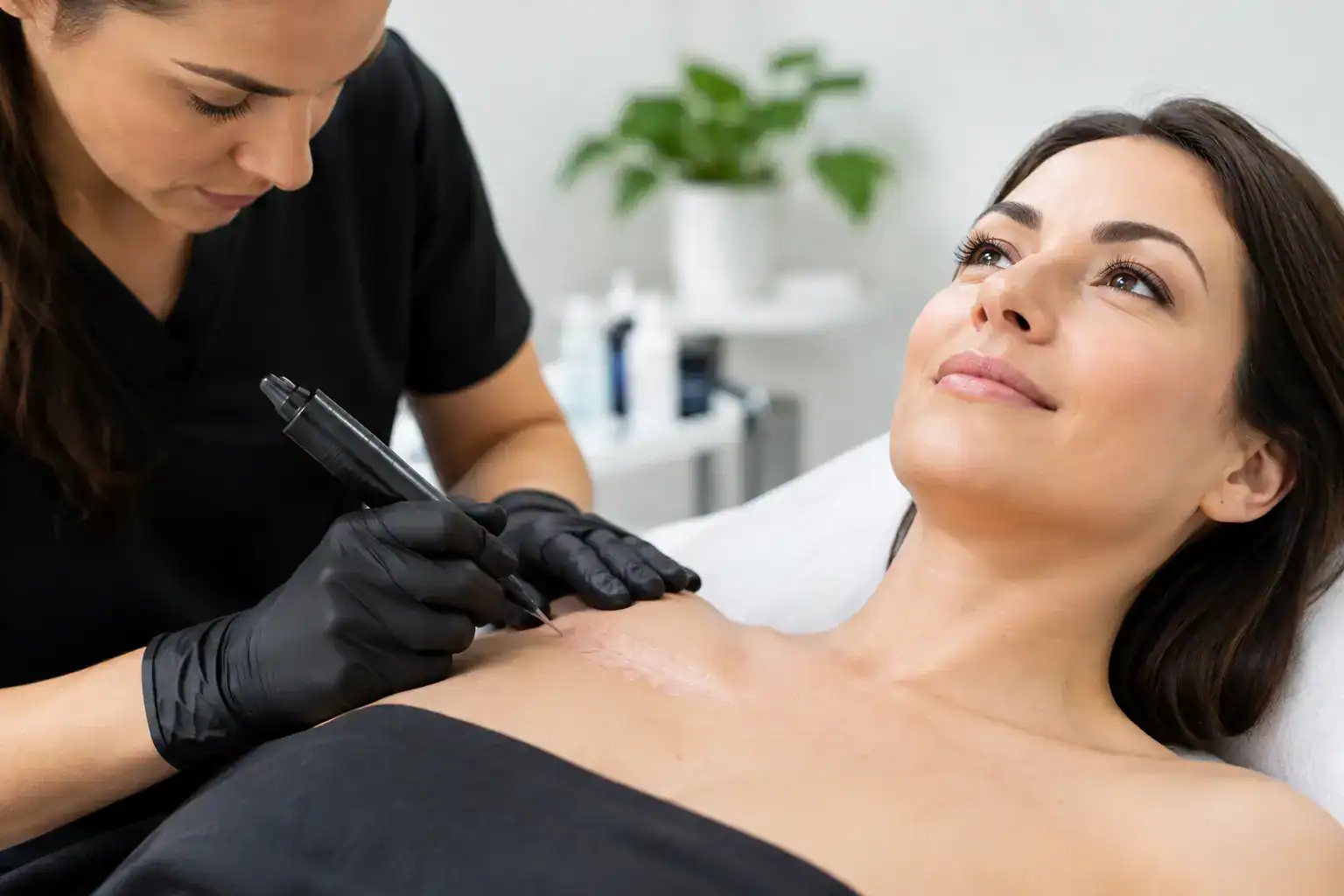
Paramedical Tattooing for Healing and Confidence
A scar may represent survival, treatment, childbirth, or a life-changing decision. It can also be the first thing you see when you get dressed, look in the mirror, or feel touched. Paramedical tattooing is a specialized form of medical pigmentation that helps soften the visual contrast of scars, restore lost detail, and create a more natural-looking sense of continuity in the skin.
This work is not about erasing a person’s story or promising perfection. It is about giving you more choice in how visible that story feels. With thoughtful planning, skin-specific pigment selection, and a skilled hand, restorative tattooing can be a meaningful final step in healing.
What Is Paramedical Tattooing?
Paramedical tattooing uses carefully implanted pigment to improve the appearance of skin affected by surgery, injury, medical treatment, or changes in the body. Unlike decorative body art, it is designed to blend with surrounding skin, recreate anatomical detail, or reduce the contrast between healed tissue and healthy tissue.
The category includes 3D areola and nipple tattooing after mastectomy or breast reconstruction, scar camouflage, stretch mark camouflage, scalp micropigmentation for the appearance of fuller hair, and certain inkless treatments intended to support the look and texture of mature scars or stretch marks.
Every case is individual. Skin tone, scar maturity, skin texture, surgical history, the Fitzpatrick skin type, and the area being treated all influence what can be achieved. A responsible consultation begins with an honest assessment of whether tattooing is appropriate now, later, or not at all.
Restorative Treatments Can Look Different for Every Body
For many breast cancer survivors, 3D areola tattooing is the final visual detail after reconstruction. By using layered tones, highlights, shadows, and fine artistic detail, a trained specialist can create the dimensional appearance of an areola and nipple on a flat surface. The goal is not a generic result. It is a result that feels proportionate and believable on your body.
Scar camouflage works differently. A scar does not always accept pigment the way untouched skin does, and its texture may remain visible even when its color is better blended. Camouflage can help reduce the contrast of pale, pink, or discolored scars once they are fully healed and stable. It may be considered after procedures such as tummy tucks, breast surgery, facelifts, joint replacements, or traumatic injury.
Stretch mark camouflage also uses custom color matching to make lighter stretch marks less noticeable against the surrounding skin. It is generally most successful on mature stretch marks that are no longer red, purple, or actively changing. Results vary based on texture, depth, skin elasticity, and the way an individual’s skin retains pigment.
Scalp micropigmentation places tiny, layered pigment impressions to create the appearance of hair follicles. It can add the look of density in thinning areas, soften the contrast of scalp scars, or create the appearance of a closely shaved hairline. It does not regrow hair, but for the right client, it can change how they see their reflection.
Timing Matters More Than Many People Realize
The desire to move forward after surgery is understandable. Still, tattooing over skin that is actively healing, inflamed, raised, unstable, or being medically treated can compromise both safety and results. Most surgical scars need significant time to mature before camouflage is considered. For areola tattooing, timing should also be guided by your surgeon and reconstruction progress.
A qualified practitioner will ask about your procedure date, medications, medical conditions, history of keloid or hypertrophic scarring, allergies, and current skin concerns. They should also discuss whether you are receiving chemotherapy, radiation, immunosuppressive medication, or other treatments that affect healing. Medical clearance may be needed in some circumstances.
This careful screening is not a barrier to your result. It is part of protecting it. The best outcome often comes from waiting until the skin is ready rather than rushing a treatment because the calendar says it is time.
The Art Is in the Assessment and Color Work
Natural-looking medical pigmentation depends on more than choosing a pigment that appears similar in the bottle. Skin has undertones, translucency, freckles, vascularity, and varying depth of color across the body. Scar tissue can also heal unpredictably and may retain pigment differently than surrounding skin.
During consultation, the specialist should evaluate the treatment area in person or through clear virtual images, then explain the likely number of sessions, limitations, and healing expectations. Custom pigment blends are created with your specific skin tone in mind, often with the understanding that healed color will soften and change from its fresh appearance.
For 3D areola work, placement, size, shape, and color are planned in relation to the breast and the client’s preferences. For scar or stretch mark camouflage, the focus is less on making an exact color match in one appointment and more on building a subtle blend over time. This is precision work. Small adjustments can make a meaningful difference.
What the Treatment Process Usually Includes
A high-touch paramedical tattooing experience should feel clear and respectful from the first conversation. At Fancy Shmancy, the process is built around consultation, personalized planning, precise treatment, and aftercare support, because restorative tattooing deserves more consideration than a standard cosmetic appointment.
Before treatment, you may receive pre-care instructions that address sun exposure, skincare products, hydration, medications, and what to wear for comfortable access to the area. On the day of your appointment, the skin is assessed again, the design or placement is confirmed, and the area is prepared using appropriate hygiene practices.
During the session, pigment is implanted in controlled layers. The sensation varies by body area, scar sensitivity, and your individual pain tolerance. Some reconstructed areas have reduced sensation, while other scars can be more sensitive than expected. Your provider should communicate throughout the appointment and make room for breaks when needed.
Afterward, the area may look deeper in color, warmer, or slightly more defined than the final healed result. Follow the aftercare guidance closely. Healing skin needs protection from friction, soaking, direct sun, and products that could interfere with pigment retention. A touch-up session is common, especially when working with scar tissue or building realistic dimensional detail.
Choosing a Specialist Is a Safety Decision
Not every tattoo artist or permanent makeup provider has training in restorative pigmentation. This field requires artistic ability, yes, but also knowledge of skin anatomy, wound healing considerations, pigment behavior, sanitation, and the emotional care required when working with clients after surgery or trauma.
Look for a provider who discusses limitations without minimizing your hopes, reviews healed results rather than only fresh photographs, and understands how Fitzpatrick skin types can affect color selection and healing. Ask about experience with your specific concern, whether collaboration with your surgeon or medical provider is appropriate, and how the practice handles follow-up care.
Be cautious of anyone who guarantees complete scar removal, promises identical results for every client, or pressures you to book before your skin is adequately healed. Paramedical tattooing can be transformative, but ethical work is rooted in informed expectations.
A Result That Supports Your Next Chapter
The most meaningful result is often quiet. It may be the confidence to wear a swimsuit without planning around a scar, the relief of seeing a completed breast reconstruction, or the freedom to stop checking whether thinning hair is visible under bright light. These changes are personal, and they deserve to be handled with skill and sensitivity.
If you are considering restorative pigmentation, give yourself permission to ask detailed questions and take your time. The right treatment plan should leave you feeling informed, respected, and supported long before pigment ever touches the skin.
Author: Liana Reznik