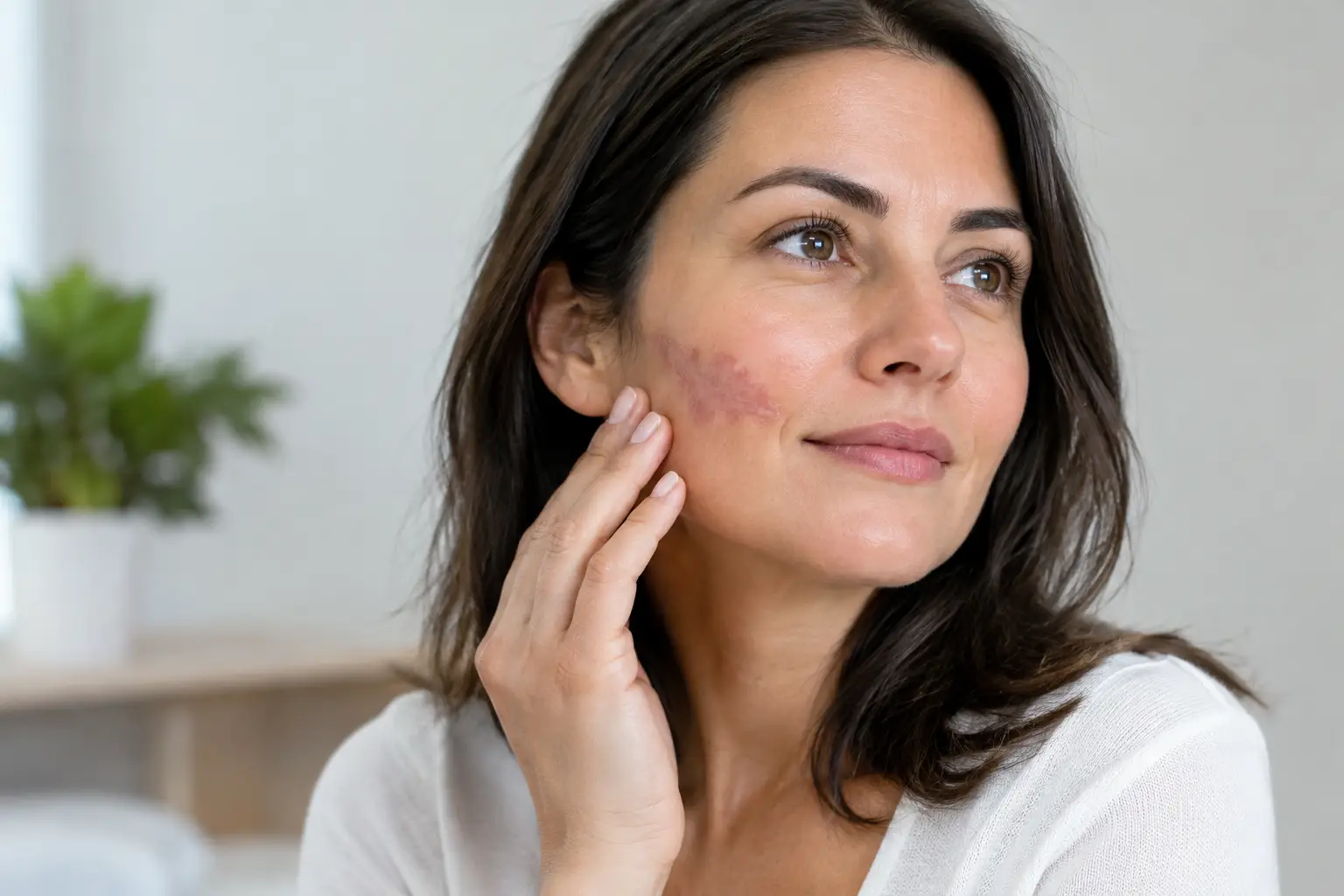
Is Radiation Scar Pigment Restoration Right?
Radiation can save lives, but its visible effects may remain long after active treatment ends. Changes in skin tone, texture, and scar color can make an area feel unfamiliar, especially after breast surgery or reconstruction. Radiation scar pigment restoration is a specialized form of medical tattooing designed to reduce the visual contrast of stable, healed scars and pigment loss, helping skin look more balanced without changing the story of what your body has been through.
For many clients, this is not about erasing a scar or pretending treatment never happened. It is about feeling more comfortable getting dressed, looking in the mirror, wearing a swimsuit, or moving through the world without a visible reminder taking center stage.
What radiation can change in scarred skin
Radiation affects more than pigment. It can alter circulation, collagen, elasticity, moisture levels, and the skin’s ability to repair itself. A scar that was once pale may become darker, reddish, purplish, or uneven in tone. Surrounding skin may lose color, become more sensitive, or develop a texture that does not behave like unaffected skin.
These changes are why post-radiation pigmentation work requires a different level of assessment than a conventional cosmetic tattoo. The skin may be thin, firm, fragile, or prone to unpredictable healing. Even when a scar looks fully closed, the tissue beneath it may still be changing.
A skilled medical pigmentation specialist evaluates the scar’s color, texture, location, maturity, and relationship to surrounding skin. Your Fitzpatrick skin type, history of healing, medications, surgical details, and radiation timeline all matter. There is no universal pigment formula and no responsible one-size-fits-all treatment schedule.
What radiation scar pigment restoration can and cannot do
The purpose of radiation scar pigment restoration is to visually soften contrast. Custom-blended pigments are placed gradually to help a scar or discolored area sit more naturally within the surrounding skin tone. Depending on the area and your goals, treatment may focus on a pale surgical scar, uneven tone near a reconstructed breast, color loss around an areola, or a combination of scar camouflage and 3D areola tattooing.
When successful, the result is subtle. The eye is less immediately drawn to the area because the difference between scar tissue and adjacent skin is less obvious. This can be especially meaningful when a scar is otherwise physically comfortable but emotionally difficult to see.
It is equally important to understand the limits. Pigment restoration does not remove scar tissue, restore sensation, flatten raised scars, repair radiation damage, or guarantee an exact skin-tone match in every light. Scar tissue may reflect light differently than nearby skin, so texture can still be visible even after color has been improved.
The goal is refinement, not perfection. A careful provider will be honest about that distinction before treatment begins.
When is skin ready for pigmentation?
Timing is one of the most important safety considerations. Radiation-affected skin needs adequate time to settle after surgery and treatment. The appropriate waiting period varies based on your medical history, the extent of radiation, whether reconstruction was performed, and how your skin has healed.
In general, the area should be fully closed, free of infection, and medically stable. It should not have open areas, active irritation, unexplained redness, or ongoing changes that suggest the tissue is still healing. Clients may also need clearance from their surgeon, oncologist, dermatologist, or other treating medical professional.
A consultation is the right place to discuss this in detail. Bring information about your treatment history, surgeries, current medications, and any prior tattooing or pigmentation in the area. If there is uncertainty, waiting is often the better choice. Good results depend on healthy healing conditions, not a rushed appointment date.
Signs a consultation may be appropriate
You may be ready to explore treatment if your scar and surrounding skin have been stable, your medical team has no concerns, and your goal is realistic camouflage rather than scar removal. You should also be prepared for the possibility that a test area, multiple sessions, or a conservative first pass may be recommended.
That measured approach is not hesitation. It is how a specialist protects both your skin and your result.
The consultation: where natural-looking results begin
At Fancy Shmancy, restorative pigmentation begins with listening. Every client’s experience with surgery, cancer treatment, injury, or reconstruction is personal. The consultation should create room for both the clinical details and the outcome that matters most to you.
Your specialist will assess the area in person or begin with a virtual consultation when appropriate. They will look at undertones in the surrounding skin, scar maturity, color variation, skin thickness, and tissue response. Natural skin is rarely one flat shade, so camouflage pigments often require layered, custom color work rather than a single premixed tone.
The treatment plan may include a small test spot before proceeding with a larger area. This is particularly valuable with radiated tissue, where pigment retention can be less predictable. A test spot allows the skin to show how it heals and how the color settles over time.
Clear communication matters here. Ask how many sessions may be needed, what fading is expected, whether the scar is a good candidate, and what circumstances would make treatment inadvisable. You deserve direct answers, not pressure to proceed.
What the treatment process feels like
The appointment is methodical and highly customized. After the skin is prepared and mapped, pigment is implanted with precise tattooing techniques chosen for the condition of the tissue and the desired effect. The sensation varies. Some clients find scarred or radiated areas less sensitive, while others experience heightened sensitivity around the scar borders or nearby healthy skin.
Treatment is typically built in layers. Rather than trying to place too much color in one visit, a conservative approach gives the skin time to heal and reveals how much pigment it retains. A second or third session may be needed to deepen color, adjust warmth or coolness, or blend the edges more completely.
Immediately after treatment, the area can look stronger, warmer, or darker than the healed result. This is normal. As the skin recovers, the pigment softens and settles. The true result should be evaluated only after the recommended healing period, not in the first few days.
Aftercare protects the investment in your skin
Aftercare is part of the procedure, not an afterthought. Your provider will give instructions based on the location and condition of your skin, but the core principle is simple: protect the treated area while it heals.
Avoid picking, scratching, friction from tight garments, soaking, swimming, heavy sweating, and sun exposure during the prescribed recovery period. Use only the products your provider recommends. If you notice increasing pain, spreading redness, unusual swelling, drainage, fever, or any sign of infection, contact a medical professional promptly.
Long term, sun protection matters. UV exposure can change both the surrounding skin and the appearance of implanted pigment, making even well-blended work look less consistent over time. Some clients choose a touch-up later as their skin, body, and natural pigmentation continue to change.
Choosing a provider for post-radiation scar camouflage
This is not the moment to choose solely on price or a generic tattoo portfolio. Look for a practitioner with specific experience in paramedical tattooing, scar camouflage, and post-surgical skin. They should understand color theory, skin anatomy, sterile technique, contraindications, and the different healing behavior associated with Fitzpatrick skin types.
Before-and-after photos can be helpful, but ask whether the cases involve mature scars, radiated skin, reconstruction, or concerns similar to yours. The strongest work looks natural rather than obvious. It also comes with clear pre-care, realistic expectations, and respectful coordination with your medical team when needed.
A scar may mark a chapter of profound strength. If its color contrast is what keeps drawing your attention, thoughtful pigmentation can offer a gentler visual transition – one planned around your skin, your healing, and the confidence you deserve.
Author: Liana Reznik