Is Skin Patch Testing Before Tattooing Necessary?
A tattoo can be a meaningful finishing touch, a daily confidence boost, or part of a deeply personal healing process. That is exactly why skin patch testing before tattooing deserves a thoughtful conversation. Whether you are considering permanent brows, lip blush, scalp micropigmentation, scar camouflage, or 3D areola tattooing, your comfort and skin health come before the pigment.
A patch test is not mandatory for every client or every procedure. In the right circumstances, however, it can be a sensible extra step that helps guide a safer, more confident treatment plan.
What Is a Tattoo Patch Test?
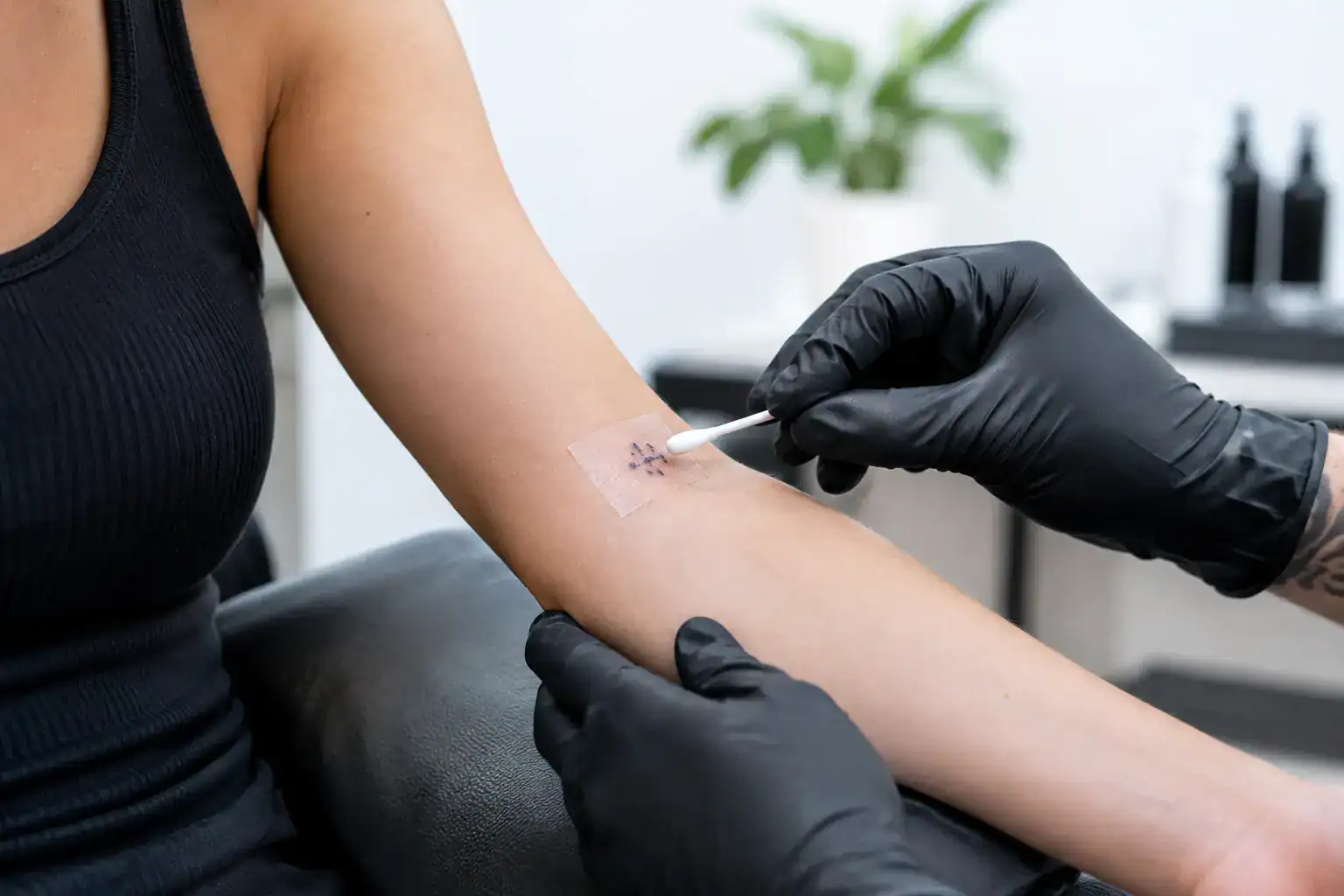
A tattoo patch test involves placing a very small amount of the intended pigment, and sometimes the topical products used during a service, on a discreet area of skin. The area is then observed for a reaction over time. Depending on the practitioner’s protocol and the type of treatment, this may be a topical application or a tiny test implantation of pigment.
The purpose is to look for signs that your skin may not tolerate a particular product well. Redness, itching, raised bumps, swelling, warmth, tenderness, or a rash may signal irritation or a possible allergic response. A normal-looking test site can be reassuring, but it cannot guarantee that a reaction will never occur after a full procedure.
That distinction matters. Tattoo pigments are placed in the skin, and the body can respond differently to a small test area than it does to a complete treatment. Reactions can also develop later, even when a client has had tattoos or permanent makeup without issues in the past.
When Skin Patch Testing Before Tattooing Makes Sense
Patch testing is particularly worth discussing if you have a history of sensitive skin, eczema, contact dermatitis, allergies to cosmetics, hair dye, latex, metals, adhesives, or topical anesthetics. It may also be advisable if you have reacted to tattoo ink, permanent makeup, or a previous cosmetic procedure.
For restorative work, the consultation is especially important. Clients seeking scar camouflage, stretch mark camouflage, inkless tattooing, or areola restoration may have skin affected by surgery, radiation, injury, reconstruction, or changes in sensation and circulation. A careful skin assessment helps determine not only whether patch testing is appropriate, but also whether the tissue is ready for treatment at all.
Your practitioner may also suggest a test when using a new pigment family, working with a client whose health history calls for added caution, or treating an area where the result carries significant emotional importance. There is no benefit in rushing a procedure that should feel considered and personal.
What a Patch Test Can and Cannot Tell You
A patch test can help identify an immediate or delayed skin response to a specific pigment or product. It can also give you and your practitioner useful information about how your skin behaves during the healing period.
What it cannot do is predict every outcome. A negative result does not eliminate the possibility of an allergy, infection, pigment migration, poor healing, or a later inflammatory response. Likewise, a red or tender spot is not automatically proof of an allergy. Skin can become irritated from friction, shaving, adhesive, cleansing products, or a minor needle-related trauma.
This is why an experienced practitioner looks at the whole picture rather than treating a patch test as a simple pass-or-fail checkbox. Your medical history, current medications, skin condition, Fitzpatrick skin type, procedure area, pigment selection, and healing capacity all influence the plan.
Pigment Is Only One Part of the Equation
When clients think about reactions, they often focus on ink. Pigment matters, but other materials used during a tattoo or permanent makeup appointment can be involved. These may include numbing creams, antiseptics, gloves, marking products, cleansing solutions, ointments, or aftercare products.
If you have had a reaction during a dental procedure, salon color service, facial treatment, surgery, or prior tattoo, share that information before your appointment. Bring the name of the product if you know it, or describe what happened and how soon it appeared. Details that may feel minor can help your provider make better choices.
A high-quality consultation is not about making assumptions. It is about creating a plan that respects your skin, your history, and the result you want to see in the mirror.
How to Prepare for Your Consultation
Be open about your health history, medications, allergies, and previous procedures. If you are under the care of a physician, dermatologist, plastic surgeon, or oncologist, follow their guidance regarding elective pigmentation treatments. Some situations may require written clearance, a postponed appointment, or a referral to an allergy specialist or dermatologist.
Avoid testing products on irritated, sunburned, broken, actively inflamed, or recently treated skin. A patch test performed on compromised skin may be uncomfortable and difficult to interpret. Your provider should also explain when to pause retinoids, exfoliating products, or other topical treatments if they apply to your procedure and skin type.
It is equally helpful to set realistic expectations. Many clients want a patch test because they are seeking certainty. What you can receive instead is something more valuable: a careful risk assessment, a personalized recommendation, and a provider who takes your concerns seriously.
Choosing a Safer Path for Permanent Makeup and Medical Pigmentation
Permanent makeup and paramedical tattooing are not one-size-fits-all services. The same approach that works beautifully for healthy brow skin may not be appropriate for a surgical scar, a reconstructed breast, or skin that has been through medical treatment.
At Fancy Shmancy, treatment planning begins with listening. The goal is never simply to place pigment. It is to understand the condition of the skin, the client’s desired outcome, and the safest path toward natural-looking results. In some cases, that means proceeding with a patch test. In others, it means adjusting the pigment choice, waiting for the skin to mature, or recommending that a client obtain medical input first.
For example, someone considering 3D areola tattooing after breast reconstruction may have healed incisions but still need an assessment of scar maturity, texture, sensation, and tissue stability. A client interested in lip blush may need to disclose a history of cold sores so the appropriate medical precautions can be discussed. A person pursuing scalp micropigmentation may need to postpone treatment if there is active dermatitis, psoriasis, or inflammation on the scalp.
These are not barriers to confidence. They are the details that protect it.
If You Notice a Reaction After a Test or Treatment
Do not try to push through a concerning skin reaction. Contact the practitioner promptly and follow their instructions. If you experience severe swelling, difficulty breathing, widespread hives, facial swelling, fever, increasing pain, pus, or rapidly spreading redness, seek urgent medical care.
For less severe changes, photographs taken in clear light can help document how the area is evolving. Avoid applying multiple new creams, makeup products, or home remedies without guidance, since they can worsen irritation or make it harder to identify the cause.
Your skin deserves the same level of care as your final result. A well-timed conversation, an honest health history, and a provider who knows when to pause can make the journey feel far more comfortable from the first consultation onward.
Author: Liana Reznik