Clinic Hygiene: What Safe Care Really Looks Like
A beautiful result should never require you to ignore the details that protect your health. Clinic hygiene is not a background task or a nice extra in permanent makeup and medical pigmentation. It is part of the treatment itself, shaping how your skin heals, how comfortable you feel in the chair, and how confidently you can move forward with your result.
For a client receiving permanent brows, lip blush, scar camouflage, 3D areola tattooing, or scalp micropigmentation, the experience is personal. In many cases, it is emotional, too. You deserve a setting that feels calm and affirming while meeting the standards of careful, clinical practice.
Why clinic hygiene matters for every procedure
Any treatment that creates controlled openings in the skin requires thoughtful infection prevention. Permanent makeup, paramedical tattooing, tattoo removal, and skin-focused treatments all call for a practitioner who understands not only artistry, but also skin anatomy, healing, and cross-contamination control.
The goal is not to create a sterile operating room. Aesthetic clinics are not surgical suites, and different services carry different requirements. The goal is to maintain a clean, organized treatment environment and use appropriate infection-control practices that reduce avoidable risk. That distinction matters because real professionalism is specific. It is not simply a room that looks white, polished, or spotless in a photograph.
Good hygiene also protects the quality of your work. When healing is disrupted by irritation, poor aftercare, or contamination, pigment retention and skin recovery can be affected. A thoughtful provider considers your skin type, medical history, current skincare routine, and the area being treated before a needle ever touches the skin.
What professional clinic hygiene looks like
The clearest sign of a well-run clinic is consistency. Safe practices should happen at every appointment, not only when a client asks about them. You may not see every preparation step, but you should feel comfortable asking how supplies are handled, what is single-use, and how treatment areas are disinfected between clients.
A prepared treatment space
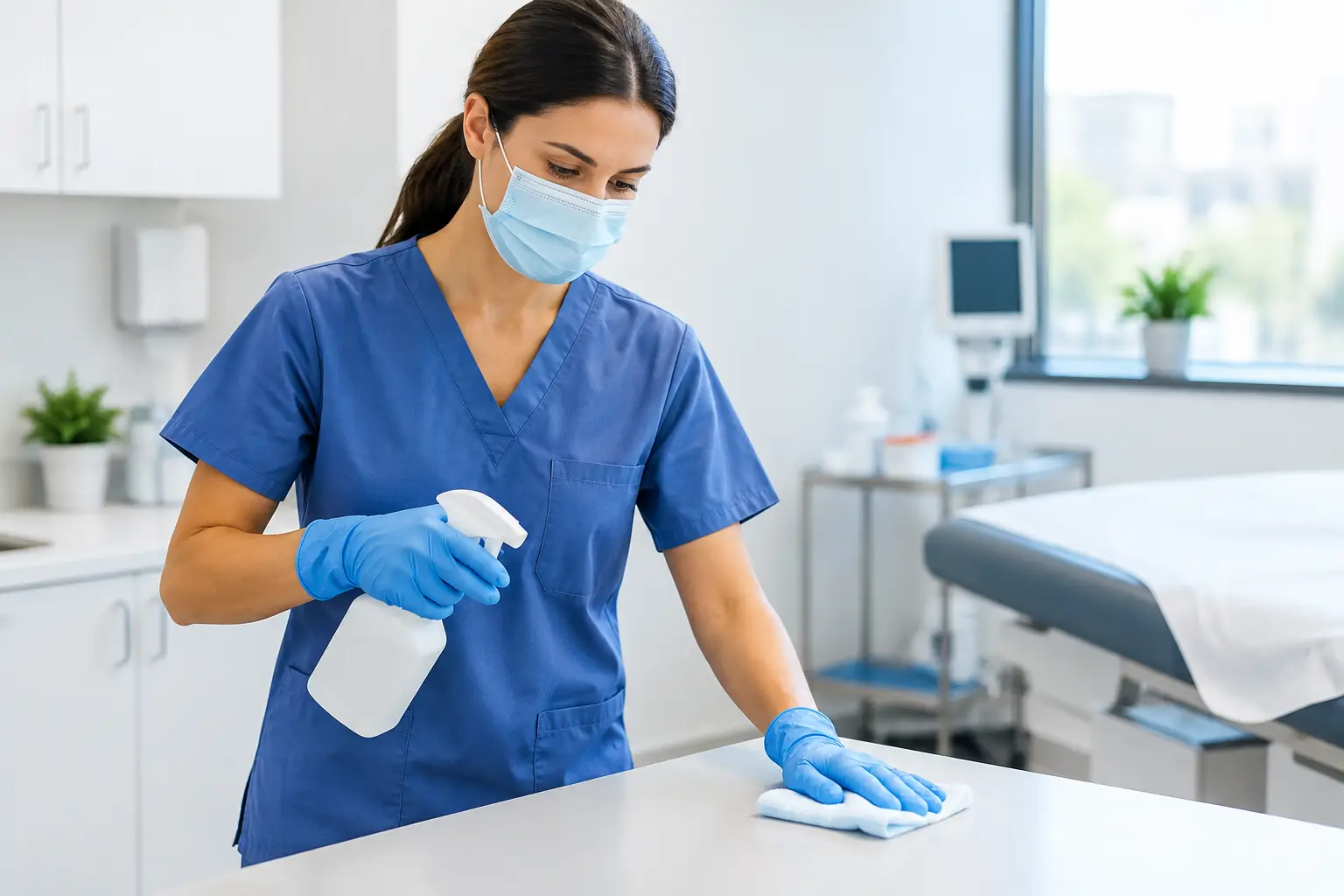
Before your procedure begins, the treatment bed, work surfaces, lamp handles, machine components, and other high-touch areas should be cleaned and disinfected according to appropriate product instructions. Items that cannot be adequately disinfected should be protected with single-use barriers or kept outside the immediate treatment area.
An organized setup is more than visual reassurance. It helps the practitioner avoid reaching across contaminated surfaces or interrupting treatment to search for supplies. Clean items should remain separate from anything that has been exposed during the procedure.
Single-use items where it counts
Needles, cartridges, gloves, pigment cups, microbrushes, applicators, and other disposable materials should be new and single-use when required for the service. Needle cartridges should be opened in a way that allows the client to see that they are fresh. Pigment should be dispensed into individual cups rather than returned to a main bottle after treatment.
For procedures involving pigment, thoughtful safeguards also extend to equipment and products. Barrier protection, proper handling of machine grips, and controlled product dispensing help prevent cross-contamination. These details may feel small, but they reflect the level of care behind the entire appointment.
Hand hygiene and glove changes
Gloves are not magic. They only work when they are used correctly. A provider should perform hand hygiene before gloving and change gloves whenever they become contaminated, tear, or touch items outside the protected treatment field, such as a phone, door handle, drawer, or personal item.
Clients sometimes worry that a practitioner changing gloves means something went wrong. Usually, it means the opposite. Glove changes are a visible sign that the provider is paying attention to where their hands have been and what they touch next.
Proper cleaning and sterilization protocols
Some reusable tools may require cleaning and sterilization based on their intended use and local regulations. This process is not the same as wiping an item down. Cleaning removes visible residue, while disinfection and sterilization follow specific protocols designed for different levels of exposure.
For most modern permanent makeup procedures, high-quality disposable cartridges and supplies reduce the need for reusable items near the treatment site. Still, a clinic should have clear systems for any reusable tools it uses. If an answer feels vague or dismissive, it is reasonable to pause before booking.
Hygiene begins before the appointment
The safest treatment plans start with consultation, not with the procedure. A qualified artist will review relevant health information, medications, allergies, previous cosmetic tattooing, active skin conditions, and recent treatments. This helps identify when a service should be postponed or when medical clearance may be appropriate.
For example, skin that is sunburned, irritated, actively breaking out, or healing from another procedure may not be ready for cosmetic tattooing. Clients using certain medications or managing conditions that affect healing may need individualized guidance. The right decision is sometimes to wait, even when you are excited for a transformation.
Pre-care instructions are part of clinic hygiene because they prepare the skin for safer treatment and more predictable healing. Avoiding alcohol, certain skincare actives, tanning, or blood-thinning products when advised can reduce unnecessary bleeding and irritation. Your provider should explain recommendations clearly and never tell you to stop prescribed medication without direction from your medical professional.
Why aftercare is part of a clean result
A clean procedure can still have a difficult outcome if aftercare is overlooked. Once you leave the clinic, your skin is in its healing phase and needs gentle, consistent care. Your provider should give written aftercare instructions that match the procedure you received, whether that is eyeliner, lip blush, scar camouflage, or restorative pigmentation.
Aftercare commonly includes keeping the area clean, avoiding touching it with unwashed hands, and staying away from swimming pools, hot tubs, saunas, intense sweating, and direct sun exposure during the advised window. The exact guidance depends on the service, the treated area, and your skin’s response.
You should also know what is normal. Mild redness, tenderness, swelling, dryness, flaking, and a temporary shift in pigment intensity can be expected with many procedures. Increasing pain, spreading redness, warmth, unusual drainage, fever, or symptoms that concern you deserve timely attention from a medical professional. A responsible clinic does not diagnose medical complications, but it should take your concerns seriously and direct you toward appropriate care.
Questions worth asking before you book
You do not need clinical training to recognize a provider who respects safety. Ask how single-use needles and pigment cups are handled, how equipment is cleaned between clients, and whether the practitioner provides pre-care and aftercare instructions. Ask what happens if your skin is not an ideal candidate on the day of treatment.
It is also appropriate to ask about experience with your specific concern. Scar tissue, reconstructed breasts, mature stretch marks, and scalp pigmentation require different technical judgment than a standard cosmetic brow appointment. A practitioner with medical pigmentation knowledge understands that skin texture, vascularity, Fitzpatrick skin type, and healing history can influence both the approach and the final appearance.
At Fancy Shmancy, every treatment begins with respect for the person behind the procedure. That means creating a plan that considers your goals, your skin, and the conditions needed for a safe, refined result.
Cleanliness should feel reassuring, not intimidating
A professional clinic should welcome your questions without making you feel difficult, anxious, or uninformed. You are trusting someone with your face, body, and often a meaningful part of your healing story. Transparency is a sign of confidence and care.
The best appointment experience balances clinical precision with human warmth. You should leave knowing how your procedure was prepared, what your skin may experience next, and who to contact if you need clarification. When a clinic treats hygiene as a foundation rather than a selling point, it creates the space for something far more valuable than a beautiful result: the confidence to feel fully at ease in your decision.
Author: Liana Reznik