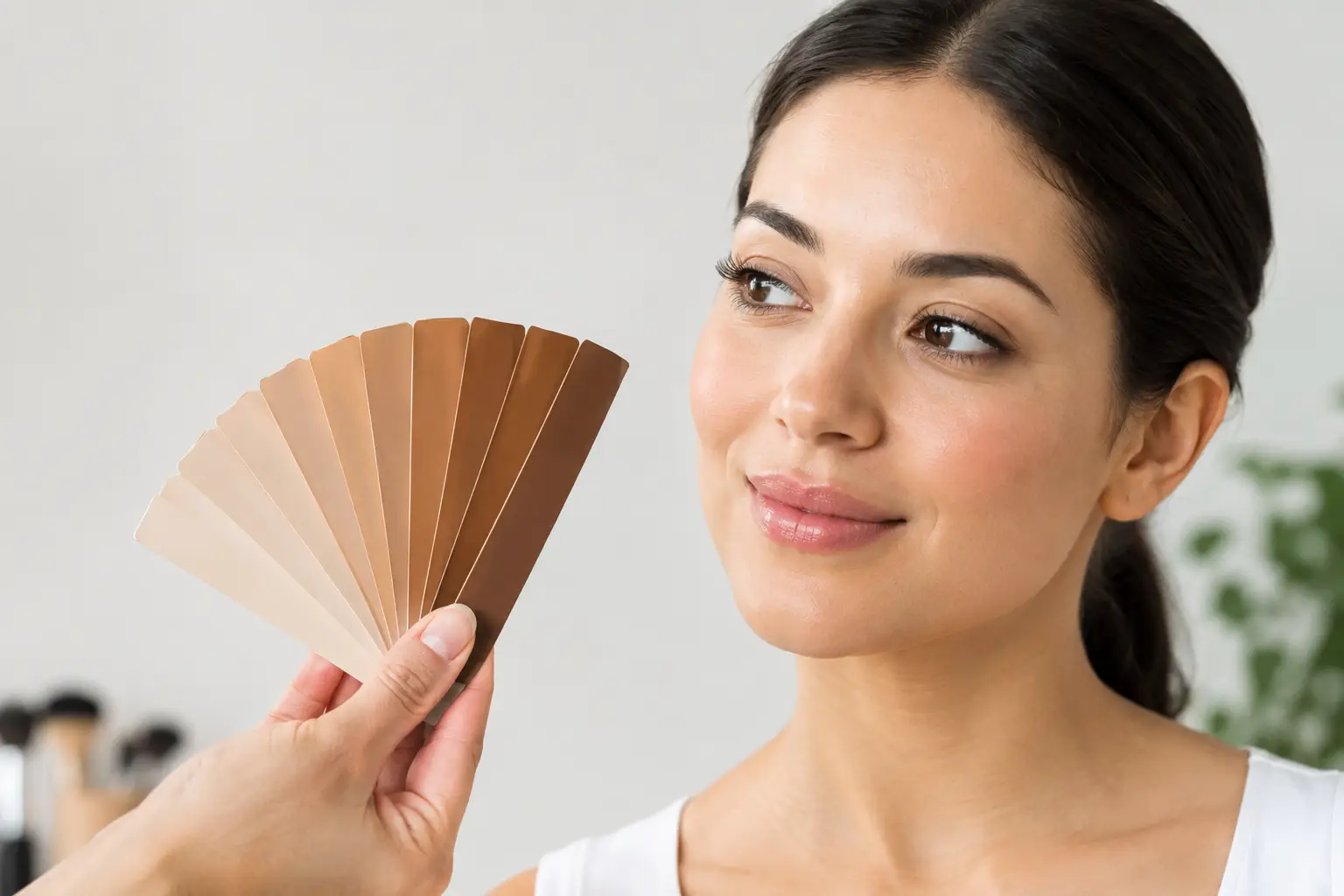
A Guide to Skin Tone Matching for Natural Results
A beautifully matched pigment should never announce itself before you do. Whether you are considering permanent brows, lip blush, scar camouflage, 3D areola tattooing, or scalp micropigmentation, a guide to skin tone matching begins with one essential truth: skin is not one flat color. It has depth, movement, warmth, coolness, and a healing response that must all be considered before a single pigment is placed.
For cosmetic and paramedical tattooing, color selection is not about choosing the shade that looks best in a bottle. It is about planning for how that pigment will settle into your unique skin and how the final result will support the way you want to look and feel.
Why Skin Tone Matching Is More Than Choosing a Color
The visible surface of your skin is only part of the picture. A pigment placed into the skin interacts with natural melanin, blood flow, skin thickness, texture, sun exposure, and the body’s own healing process. That is why a color that appears soft and natural during a consultation can heal differently from one client to another.
This is especially meaningful in restorative work. With scar camouflage, stretch mark camouflage, and areola restoration, the goal is not simply to add pigment. The goal is visual continuity: helping treated skin blend more naturally with the surrounding area while respecting its texture, sensitivity, and healing history.
A skilled artist studies the treatment area in context. The correct match may be slightly warmer, lighter, or more muted than the skin beside it on the day of treatment because healed pigment can shift as the skin recovers. Precision comes from anticipating that change, not reacting to it afterward.
A Guide to Skin Tone Matching Starts With Undertone
Your skin tone is the visible depth of your complexion, often described as fair, light, medium, tan, deep, or rich. Your undertone is the subtle color beneath that surface. Most undertones fall along a warm, cool, neutral, or olive spectrum, although many people sit between categories.
Warm undertones may show golden, peach, or yellow influence. Cool undertones can appear rosy, pink, red, or bluish. Neutral skin has a balanced mix, while olive skin often has a green-gray or golden cast that can make conventional color choices behave unexpectedly.
In permanent makeup, undertone informs every decision. A brow pigment that is too warm may heal orange or red on some skin. One that is too cool can heal ashy or gray. For lip tattooing, natural lip tone, melanin level, and any existing darkness or unevenness must be evaluated before selecting a target color. A bright pink that looks beautiful on one person can appear muted, purple-toned, or overly cool on another.
The same principle applies to restorative pigmentation. Areola color is rarely a single beige, pink, or brown. It often requires custom blending to reflect the client’s surrounding skin, breast reconstruction results, and personal preferences. The most natural outcomes are built with nuance.
Why Vein Tests and Jewelry Tests Are Not Enough
You may have heard that blue veins mean cool undertones or that gold jewelry means warm undertones. These can be entertaining starting points, but they are not reliable enough for medical pigmentation or permanent makeup planning.
Lighting changes how skin appears. So do self-tanner, recent sun exposure, skincare ingredients, inflammation, and makeup. A professional assessment considers the treatment area itself under controlled light, rather than relying on a quick rule of thumb.
Fitzpatrick Skin Type and Pigment Behavior
The Fitzpatrick scale classifies skin according to how it responds to ultraviolet exposure, from very fair skin that burns easily to deeply pigmented skin that rarely burns. It is a valuable part of consultation, but it is not a color chart and should not be used alone to choose pigment.
In experienced hands, Fitzpatrick skin type helps guide treatment planning. It can indicate how cautiously the skin may need to be treated, its likelihood of post-inflammatory hyperpigmentation, and how pigment may appear during healing. Skin with more melanin may need a different approach to prevent results from becoming too cool, too dark, or uneven.
For example, scar tissue can hold color differently than unscarred skin, regardless of a client’s Fitzpatrick type. A scar may be lighter, pinker, firmer, thinner, or less vascular than the surrounding skin. It may require more than one session and should be fully healed and medically cleared when appropriate before camouflage work begins.
This is why Fancy Shmancy approaches pigmentation as a personalized clinical-artistic process, not a one-size-fits-all service.
The Treatment Area Changes the Color Plan
Matching skin on the cheek is different from matching skin on the breast, abdomen, scalp, or lips. Each area has its own texture, circulation, oil production, and exposure to sunlight. The desired result also changes the pigment strategy.
For permanent brows, the goal is usually a refined hair-like effect or soft powder finish that complements the natural brow hair, hair color, and facial coloring. The pigment should enhance definition without looking heavy or artificial as it fades.
For scalp micropigmentation, the pigment must mimic the soft shadow of hair follicles. It needs to complement the client’s remaining hair, scalp tone, and age-related skin changes. A shade that is too dark or too warm can look stamped on rather than naturally integrated.
For stretch mark and scar camouflage, an exact initial match is not always realistic or desirable. Camouflaging texture is different from erasing it, and pigment cannot make every scar disappear. Still, carefully layered color can reduce contrast and make the area less visually distracting. That can be deeply meaningful for someone who has spent years feeling self-conscious about surgical scars, injury marks, or skin changes after pregnancy.
Healing Is Part of the Match
Fresh pigment is not the final result. Immediately after treatment, the area may look darker, warmer, brighter, or more defined than it will once healed. During the first weeks, skin can look dry, flaky, or temporarily uneven as it renews itself.
This is normal, and it is why aftercare matters. Picking, exfoliating, excessive moisture, sun exposure, and unapproved products can interfere with pigment retention and alter the final appearance. Following tailored aftercare instructions gives the skin the best opportunity to heal evenly.
A touch-up appointment is often part of responsible treatment planning. It allows the artist to assess healed color, retention, and symmetry before making measured refinements. In restorative pigmentation, multiple sessions may be recommended because building a natural-looking result gradually is safer and more predictable than overworking the skin in one visit.
What to Share During Your Consultation
The most helpful consultations are honest and detailed. Bring photos if there is a color, brow shape, lip effect, or restorative result you admire, but use them as direction rather than a promise of an identical outcome. Your skin, anatomy, and healing response are your own.
Be prepared to discuss previous tattoos or permanent makeup, laser treatments, skincare products, medications, allergies, skin conditions, surgery dates, and any history of unusual scarring or hyperpigmentation. For paramedical work, your provider may also need to coordinate with your physician or surgeon, particularly after reconstruction or recent medical treatment.
Good color matching also depends on communicating your comfort level. Some clients want their freckles, brows, or lips to be nearly undetectable. Others want more visible definition. Neither preference is wrong. The best plan is one that respects your features, lifestyle, and vision while staying realistic about how pigment will heal.
Natural Results Come From Restraint and Expertise
A successful skin tone match is often one people cannot quite identify. They may simply notice that you look rested, balanced, or more like yourself. In restorative work, they may see a scar or reconstructed area less as the first thing they notice and more as one part of a whole person.
That outcome comes from detailed assessment, custom pigment blending, careful technique, and patience through the healing process. The right shade is never just a shade. It is a considered decision that honors your skin, your story, and the confidence you deserve to carry forward.
Author: Liana Reznik