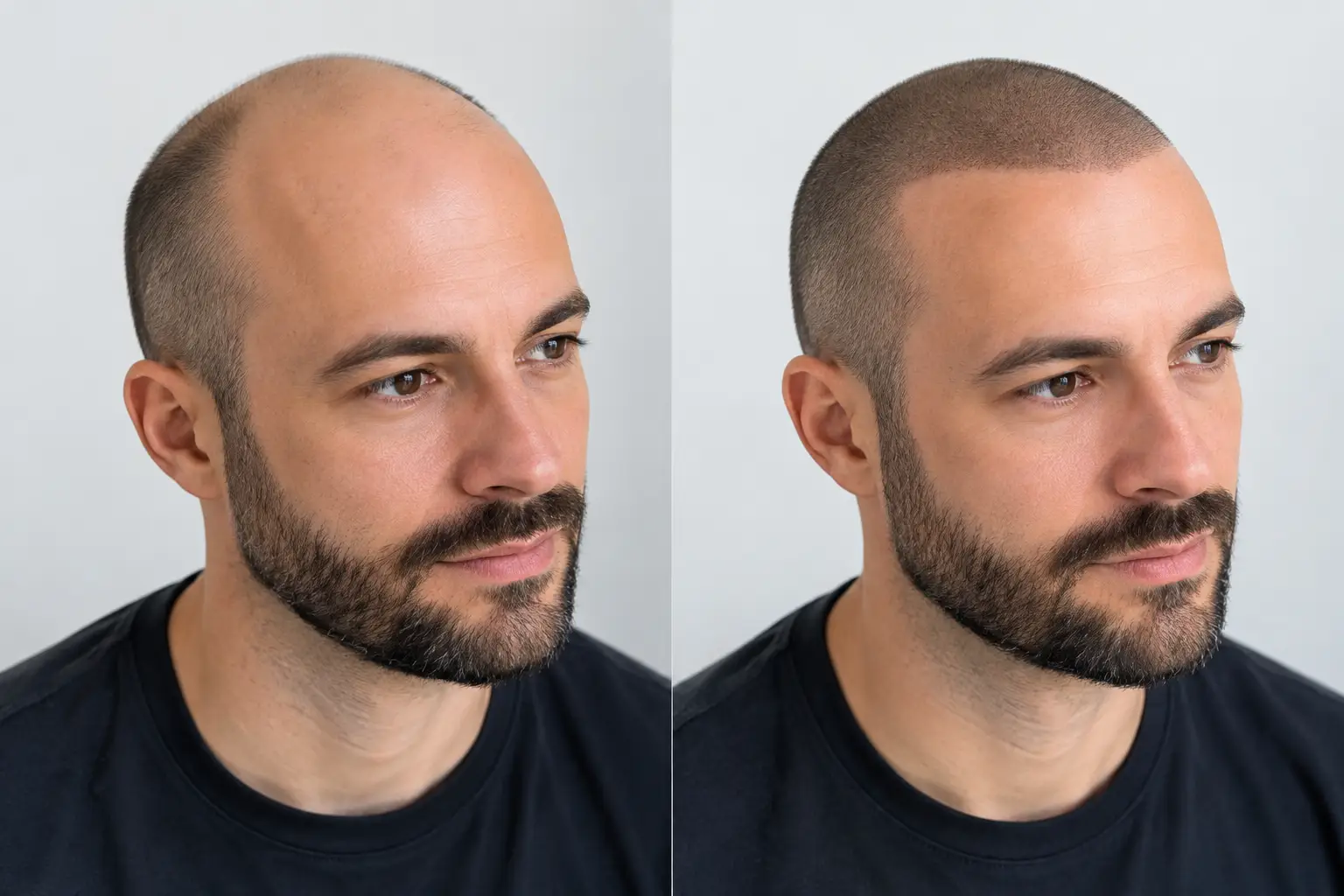
What a Hairline Pigmentation Transformation Changes
A receding hairline, thinning at the temples, or a visible transplant scar can change how someone feels when they catch their reflection. A hairline pigmentation transformation uses scalp micropigmentation to restore visual density where it is needed most, creating the appearance of a more defined, balanced hairline without surgery or daily camouflage products.
The result is not about drawing on a harsh new hairline. It is about thoughtful placement, realistic density, and pigment shades selected to work with your skin tone, existing hair color, and the way your hair naturally grows. For many clients, the transformation is quieter than they expect: their hairline simply looks more intentional, more complete, and more like them.
What Hairline Pigmentation Can Change
Scalp micropigmentation is a specialized form of medical pigmentation that places tiny, layered impressions of pigment across the scalp. These impressions replicate the look of closely cropped hair follicles and can reduce the contrast between the scalp and existing hair.
At the hairline, precision matters. A well-designed treatment can soften the look of temple recession, frame the face, make fine or thinning hair appear denser, and blend the transition between a hair transplant and surrounding hair. It can also help camouflage certain scars when the skin has fully healed and is appropriate for treatment.
A hairline pigmentation transformation does not grow hair or stop hair loss. It changes the visual story. By reducing the visibility of bare scalp and creating a carefully considered frame around the face, it can help clients feel less defined by thinning areas, scars, or an uneven hairline.
The right approach depends on the goal. Someone who shaves their head may want the clean, natural appearance of a closely cropped hairline. A client with longer hair may benefit from density work placed behind the existing front line, allowing their own hair to appear fuller. These are different plans, and they should never be treated as a one-size-fits-all service.
A Natural Result Starts With Hairline Design
The most noticeable scalp micropigmentation results are often the ones that look least tattooed. That comes from resisting trends and designing for the individual rather than copying a sharp, overly low, or perfectly symmetrical hairline.
A natural hairline has variation. It may be slightly softer at the corners, lighter at the leading edge, and built gradually through layers. Age, facial proportions, current hair pattern, lifestyle, and future hair loss all deserve consideration. A hairline that feels exciting in the moment can look unnatural later if it is placed too low or too aggressively.
At Fancy Shmancy, each treatment begins with a detailed consultation and a plan tailored to the client. Skin anatomy and Fitzpatrick skin type matter, as does the condition of the scalp. Oily skin, sun exposure, active inflammation, healing scars, previous pigment, and certain medical histories can affect both candidacy and pigment retention.
Color selection is equally careful. Pigment should complement the appearance of existing follicles without turning cool, warm, or overly saturated as it heals. A skilled practitioner works in subtle layers, assessing how the scalp responds at each appointment rather than trying to create full density in one session.
What the Treatment Process Looks Like
Scalp micropigmentation is typically completed over a series of sessions. The first appointment establishes the hairline design and begins building a light foundation. Following sessions add depth, density, and refinement once the initial pigment has healed.
Before treatment, the scalp is cleaned and prepared. Your practitioner will review the proposed shape with you, including the temples, frontal hairline, and areas of thinning or scarring. This is the moment for clear communication. You should feel comfortable discussing how soft or defined you want the result to appear, how you typically wear your hair, and any concern about future hair changes.
During the procedure, a specialized device places small deposits of pigment into the upper layers of the skin. Most clients describe the sensation as manageable, though individual comfort levels vary. Treatment time depends on the size of the area and the complexity of the work.
Afterward, the scalp may look a little darker or more defined than the healed result. This is expected. Pigment settles as the skin recovers, which is why a measured, layered approach is more reliable than attempting dramatic density immediately.
Healing Is Part of the Transformation
The aftercare period is not an afterthought. It protects the developing result and gives the scalp time to recover properly. Clients receive specific pre-care and aftercare instructions based on their treatment plan, but the general goal is to avoid disrupting the area while it heals.
For a short period, this may mean avoiding heavy sweating, swimming, direct sun exposure, exfoliating products, and picking or rubbing the scalp. Hair washing and shaving instructions may also be adjusted around the appointment schedule. Following those directions closely helps pigment heal more evenly.
Touch-ups are normal with scalp micropigmentation. The number of sessions and the need for future maintenance vary based on skin type, lifestyle, sun exposure, immune response, and the amount of existing hair. A good provider discusses this honestly from the beginning. Long-lasting does not mean unchanged forever, especially in an area exposed to daily washing, shaving, and sunlight.
Who May Benefit From Scalp Micropigmentation?
Hairline pigmentation can be meaningful for people with male or female pattern thinning, widening part lines, temple recession, alopecia-related hair loss, or visible scars. It can also be an option for clients who have had a hair transplant and want to increase the look of density between grafts or camouflage a donor-area scar.
Still, not every scalp is ready for pigmentation. Active scalp conditions, infections, open wounds, recent surgery, unstable hair loss, or certain skin concerns may require postponing treatment or obtaining medical clearance. If a scar is raised, very new, or still changing in color and texture, it may need more time before it can be evaluated for camouflage.
That careful screening is part of responsible care. An affirming consultation should include room for questions, realistic expectations, and a conversation about whether scalp micropigmentation is the appropriate next step for you.
Confidence Should Still Look Like You
The best hairline pigmentation transformation is not defined by a dramatic before-and-after photo alone. It is defined by how naturally the work fits your face, your skin, your lifestyle, and your sense of self. Whether your goal is a sharper shaved-hair look, softer temples, or a less visible scar, the value is in having a plan that honors both the details and the person wearing the result.
A carefully designed hairline can be a small visual change with a deeply personal impact – a chance to spend less energy managing what you see in the mirror and more energy feeling comfortable in it.
Author: Liana Reznik