Inkless Tattoo for Scars and Stretch Marks
A scar or stretch mark can carry a story you do not want to erase – surgery, pregnancy, weight change, an injury, or a chapter of healing. An inkless tattoo offers a different kind of support: it is designed to improve the texture and overall appearance of certain marks without depositing skin-colored pigment. For many clients, the goal is not perfection. It is to feel more comfortable seeing their skin, dressing for the season, or recognizing themselves in the mirror.
What Is an Inkless Tattoo?
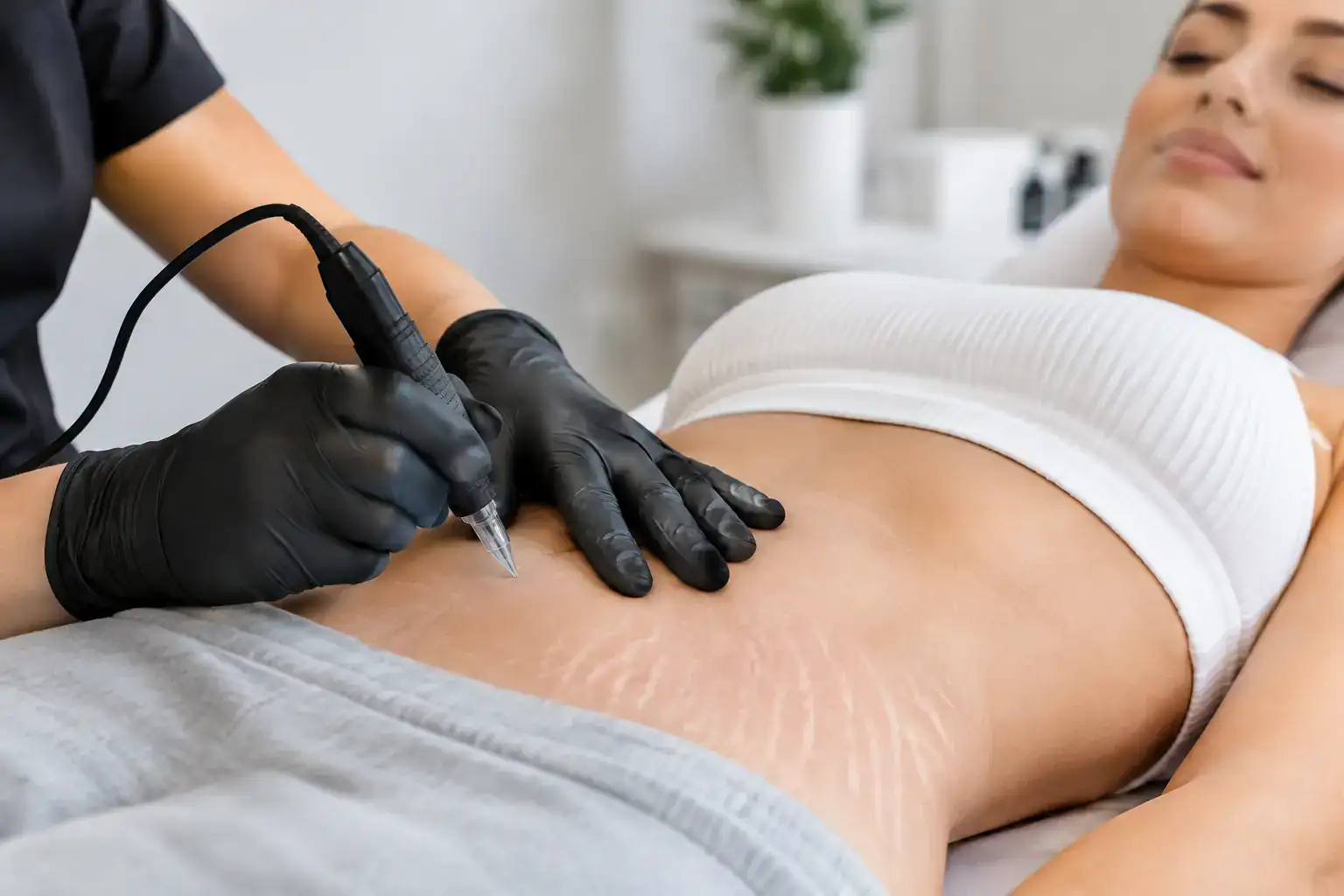
An inkless tattoo is a form of restorative skin treatment that uses a tattoo-style device and fine needles, but no traditional tattoo ink. The controlled treatment creates microscopic channels in the skin while a specialized topical serum is applied. Depending on the protocol and the skin’s needs, the treatment may support collagen production and encourage a smoother-looking surface over time.
It is most often considered for stretch marks and certain mature scars that feel uneven, indented, or visually distinct from the surrounding skin. The name can be slightly misleading: this is not a standard decorative tattoo, and it is not the same as scar camouflage. Scar camouflage uses carefully matched pigment to reduce contrast in color. Inkless work focuses first on texture and skin quality.
That difference matters. If a scar is flat but noticeably lighter or darker than the surrounding area, camouflage pigmentation may be the more appropriate option. If the mark is primarily textured, an inkless approach may be worth discussing. In some cases, a specialist may recommend a staged plan that addresses texture before considering pigment.
What an Inkless Tattoo Can and Cannot Do
The right treatment can help a mark look softer, less rigid, and less visually prominent. It may improve the appearance of mature stretch marks on areas such as the abdomen, hips, thighs, breasts, or buttocks. It can also be considered for select surgical scars, including scars following body contouring procedures, breast surgery, or other healed incisions.
Results are gradual because the skin needs time to respond. It is realistic to expect improvement, not an erased scar or completely restored pre-scar skin. Every body heals differently, and outcomes can vary based on scar age, depth, location, genetics, sun exposure, skin tone, aftercare, and overall health.
An inkless tattoo also cannot safely treat every kind of mark. Raised keloid scars, actively inflamed scars, open skin, rashes, infections, and scars that are still changing require a different approach or medical evaluation. A responsible provider will never promise that one treatment is right for every scar.
Is Your Scar or Stretch Mark Ready?
Timing is one of the most important parts of restorative tattooing. Fresh scars are still healing beneath the surface, even when they appear closed. Scar tissue may continue to change in color, firmness, and sensitivity for many months. Treating too early can interfere with healing and makes results less predictable.
During a consultation, the practitioner should evaluate whether the skin is fully healed, stable, and appropriate for treatment. They will look at the texture, color, thickness, location, and sensitivity of the area, as well as your Fitzpatrick skin type. This assessment helps shape both the treatment plan and the expectations for healing.
Medical history matters, too. Certain medications, autoimmune conditions, diabetes, blood-thinning medications, compromised healing, a history of abnormal scarring, recent procedures, pregnancy, or breastfeeding may affect candidacy or timing. When needed, clearance from your physician or surgeon is the thoughtful next step. Particularly after reconstructive or cosmetic surgery, collaboration with your medical team protects both your healing and your result.
The Inkless Tattoo Treatment Experience
A high-quality appointment begins well before the device touches the skin. Your provider should discuss your goals, examine the treatment area in person or through a detailed virtual consultation, review pre-care, and explain what is achievable for your individual skin. This is not a one-size-fits-all service.
At the appointment, the skin is cleansed and prepared with careful attention to hygiene. A topical numbing product may be used when appropriate. The practitioner then works methodically across the selected area with controlled depth and technique, tailoring the treatment to the condition of the tissue. The sensation varies, but clients often describe it as manageable, especially with numbing support.
A single session may be enough for a small, mild area, but several sessions are common for deeper stretch marks or more extensive scarring. Treatments are spaced apart to give the skin time to repair and reveal its response. Rushing the process is not a shortcut to better results.
Healing Is Part of the Result
Immediately after treatment, the area may appear red, feel warm, or have mild swelling. Tiny pinpoint marks, dryness, flaking, or temporary darkening can occur as the skin heals. These effects are generally expected, but your provider should explain what is normal for your treatment and what would warrant a call.
Aftercare is not an afterthought. Following your instructions closely can influence comfort, healing, and the final appearance. This commonly includes keeping the area clean, avoiding friction, skipping pools and hot tubs during the initial healing period, limiting intense exercise briefly if advised, and protecting the area from sun exposure. Picking, exfoliating, or applying unapproved products can disrupt the healing skin.
The most visible changes do not happen overnight. Early healing can look uneven before the skin settles. Collagen remodeling takes time, which is why a follow-up assessment after the appropriate healing interval is more meaningful than judging the area in the first few days.
Inkless Tattoo vs. Scar Camouflage
Both services can be deeply meaningful, but they solve different visual concerns. Inkless treatment is typically chosen when texture is the leading concern. Scar camouflage is a medical pigmentation technique that deposits custom-blended pigment to help a stable, flat scar blend more naturally with surrounding skin.
For example, someone with pale, flat stretch marks may be a candidate for camouflage after a thorough color assessment. Someone with stretch marks that are depressed or uneven may first benefit from a texture-focused treatment. A person with both concerns may need a phased approach. The order, number of sessions, and recommended technique should come from an individualized evaluation rather than a menu of promises.
This is where advanced skin knowledge matters. Working with scarred tissue is different from tattooing healthy, untouched skin. Scar tissue can hold pigment unpredictably, react differently to trauma, and vary dramatically from one area to another. An experienced paramedical tattoo specialist understands when to proceed gently, when to wait, and when a medical referral is the right answer.
Choosing a Provider for Restorative Work
Restorative tattooing is personal work. You deserve more than a quick appointment and a generic treatment plan. Look for a practitioner with demonstrated experience in medical pigmentation, scar revision considerations, skin anatomy, infection-control standards, and the full range of Fitzpatrick skin types.
Before committing, ask how the provider determines candidacy, whether they have experience with marks similar to yours, how they plan for changes in skin tone, and what aftercare support they provide. You should feel comfortable discussing your health history and asking direct questions about realistic outcomes. A respectful consultation makes room for both hope and honesty.
At Fancy Shmancy, this process is approached with the care it deserves: thoughtful consultation, precise treatment planning, and support through each stage of healing. Whether your mark comes from surgery, motherhood, injury, or a change in your body, the treatment should honor the fact that your skin is not a problem to be fixed. It is part of you – and it deserves skilled, compassionate care.
Author: Liana Reznik