Powder Brows Versus Microblading: Which Fits?
A beautifully shaped brow can make the face feel more balanced before you have applied a stitch of makeup. But when clients ask about powder brows versus microblading, the best answer is rarely a one-size-fits-all recommendation. Your skin, natural brow hair, lifestyle, desired finish, and long-term expectations all matter.
Both services are forms of cosmetic tattooing designed to create fuller, more defined eyebrows. Each can look soft, believable, and beautifully tailored when performed with the right technique and thoughtful color selection. The difference is in how pigment is placed, how the skin tends to retain it, and the effect it creates once healed.
Powder Brows Versus Microblading: The Core Difference
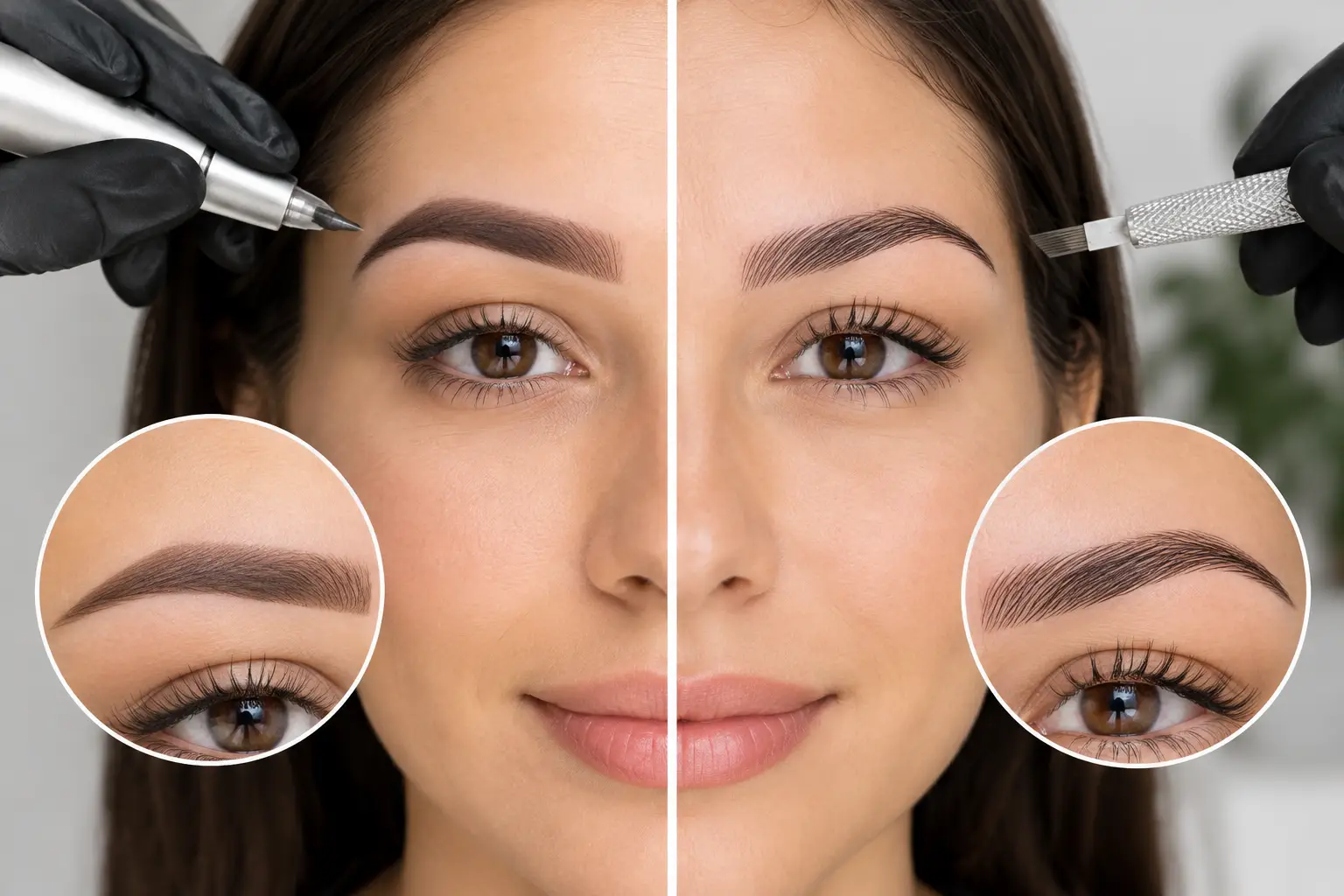
Microblading uses a handheld tool with tiny needles arranged in a blade-like formation. The artist creates fine, hair-inspired strokes and places pigment within those strokes. The goal is to mimic the appearance of individual brow hairs, especially through sparse areas.
Powder brows are created with a cosmetic tattoo machine that deposits pigment in soft layers. Rather than individual hair strokes, the healed result resembles a gently shaded brow pencil or brow powder. The front of the brow can remain airy and diffused, while the arch and tail can have more definition.
Neither approach should look harsh or stamped on. A skilled artist considers facial proportions, bone structure, natural hair growth, and undertones in the skin before designing the brow. The most flattering result is often one that gives you definition without announcing itself from across the room.
The Finish: Hair Strokes or Soft Makeup
Microblading is often appealing to someone who wants the illusion of added hairs. If you have dry to normal skin, distinct gaps in otherwise healthy natural brows, and a preference for a very minimal makeup look, it may be a lovely option. When it heals well, it can create delicate texture where the brow needs support.
Powder brows tend to suit clients who fill in their eyebrows most mornings, enjoy a polished appearance, or want more visible structure. The result can be as soft or as defined as you prefer. A light, misty powder brow offers subtle fullness, while a more saturated finish creates a refined, makeup-ready frame for the eyes.
Many people imagine powder brows as solid blocks of color. That is not the goal of modern permanent makeup. With precise pixelation and a carefully built shape, the effect should heal into a soft wash of color with gentle transitions – not a heavy, drawn-on brow.
Skin Type Can Change the Recommendation
Skin is not a passive surface. It is living tissue, and its texture, oil production, sensitivity, and healing behavior influence every permanent makeup result.
Microblading can be less predictable on oily skin, enlarged pores, mature skin, very thin skin, or skin with significant sun damage. On these skin types, crisp hair strokes may soften, expand, or blur as they heal. This does not mean the skin cannot receive eyebrow tattooing. It means another technique may produce a cleaner, more stable result.
Powder brows are often a stronger choice for oily or combination skin because the soft shading tends to heal more evenly. They can also be a thoughtful option for mature clients who want definition without relying on hair strokes that may not retain sharply. Skin with a history of brow tattooing, scar tissue, or uneven pigmentation needs an especially individualized assessment.
Your Fitzpatrick skin type and skin tone also guide pigment selection. The right color is not simply blonde, brunette, or black. It must be chosen to heal naturally within your skin, then adjusted with care at the perfecting session. A thorough consultation protects the result by setting realistic expectations before pigment ever touches the skin.
Healing and Longevity Are Not Identical
Both powder brows and microblading usually appear darker, warmer, and more intense immediately after the appointment. As the area heals, light flaking is expected and the color softens considerably. Picking, scratching, or attempting to remove flakes early can pull pigment from the skin and interfere with retention.
The initial healing period generally takes around 7 to 14 days on the surface, although the skin continues settling beneath the surface for several weeks. A follow-up appointment is commonly needed to evaluate healed color, reinforce areas that retained lightly, and refine the final balance.
Longevity varies with skin type, immune response, skincare routine, sun exposure, and pigment depth. In broad terms, powder brows often remain visible longer than microbladed hair strokes, particularly on oilier skin. Many clients schedule color refreshes every one to three years, though some need them sooner and others later.
A lighter, more natural application may fade sooner than a more saturated application. That trade-off can be worthwhile if your priority is a soft, understated look. Permanent makeup should evolve with your face and style, not lock you into a brow trend that no longer feels like you.
Comfort, Aftercare, and Lifestyle Considerations
Both procedures begin with topical numbing and should be approached slowly, with frequent check-ins about comfort. Some clients describe a scratching sensation; others notice vibration or mild pressure. Hormonal changes, stress, caffeine, and sensitivity can affect how an appointment feels, which is why pre-care instructions matter.
Aftercare for both treatments usually includes keeping the area clean and dry as instructed, avoiding makeup directly on the brows during early healing, and pausing activities that cause heavy sweating. Swimming, saunas, tanning, exfoliating acids, retinoids, and direct sun exposure can all compromise the healing process if introduced too soon.
Your lifestyle can help decide between techniques. If you work out intensely most days, use active skincare, spend considerable time outdoors, or want brows that hold up well with oily skin, powder brows may offer more dependable long-term wear. If you have dry skin and want the quietest possible enhancement in a few sparse areas, microblading may still be the better artistic fit.
When a Combination Brow Makes Sense
The choice is not always powder brows or microblading alone. Combination brows blend hair-like strokes with machine shading, usually placing strokes at the front and adding a soft powder effect through the body and tail. This can create dimension while providing the density that strokes alone may not achieve.
Combination brows work best when the client has suitable skin and enough natural hair to support the illusion. They are not automatically the “best of both” option. On skin that is very oily or textured, even limited strokes may heal less crisply than shading. Choosing a technique because it is currently popular is less valuable than choosing one that respects how your skin will heal.
What a Careful Brow Consultation Should Cover
A responsible consultation looks beyond a photo of your dream brows. It should include your health history, current medications, previous tattooing, skincare habits, skin characteristics, and comfort with maintenance. Pregnancy, certain medical conditions, active skin irritation, blood-thinning medications, recent cosmetic procedures, and a history of keloid scarring can affect candidacy or timing.
You should also discuss shape honestly. A brow shape that photographs dramatically may feel too strong in daily life. The right design should account for facial asymmetry without trying to erase every natural difference. Brows are sisters, not identical twins, and a natural result honors that reality.
At Fancy Shmancy, each brow service is planned around the person wearing it, with attention to skin anatomy, color theory, healing behavior, and the confidence you want to carry into your day. The goal is never to make everyone leave with the same brow. It is to create a result that feels considered, clean, and unmistakably yours.
If you are deciding between powder brows and microblading, bring reference photos, but also bring your real routine and your real concerns to the consultation. The most beautiful choice is the one that will heal gracefully on your skin and still feel like you when you catch your reflection months from now.
Author: Liana Reznik