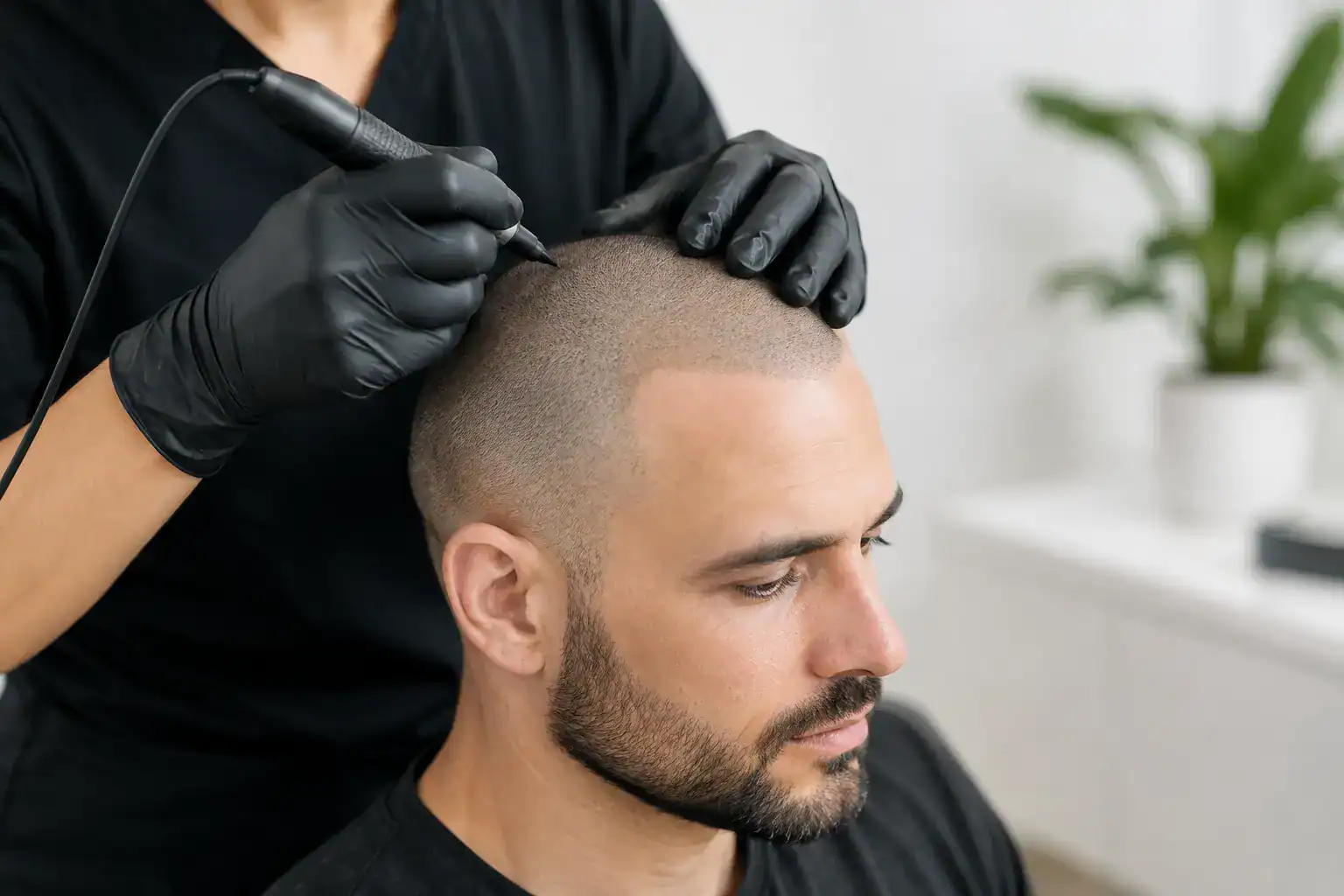
Top Benefits of Scalp Micropigmentation
A changing hairline can alter more than a reflection. It can affect how freely you move through photographs, social plans, work meetings, or a day at the pool. The top benefits scalp micropigmentation provides are not about pretending hair loss never happened. They are about restoring visual balance with a carefully placed, natural-looking pigment treatment designed around you.
Scalp micropigmentation, often called SMP, uses specialized pigment and precise micro-deposits to replicate the appearance of closely shaved hair follicles. For some clients, that means a fuller-looking buzzed style. For others, it means the look of added density between existing hairs or a way to soften the contrast of a scar. The right result is subtle, proportionate, and personal.
Top Benefits of Scalp Micropigmentation for Confidence
A realistic, tailored hairline effect
A convincing SMP result is never one-size-fits-all. The shape, softness, density, and placement of the hairline should reflect a client’s facial structure, age, skin tone, current hair pattern, and personal style. A very sharp, low hairline may look striking in the short term but can feel unnatural over time. Thoughtful design matters.
During a professional consultation, the treatment plan can account for whether you want the appearance of a closely cropped hairstyle, subtle density support, or scar camouflage. The pigment color is also selected with care, taking undertones and Fitzpatrick skin type into consideration. When those details are handled properly, SMP can create dimension without looking flat, harsh, or overly dark.
A non-surgical option for visible hair loss
Hair restoration decisions can feel overwhelming. Some people are not candidates for surgery, do not want surgical downtime, or simply prefer a visual solution that does not require moving follicles from one area of the scalp to another. Scalp micropigmentation does not regrow hair, stop future hair loss, or replace medical treatment when medical treatment is needed. It does, however, offer a non-surgical way to address the appearance of thinning, recession, or bald areas.
That distinction is valuable. SMP is a cosmetic and restorative pigmentation service, not a promise of new growth. Clients who understand that from the start are often able to make clearer, more confident choices about their care.
Fuller-looking density without changing your routine
For clients who still have hair, scalp show-through can be the concern rather than complete baldness. Strategic pigmentation between existing follicles can reduce the contrast between the scalp and hair, creating the impression of more density. This may be especially helpful at the crown, along a widening part, or in areas affected by diffuse thinning.
Results depend on the amount and color of existing hair, the condition of the scalp, and how closely the hair is typically worn. SMP does not add physical volume, so it will not behave like thick hair in the wind or under a styling brush. What it can do is make the scalp less visually prominent, which often changes how clients feel about their hair from every angle.
Support for scars and surgical areas
Scars on the scalp can remain visible because hair does not always grow through scar tissue. They may result from injury, surgery, or a previous hair transplant procedure. With the right evaluation, scalp micropigmentation can help blend a healed scar into the surrounding scalp by reducing the contrast in color and visual texture.
Scar work requires a measured approach. Mature, stable scar tissue responds differently than healthy skin, and not every scar is ready for pigmentation. Its texture, age, color, location, and healing history must be assessed before treatment. A skilled practitioner will be candid about what camouflage can realistically achieve and may recommend waiting if tissue is still healing or medically unstable.
Low-maintenance confidence
One of the practical benefits of SMP is that it can simplify a daily routine. There are no hair fibers to apply each morning, no topical concealer to worry about transferring, and no need to style hair just to disguise a particular area. Clients with a shaved look may simply maintain their preferred hair length and follow their aftercare instructions.
SMP is considered long-lasting, but it is not necessarily permanent in the way many people imagine. Pigment can soften over time due to sun exposure, skin changes, lifestyle, and individual biology. Periodic refresh appointments may be appropriate to preserve the intended depth and definition. For many clients, that maintenance feels far more manageable than a daily cover-up routine.
The Benefits Depend on Technique and Planning
Scalp micropigmentation is sometimes described as a hair tattoo, but that language can miss the level of specialization involved. The scalp is not treated like a blank canvas. Pigment depth, dot size, spacing, color dilution, and gradual layering all influence whether the work resembles natural follicles or reads as obvious ink.
At Fancy Shmancy, planning begins with a conversation about the result you hope to see and the life you want to live with it. An in-person or virtual consultation helps determine whether SMP is suited to your goals, skin, and hair loss pattern. It also gives you space to ask direct questions about the treatment process, healing period, expected number of sessions, and long-term care.
Most scalp micropigmentation plans involve multiple sessions. The first session establishes a conservative foundation. Later appointments build density, refine transitions, and assess how the skin has healed. This gradual approach protects the natural appearance of the work. It is easier to add thoughtful density than to correct a result that was made too dark or too dense too quickly.
Clean technique, high-quality materials, and careful aftercare are equally essential. A reputable provider should discuss health history, scalp conditions, medications, prior procedures, and any factors that could affect healing. If a client has active irritation, infection, open skin, or an untreated scalp concern, treatment may need to be postponed. Safety and predictable healing come before a fast appointment.
Who May Benefit Most From SMP?
SMP can be an affirming option for men and women with pattern hair loss, diffuse thinning, alopecia-related hair loss, or visible scalp scars. It can also complement certain hair restoration journeys by helping create visual continuity where hair remains sparse. The best candidate is not defined by a particular age or hair loss stage. It is someone with realistic expectations who wants a refined, low-maintenance cosmetic solution.
It may not be the right next step for everyone. Clients with rapidly changing hair loss may want a more conservative design that can evolve gracefully. Those with very long hair and advanced thinning may find that density work helps, but does not fully conceal every area under all lighting conditions. And clients seeking actual hair regrowth should speak with a qualified medical provider about underlying causes and available treatments.
That honesty is part of good artistry. The most satisfying result is not the most dramatic possible result. It is the one that fits your features, your lifestyle, and your comfort level so naturally that you spend less time thinking about your scalp at all.
If hair loss or a visible scalp scar has made you feel self-conscious, you deserve a conversation that is both compassionate and precise. A personalized consultation can help turn uncertainty into a treatment plan that respects your skin, your goals, and the confidence you are ready to reclaim.
Author: Liana Reznik